
A Private Tour Through Time: Celebrating 100 Years of Kirkcaldy Galleries
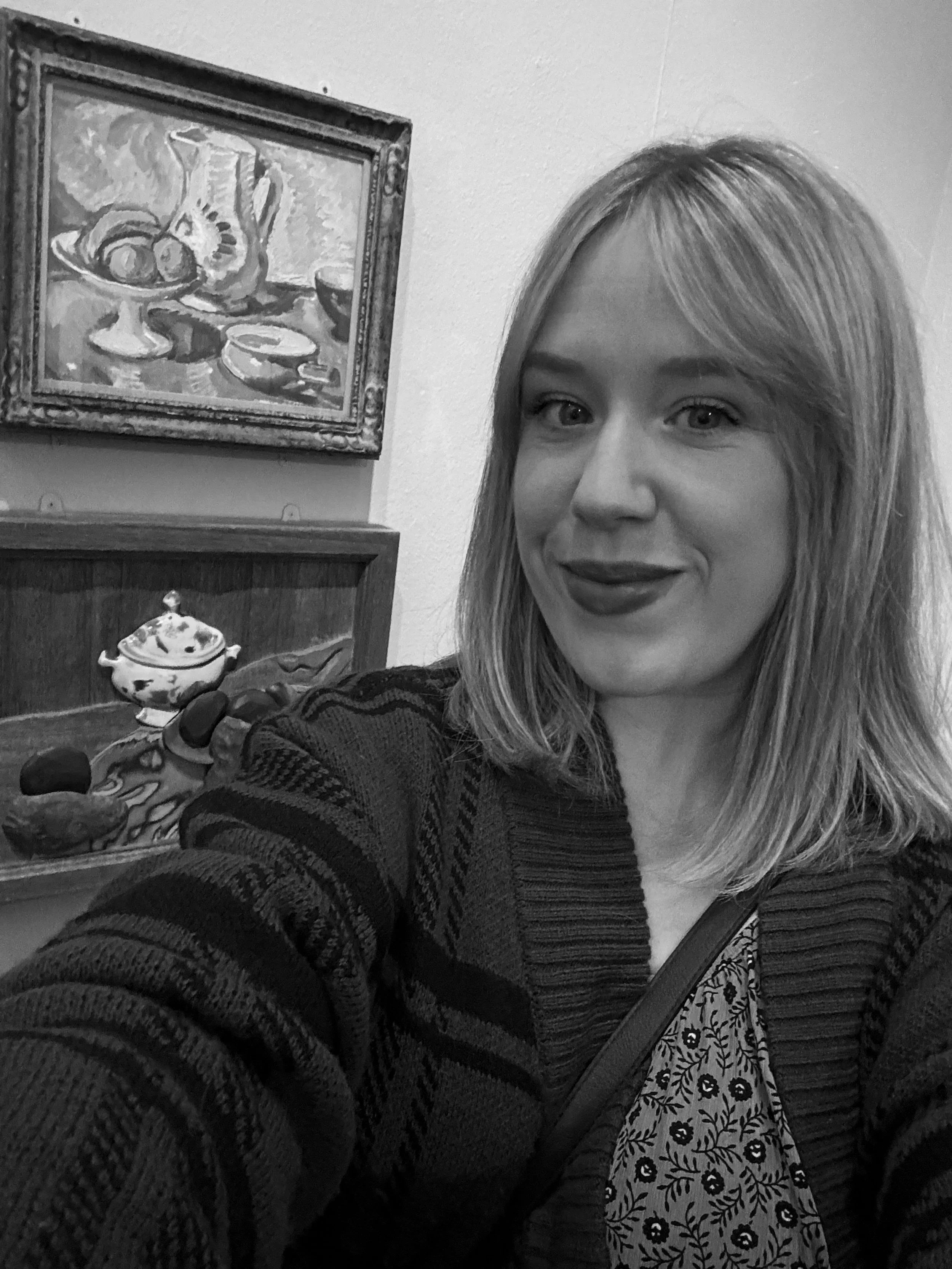
Me, standing beside a beautiful still life by S.J. Peploe (1871 - 1935)
There’s a lot more Peploe to come…
Earlier this month I had the privilege of experiencing a private tour of the 100th anniversary exhibition at Kirkcaldy Galleries & Museum. Invited through my membership with Kirkcaldy Art Club, I had expected to join a small group, but it turned out I was the only attendee. This meant a one-on-one tour with one of the gallery’s curators. Representing the Art Club in this way was a rare and special opportunity.
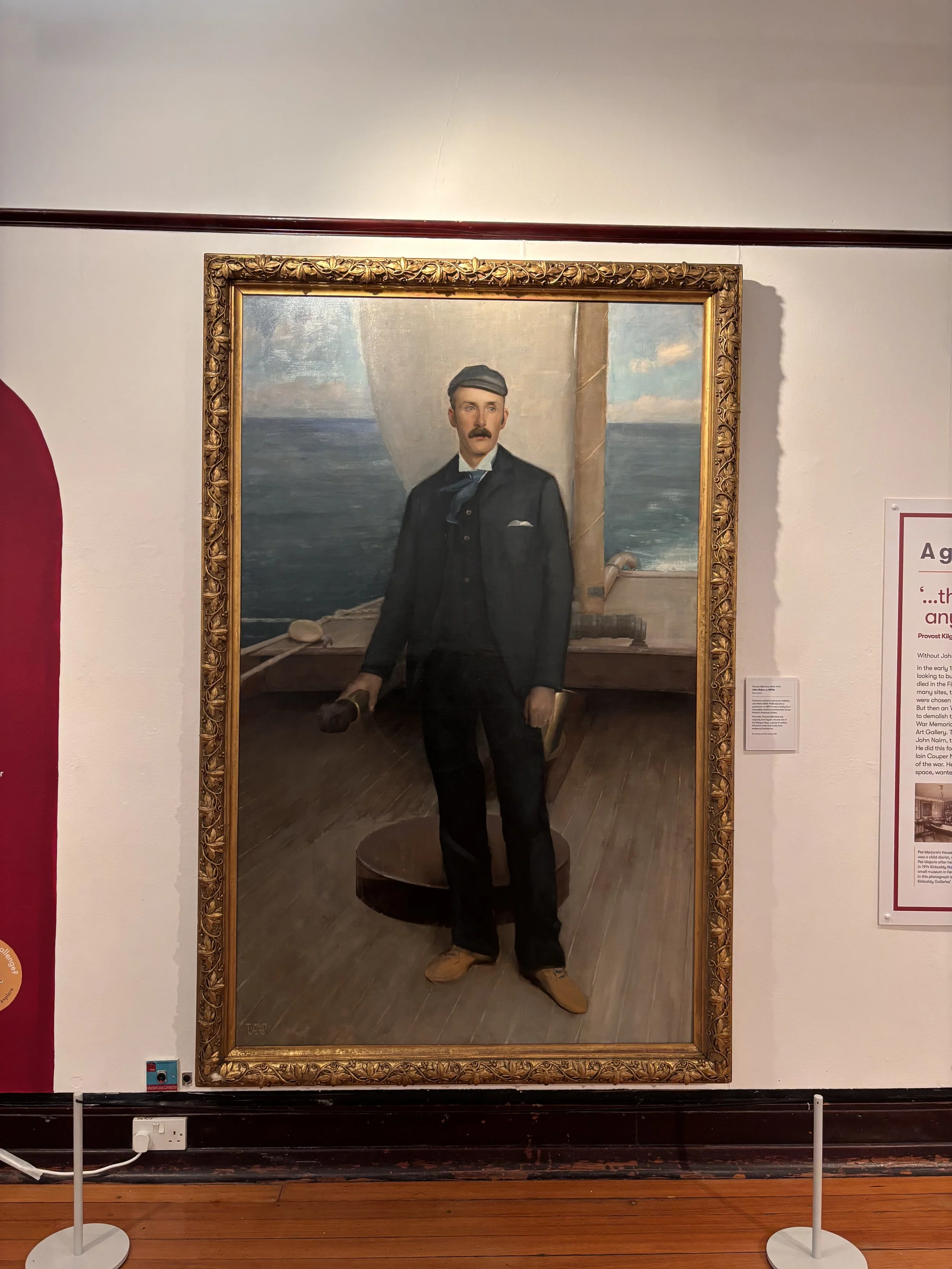
John Nairn (1853 - 1928)
Painted by one of the Glasgow Boys, Thomas Millie Dow who was originally from Dysart. Donated by the Nairn family.
A Heritage Site Built from Passion and Legacy
Kirkcaldy Galleries & Museum exists today thanks to John Nairn of the Nairn family, whose industrial work in linoleum is part of the town’s history. Nairn was also a dedicated art collector, and his vision and funding led to the creation of the galleries in 1925 as a memorial following the First World War. Nairn sadly lost his son only weeks before the end on the war. He contributed works from his own collection to establish the galleries’ early exhibitions. On the wall in the first room is a quote from Nairn that says the Galleries/Museum was ‘gifted in the hope that it would stimulate other public-spirited acts’. A century later, the galleries continue to be a cultural anchor in the town. I highly recommend every Fifer to visit at least once.
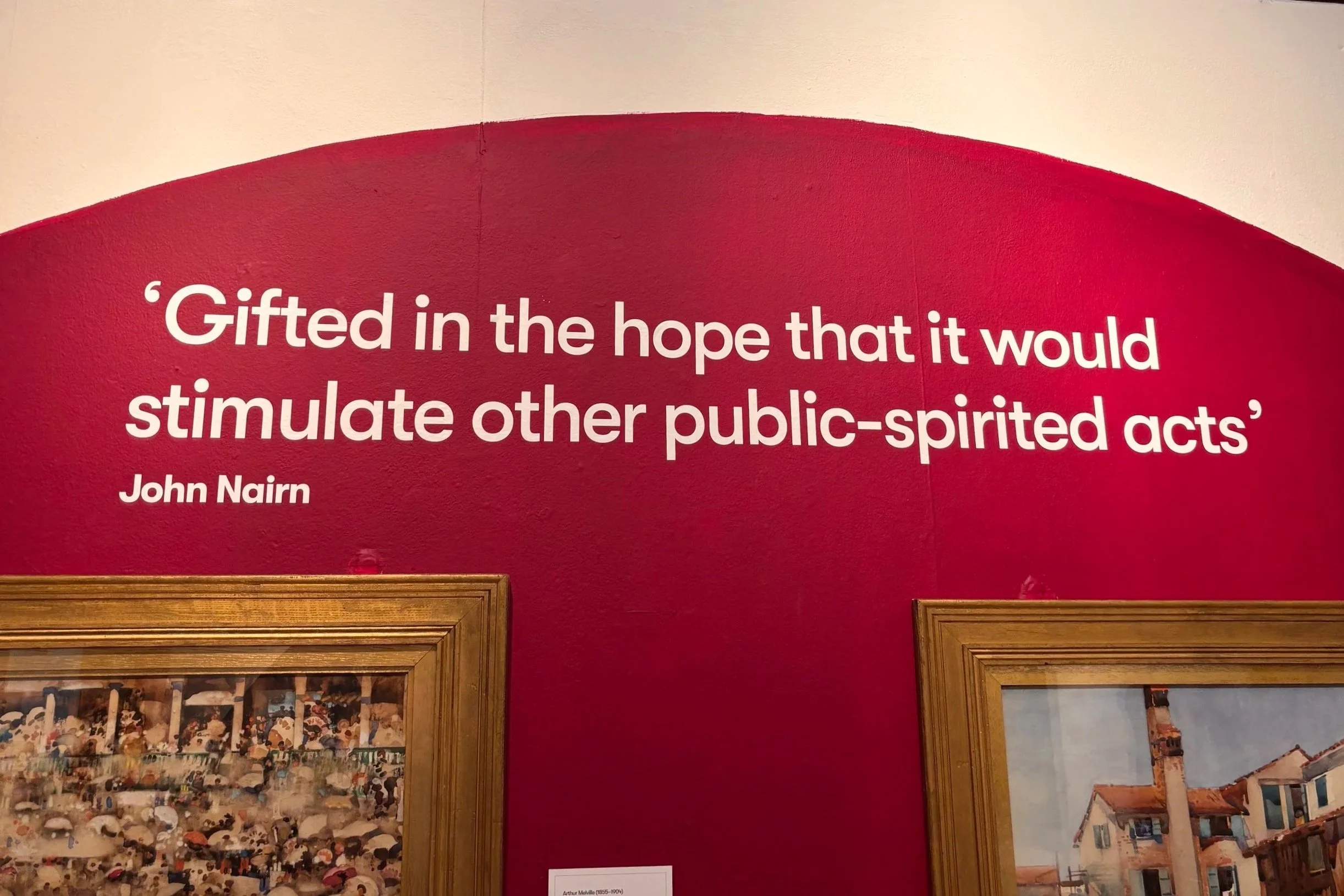
…something to keep in mind.
The galleries are one of only three venues in Fife where works from the Fife Collection are displayed, though the full collection is preserved in Glenrothes. Its ongoing relevance underscores the enduring impact of Nairn’s legacy and the importance of local galleries in sustaining artistic culture.
Re-thinking What Is Considered “Art”
During the tour, the curator explained that the galleries are actively working to increase representation of female artists in the collection, a development I find particularly encouraging. Art history has long favoured male voices and perspectives, and it was reassuring to hear the galleries are addressing this imbalance. At the same time, she highlighted that the galleries rely heavily on donations to grow their collection. This means that acquisition patterns often reflect the tastes of traditional collectors, who tend to prioritise oil painting, sculpture and drawing over other media. As you can imagine, this was a bit of a downer for me personally.
This became particularly evident when we encountered a collaborative textile banner created by The Hive in Kirkcaldy and local artist, Claire Christie. The Hive is a local LGBTQ+ community space located on Whytescauseway. Initially passed over, the curator returned to discuss it, acknowledging its emotional significance while noting that it was not regarded at the same level as other works. This highlighted the ongoing hierarchy that places certain media, such as textiles and digital art, beneath traditional forms in terms of perceived value.
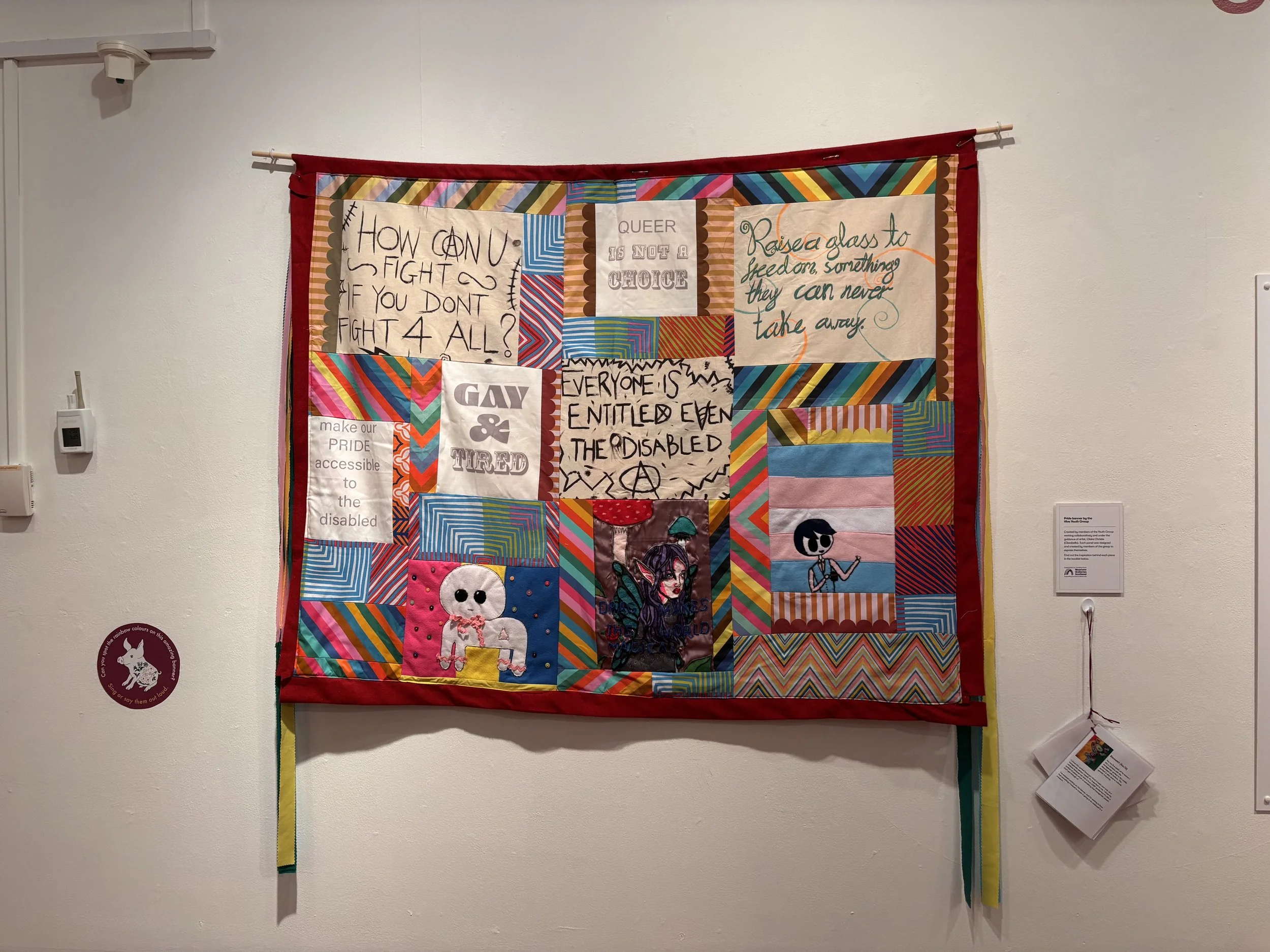
Created by members of the Youth Group working collaboratively and under the guidance of artist, Claire Christie (Clarabella).
The Hive banner itself was inspired by a previous exhibition on Fife’s coal mining heritage and immediately brought to mind the film Pride, based on the true story of LGBTQ+ activists supporting striking miners in the 1980s during Margaret Thatcher’s administration. The work carries a depth of social history, activism and collective memory, demonstrating that medium alone does not determine the importance or impact of an artwork.
This moment reinforced my own artistic priorities. I am inspired to create a large-scale quilted wall hanging or banner that integrates my digital design work with handcrafted textile techniques. I aim to produce a piece that communicates conceptually and visually as fine art, challenging outdated distinctions between craft, digital media and traditional forms. For me, the value of art is in the story it tells, not the tools used to create it. If you have read any of my other blog posts you will know this about me, I am on a mission to demonstrate the value of digital and craft based art.
The Peploe Collection – A Moment of Artistic Connection
One of the highlights of the tour was the section devoted to S.J. Peploe, part of the Scottish Colourists. Fife holds the largest public collection of Peploe’s work, approximately 35 pieces, which allowed for a comprehensive view of his evolving style and colour palette. Peploe’s paintings were purchased for the Fife collection from John Blyth. Blyth also donated a generously huge collection of paintings (mostly Peploe’s) to the Galleries. For those of you who aren’t familiar with Blyth, his grandson is Michael Portillo (the train guy). My favourite Peploe painting on display is Roses, 1920s with its pink roses, oranges and apple arrangement.
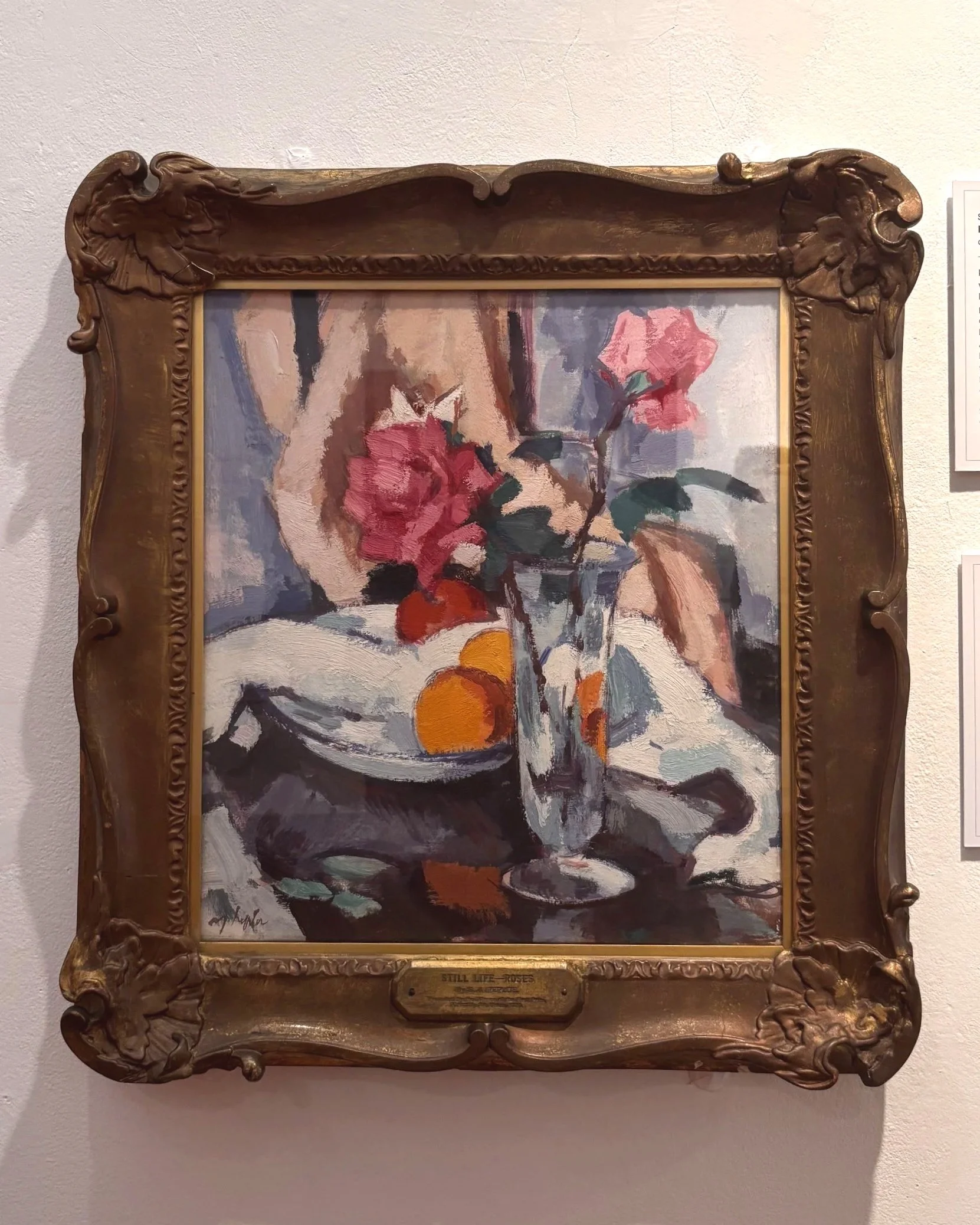
Roses, 1920s by Samuel John Peploe
I loved this painting so much I decided to purchase a Peploe art book to have a closer look at more of his paintings and to read about his life as an artist.
The exhibition also included works by artists who had visited the gallery and been inspired by its collection, including Jack Vettriano. It was a tangible reminder of how local galleries can influence creative practice across generations.
Peploe’s still life paintings have long influenced my work. His use of blues and violets, particularly in works created in Paris, conveys a subtle atmosphere reminiscent of early morning light over the city - soft, reflective, and meditative. I am considering creating a new Meditation Symphony inspired by Peploe, incorporating his palette into the layered, contemplative style of my series.
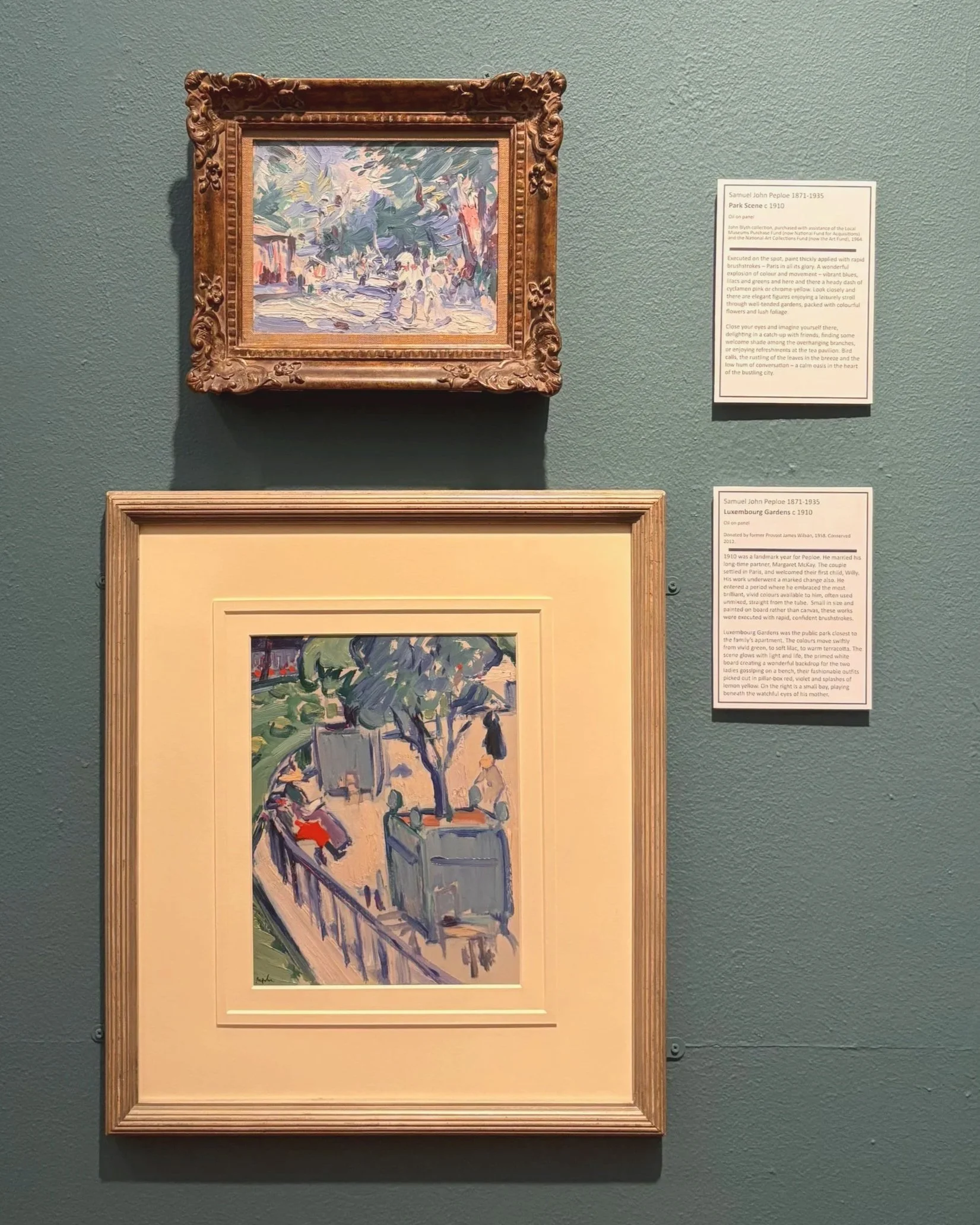
Peploe has captured that Parisian blue so beautifully here!
Familiar Faces and Local Talent
It was particularly rewarding to see the work of Dot Black, one of my tutors from Kirkcaldy Art Club, featured in the exhibition. Her sketch, Woman in Pink, was presented as a study for a larger final painting. A key detail in this sketch are the spiralling ribbons which add a sense of both movement and constraint. Seeing her contribution within the gallery reinforced the vitality of Fife’s artistic community and the ways in which local artists continue to shape its identity.
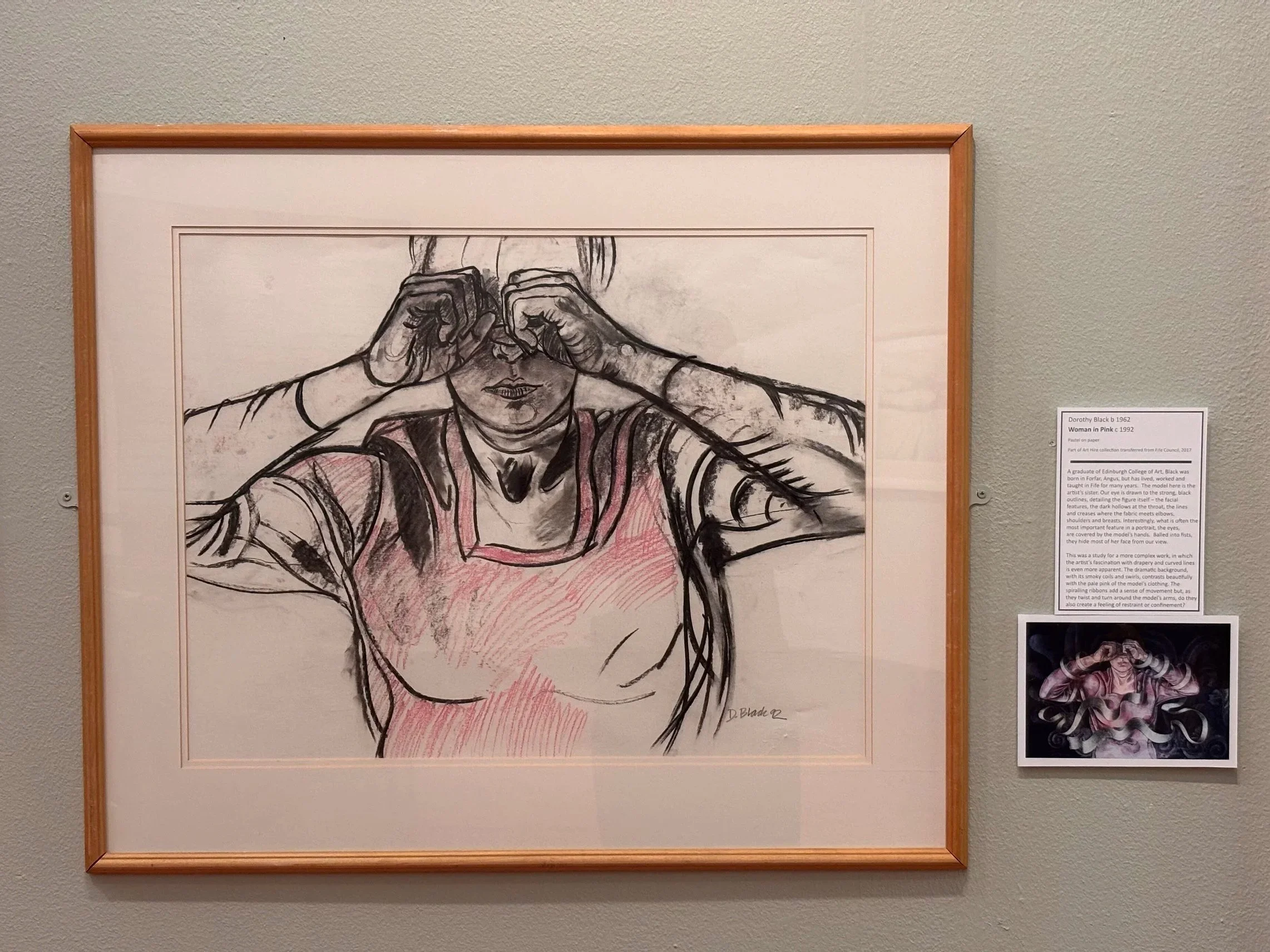
Woman In Pink by Dorothy Black.
Leaving Inspired
The tour was a reminder that the Kirkcaldy Galleries is more than a repository of artworks. It is a living institution shaped by donors, artists and community members, reflecting evolving tastes and priorities. The collection balances legacy and innovation, acknowledging the importance of inclusion, representation and storytelling across all media.
I left the galleries inspired not only by the works themselves, but by the broader creative dialogue they provoke. The experience affirmed my commitment to creating art that bridges digital and tactile practices, to honour storytelling, and to challenge the hierarchies that undervalue certain media. Kirkcaldy Galleries demonstrate that a century-old institution can still evolve, and that there is always room for new voices and new forms to contribute meaningfully to the artistic conversation.
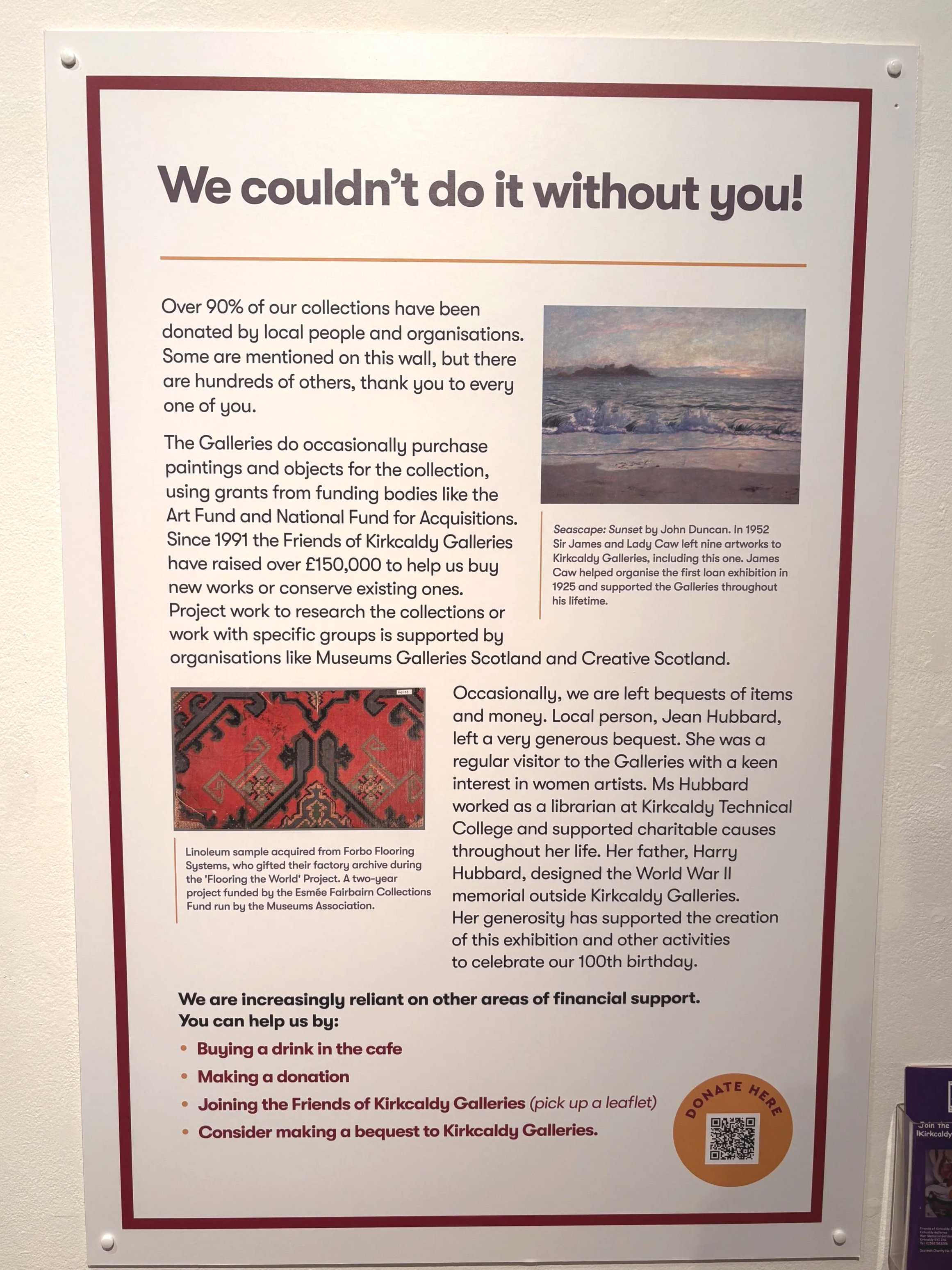
Before I left, I picked up a leaflet to take home to read. I have decided to join Friends of Kirkcaldy Galleries.