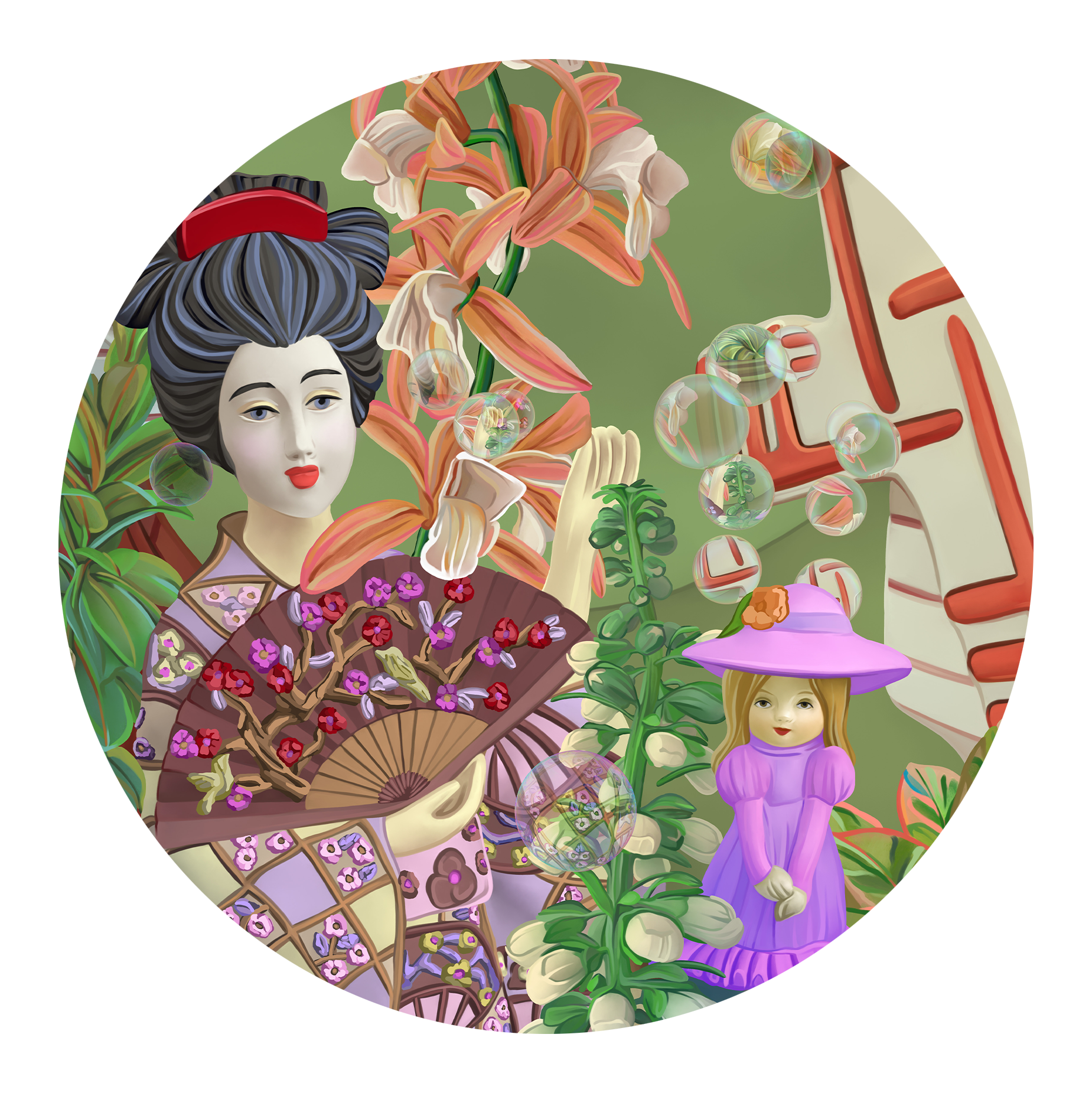
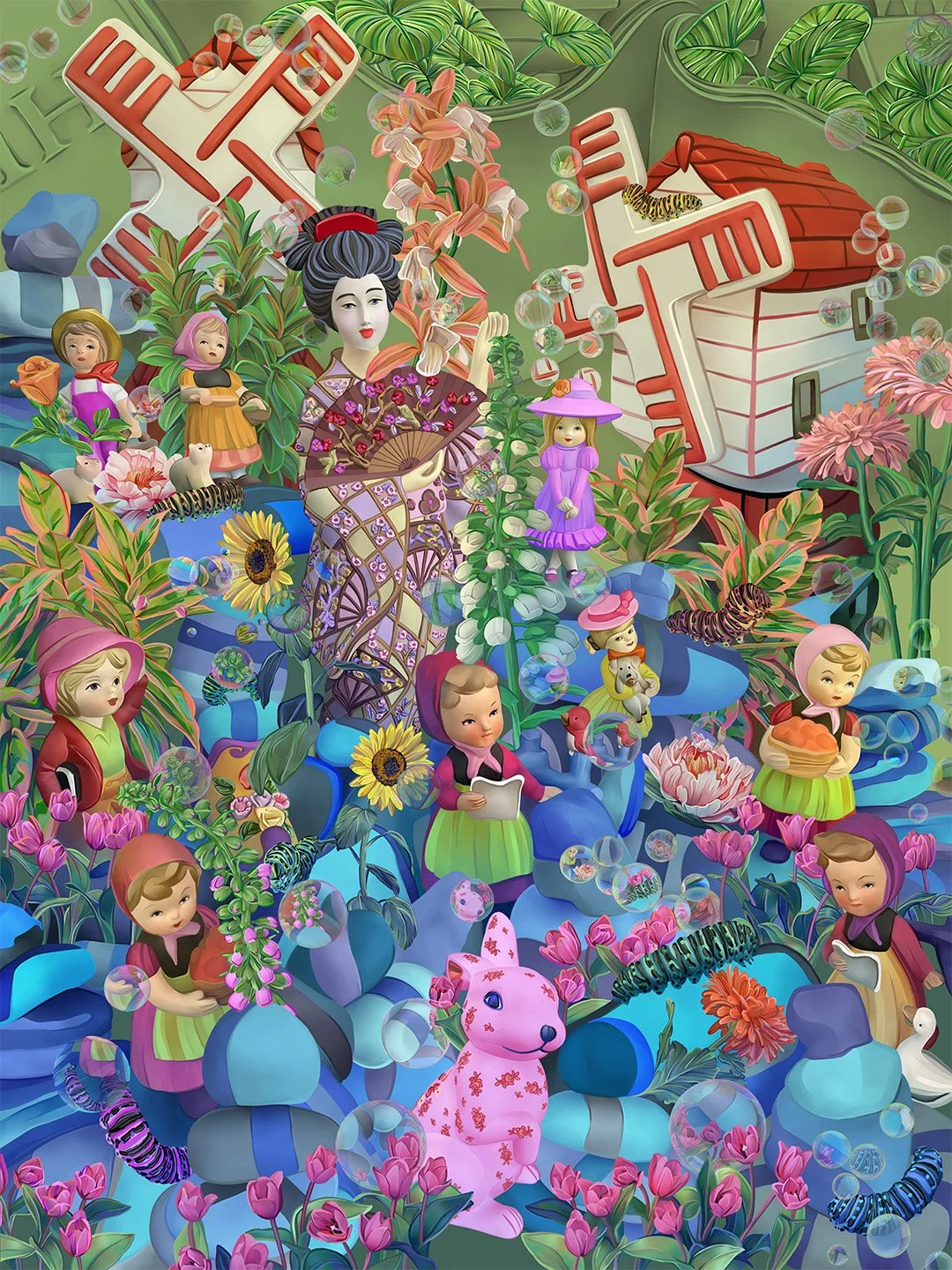
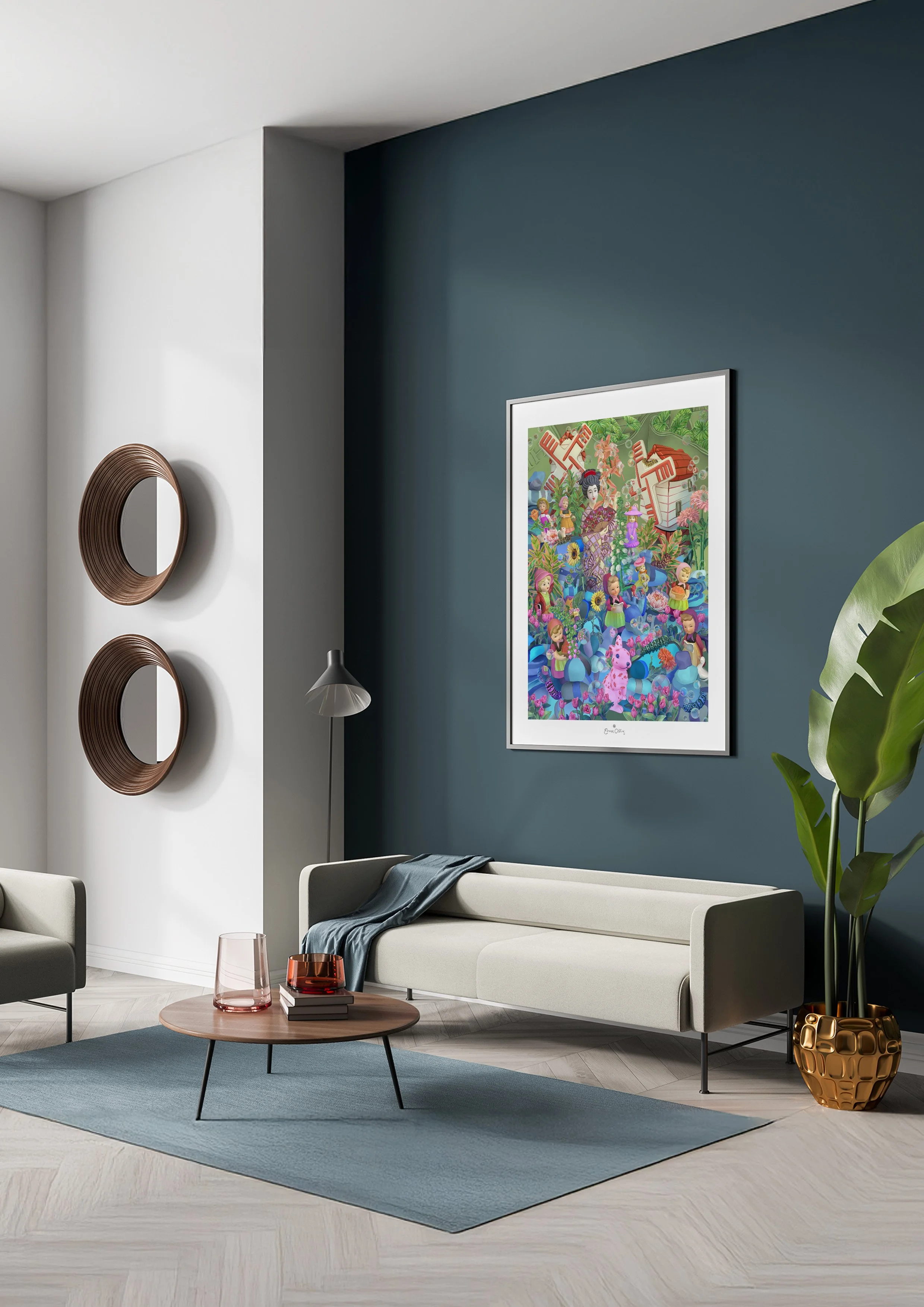
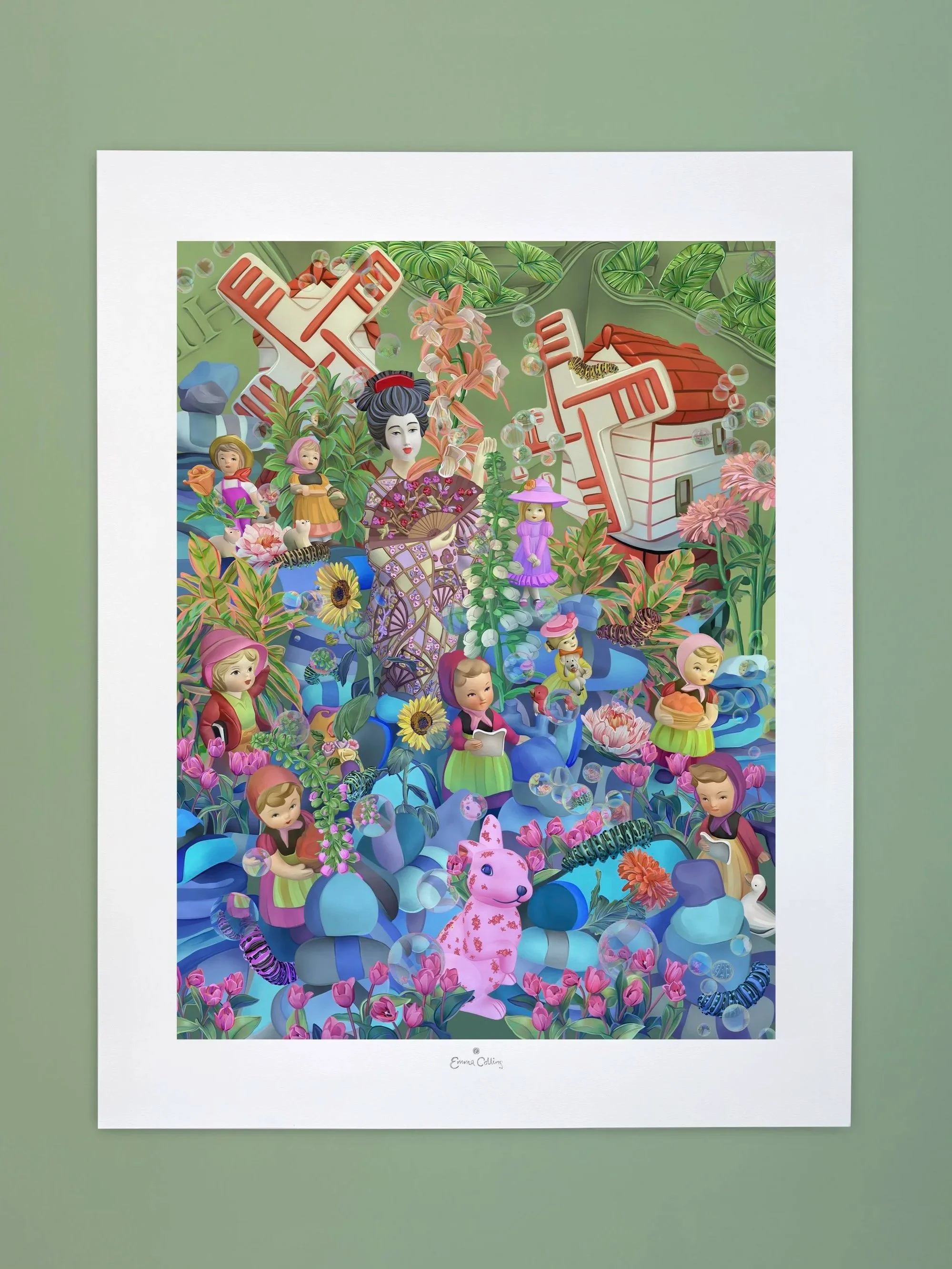
A central geisha symbolises lifelong creative practice, surrounded by children representing early imaginative play. Inspired by Japan’s floating world, the piece suggests we begin building inner creative sanctuaries from a young age to help us navigate reality.
Children of the Floating World
Ever since I first saw a pencil drawing my dad made of a Geisha, I’ve always had a romanticised image of them. Their iconic makeup, hair, and kimono left a lasting impression on me. Japanese art and culture have influenced entire art movements, especially Art Nouveau and the work of artists I admire, such as the Glasgow Four—especially Charles Rennie Mackintosh. As a Scot, I was introduced to their work from a young age, and it became part of my foundational understanding of art and design.
In 2024, I attended the Kimono: Kyoto to Catwalk exhibition at the V&A Dundee, which completely captivated me. As someone naturally drawn to ornamentation, storytelling, and decorative detail, I found it overwhelmingly inspiring and immersive.
This led me to explore the Japanese concept of ukiyo, or “the floating world.” Historically, it referred to the pleasure-seeking urban culture of Edo-period Japan (1600–1867), but in modern usage, ukiyo has evolved. It can describe a mindset that embraces living in the moment, detached from the troubles of life. This idea resonates deeply with my Inner Worlds theme and my personal relationship with escapism.
Children of the Floating World marks my first step into exploring this concept through art. For me (and perhaps for others) escapism began in childhood. I used to retreat into art whenever I was bored, afraid, or inspired. I escaped through Disney films, drawing, playing PlayStation, and later, the vast possibilities offered by the internet. Over time, though, some of these spaces began to feel hollow or isolating, impacting my mental health. This tension between refuge and disconnection is something I find compelling.
As technology continues to evolve—with virtual reality making it ever easier to retreat—I find myself reflecting on the cost of constant escape, especially amid today’s social, political, and environmental crises. I also experience chronic pain due to endometriosis, which at times makes it necessary to escape into art for the sake of my mental wellbeing.
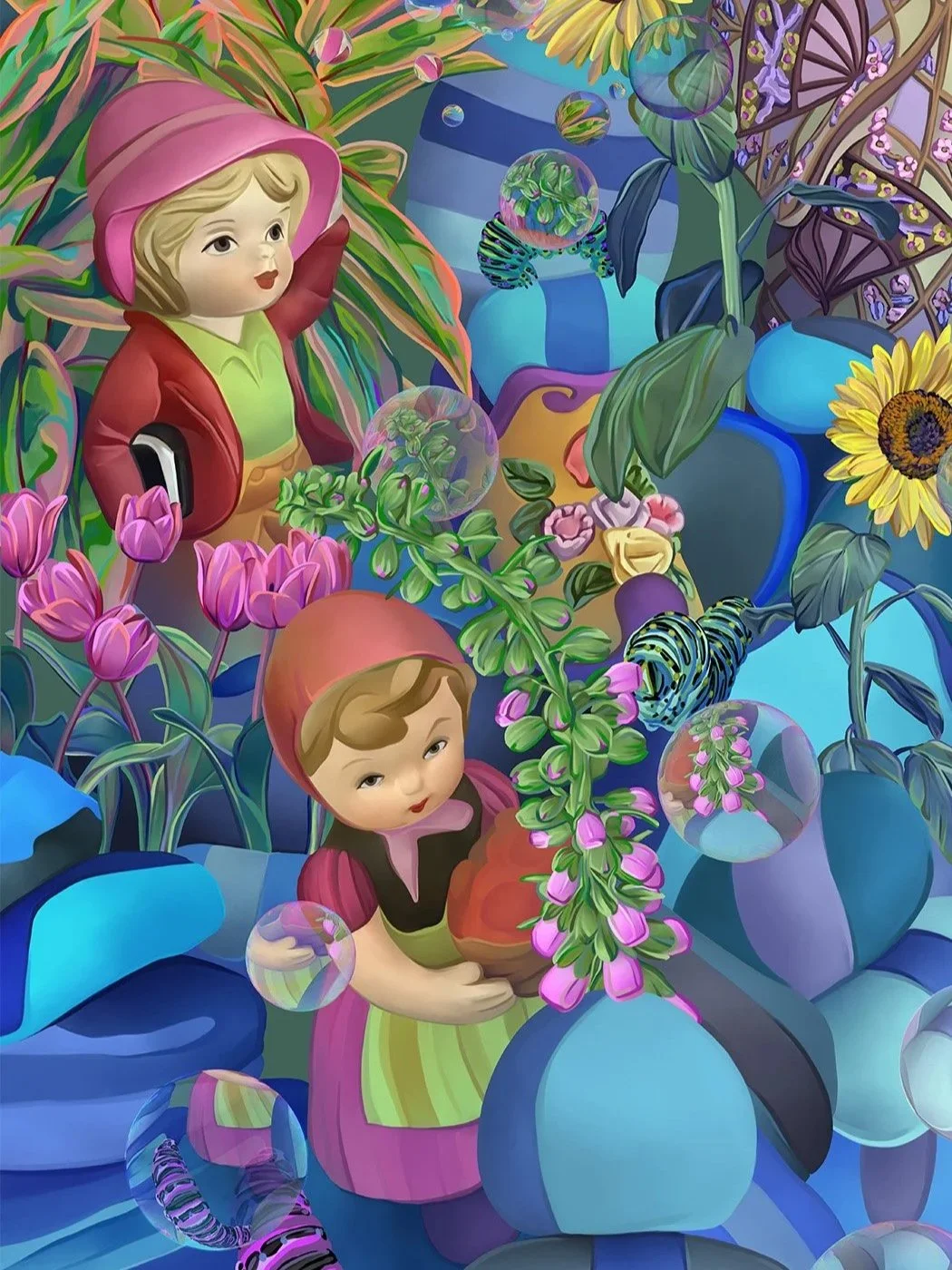
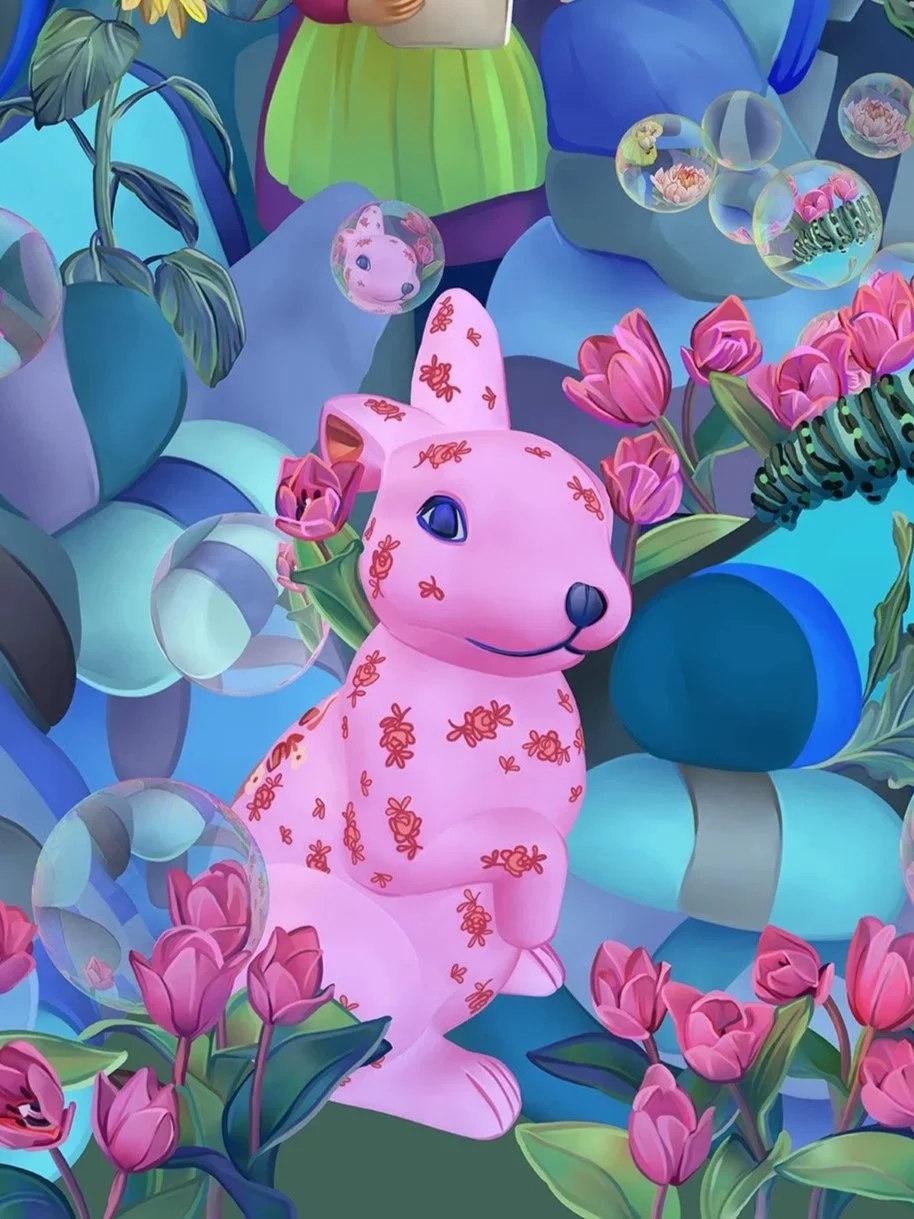
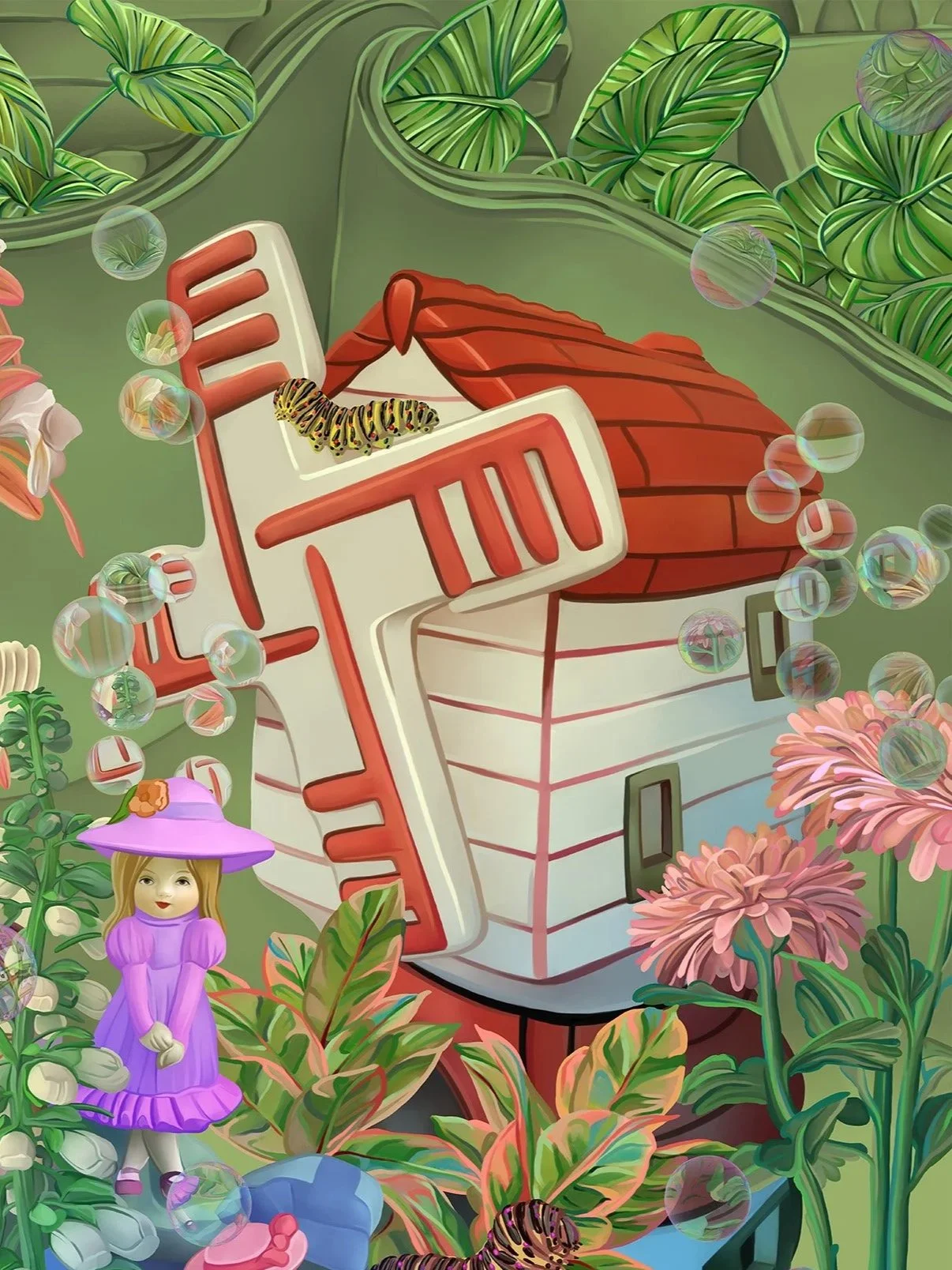
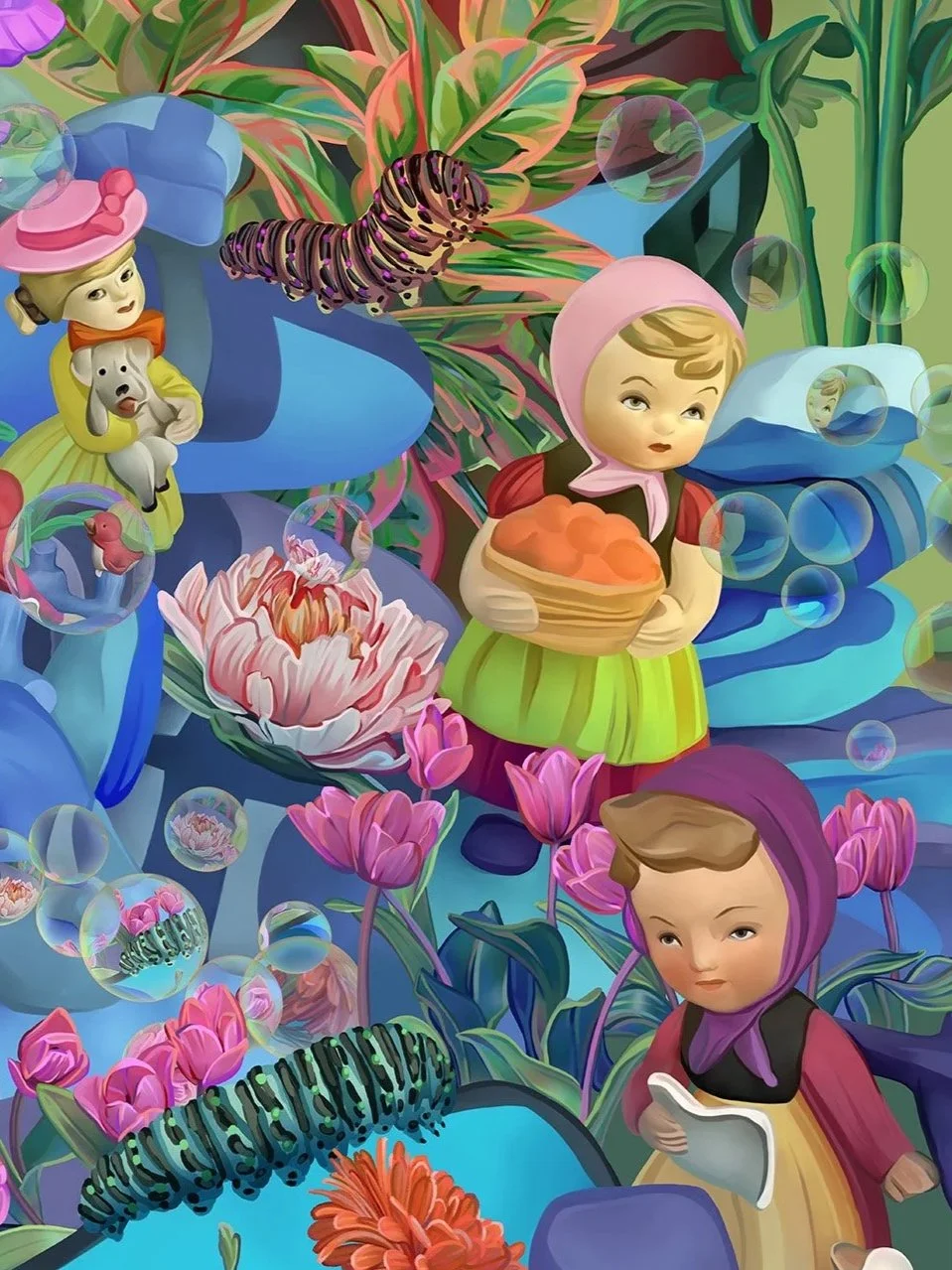
In this piece, a geisha stands at the centre, surrounded by children and bubbles. Two large windmills turn in the background. Like the other works in this collection, the artwork is painted in portrait format to emphasise a sense of closeness and intensity which is especially present here. Characters at the top of the composition are bathed in sunlight, while those lower down recede into shadow. This contrast mirrors the duality at the heart of ukiyo—a world of fleeting beauty and hidden sorrow.


Watch me unbox Children of the Floating World!
Unboxing Children of the Floating World is like opening a small portal to another realm. Inspired by the Japanese concept of the floating world (ukiyo), the piece invites you to drift between reality and dream — a place of fleeting pleasures, creative immersion, and quiet escape.