
Finding My Own Petit Trianon
The Marie Antoinette Style exhibition at the V&A South Kensington finishes this month on the 22nd. It’s completely sold out. I haven’t been able to get down to London to see it and I have a major case of FOMO.
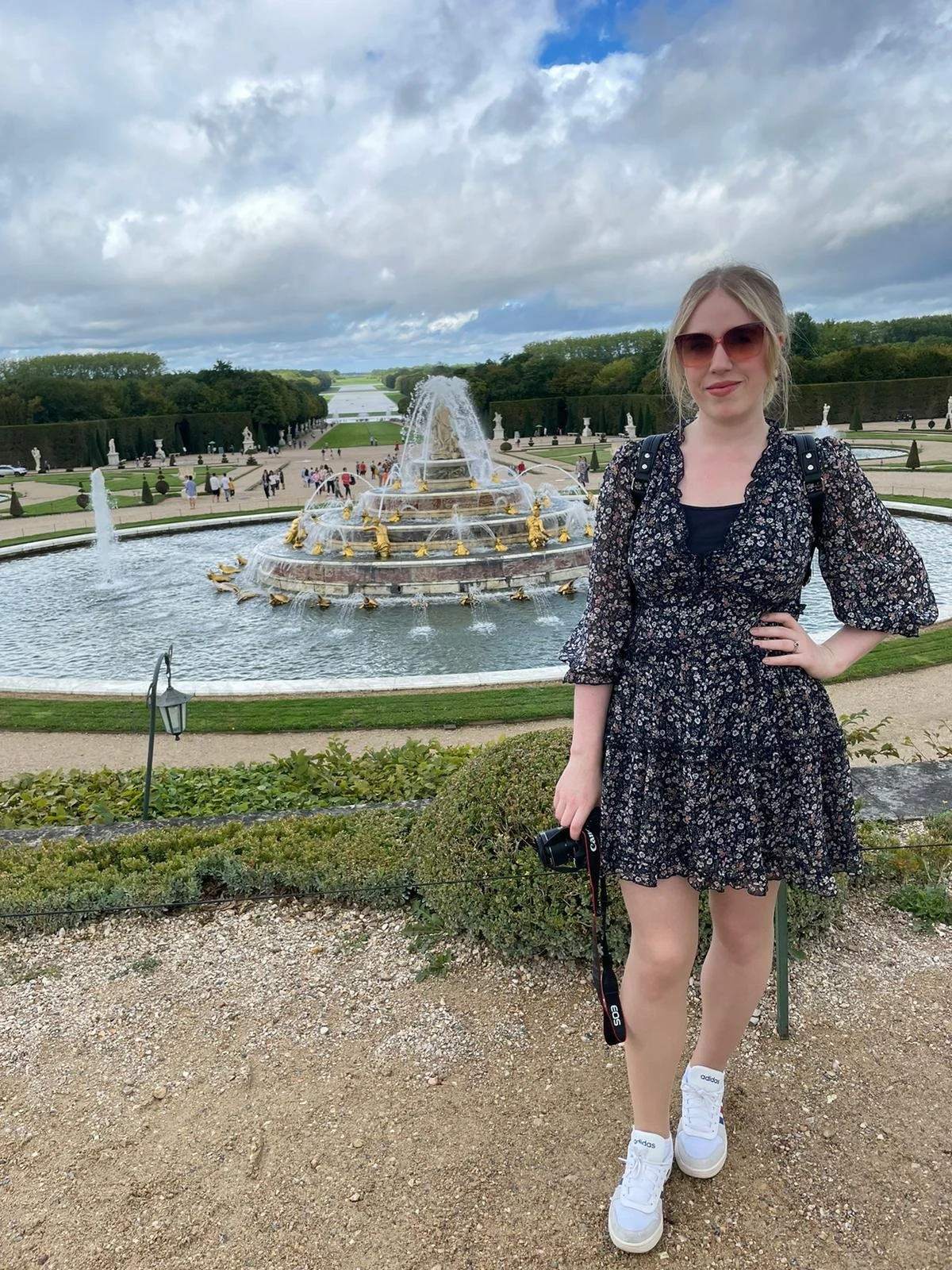
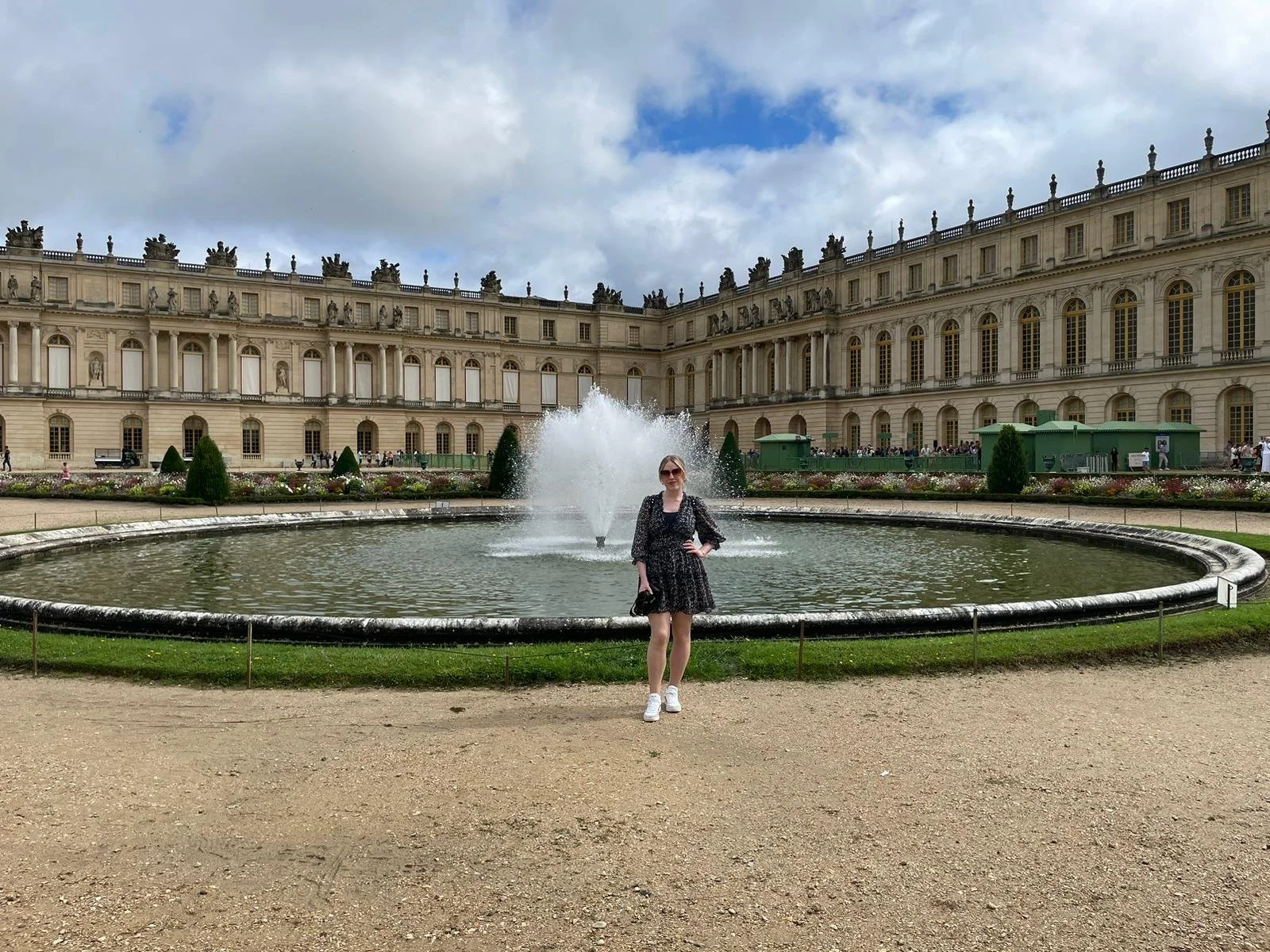
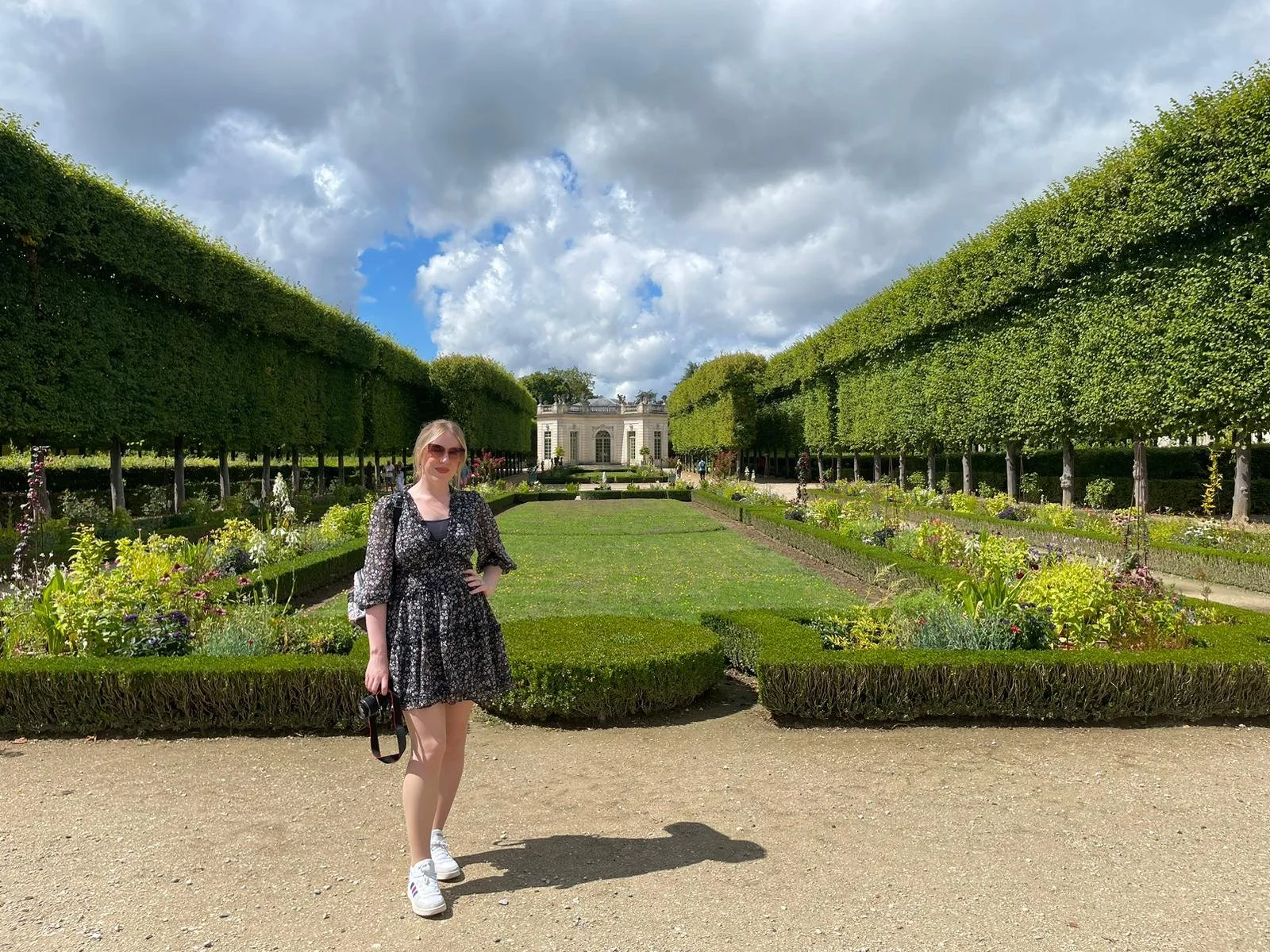
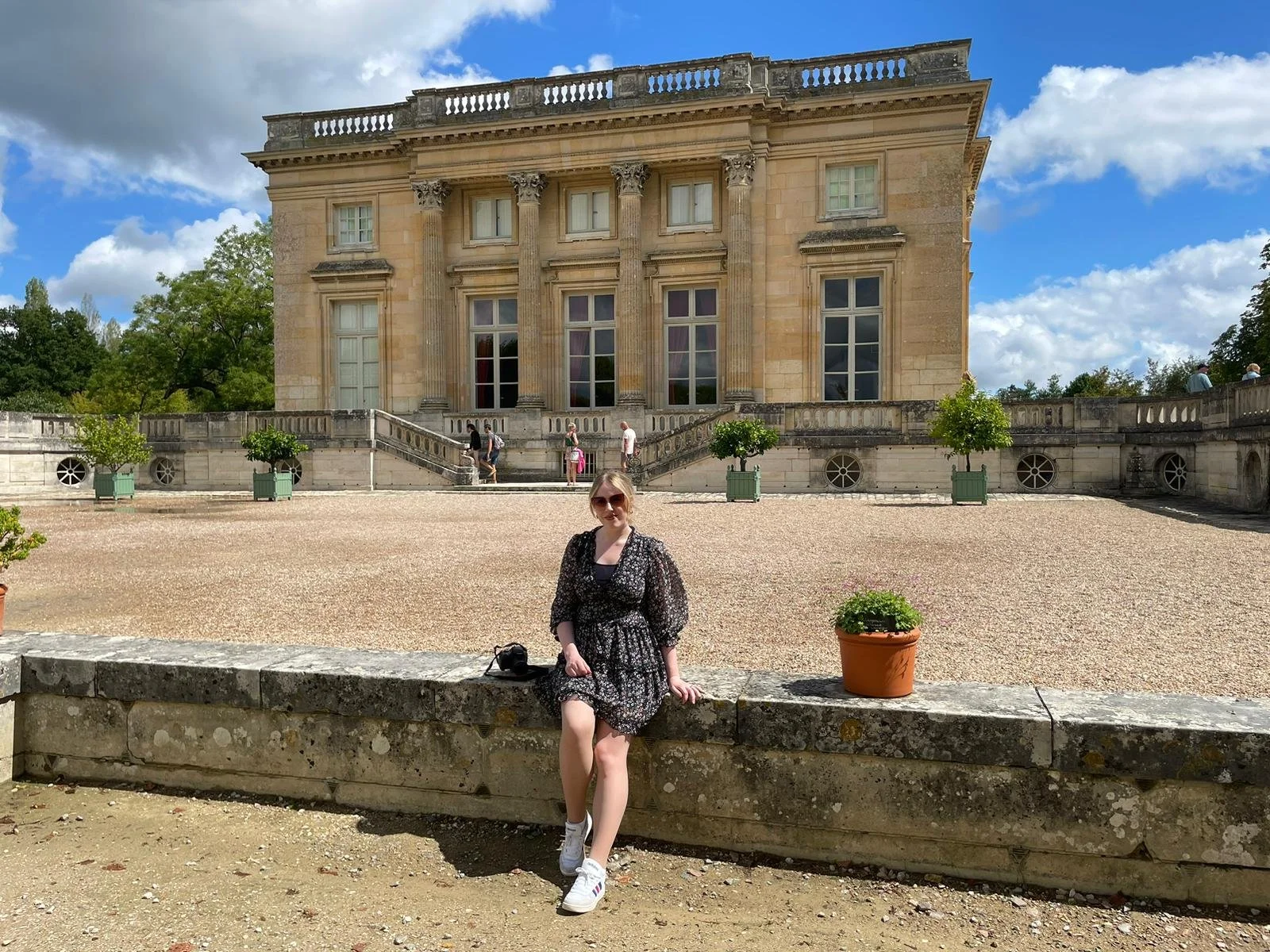
I do feel slightly cheered up though, because I was lucky enough to visit the Palace of Versailles in August 2023, including Marie’s Petit Trianon. As gobsmackingly beautiful as the Palace is, I can completely understand why she chose to spend so much time at the Petit Trianon. The Palace is overwhelming, to say the least. I did everything I could not to walk around with my mouth constantly hanging open while we were there.
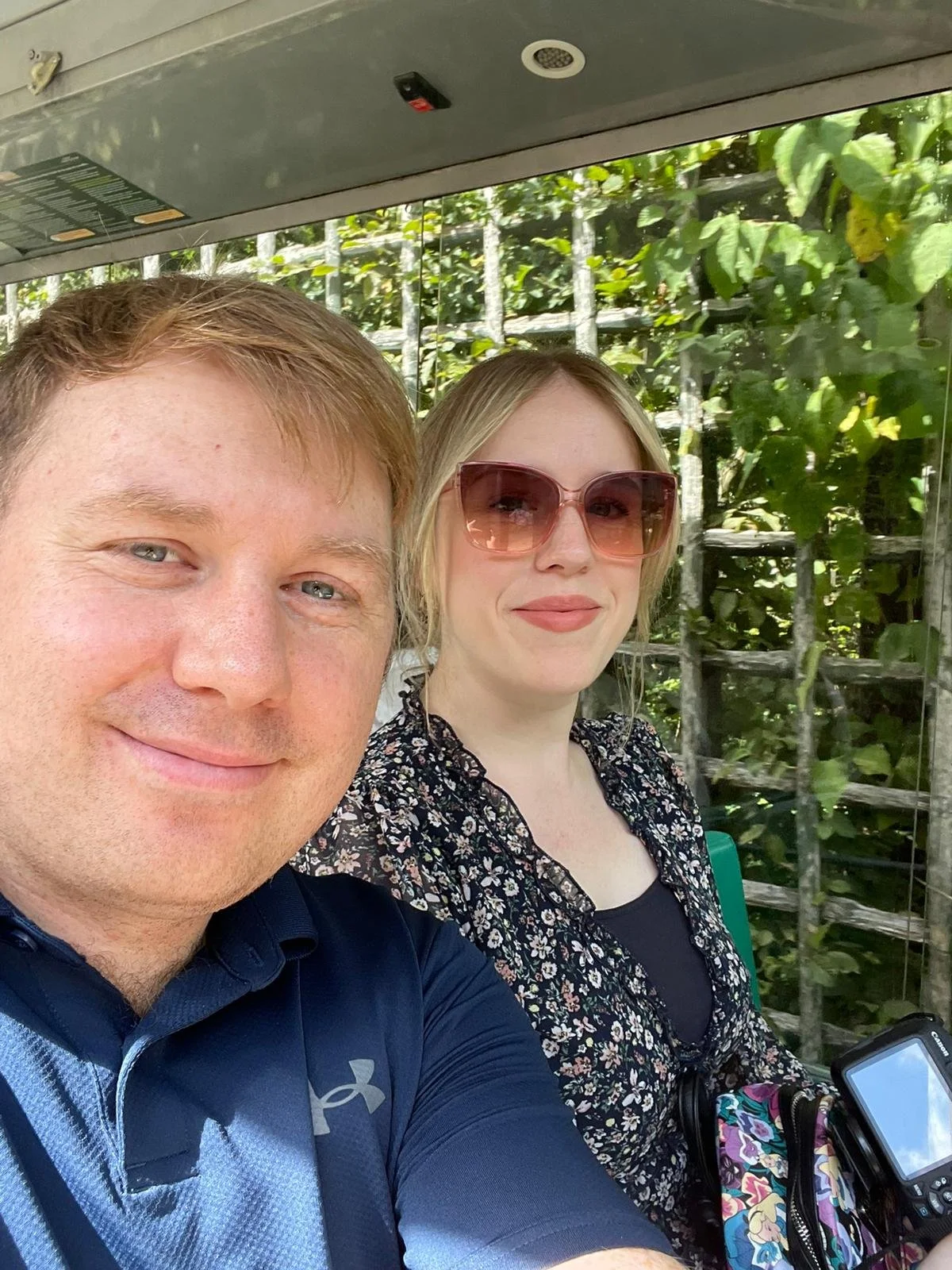
The gardens are exceptionally vast. We tried our best to see as much as possible in the single day we had. In the morning we used the on-site transport to travel from the Palace to the Petit Trianon as it was simply too far to walk in 30-degree heat. We also wanted to save our feet for exploring the Palace later that afternoon.
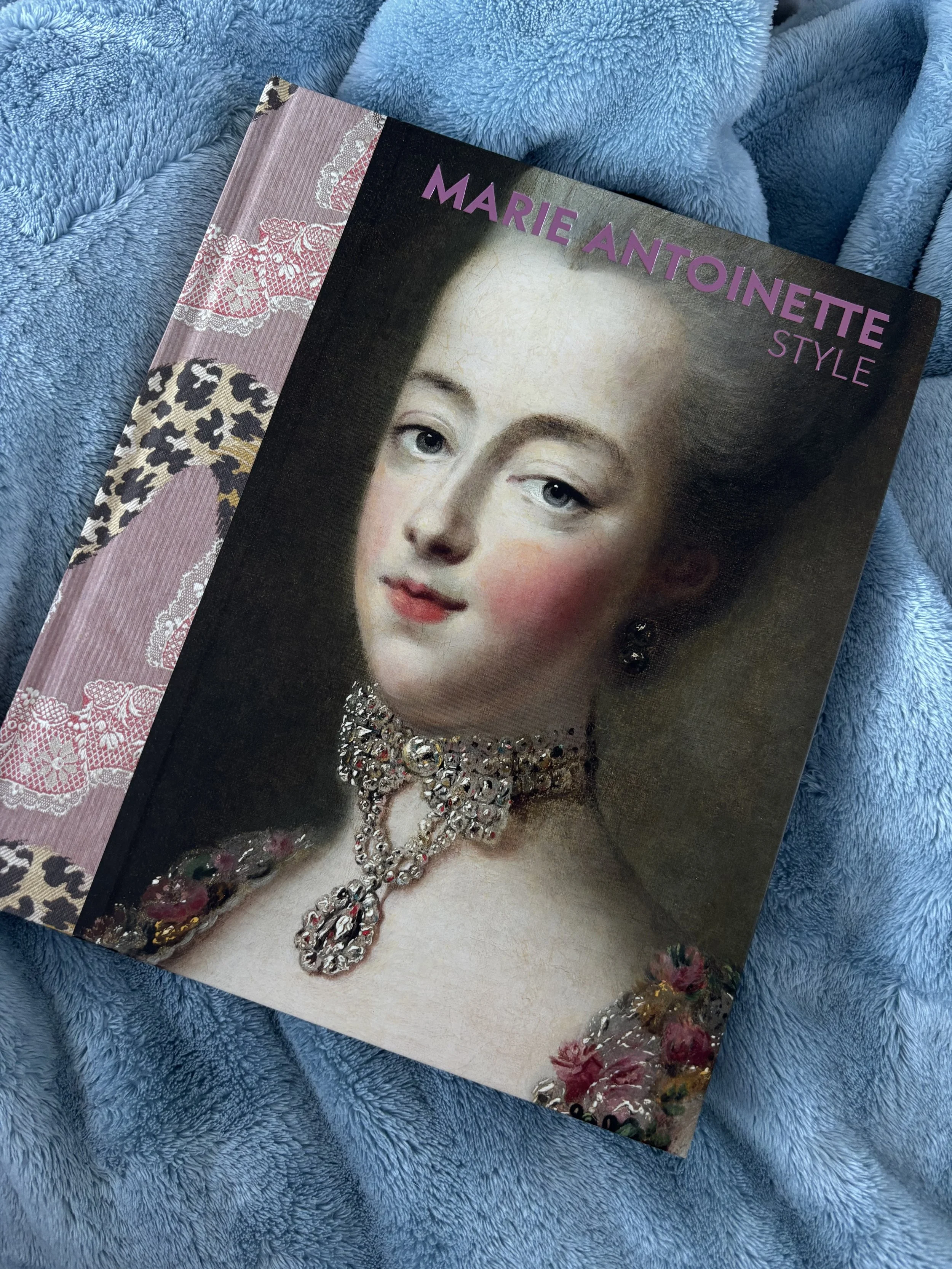
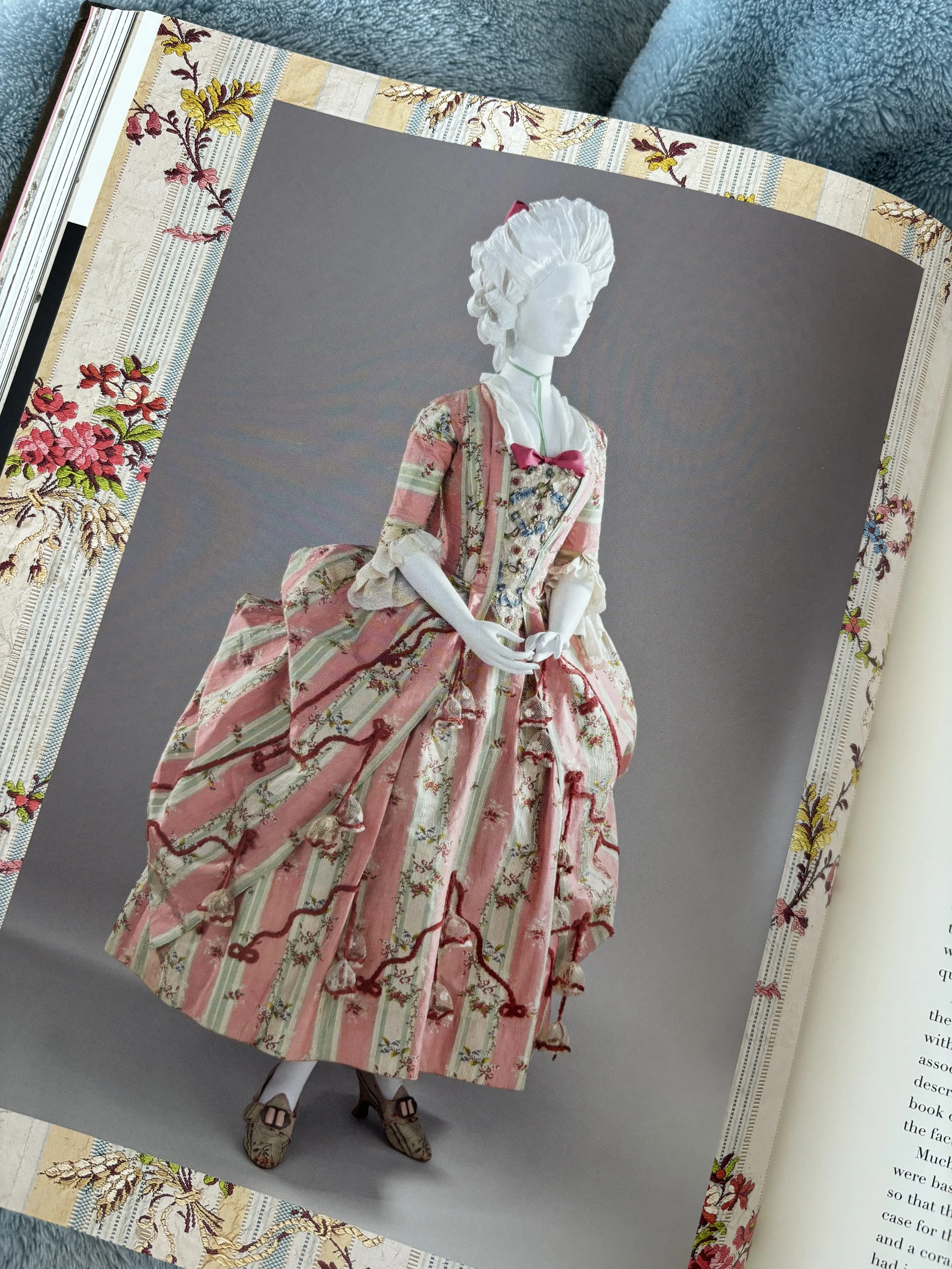
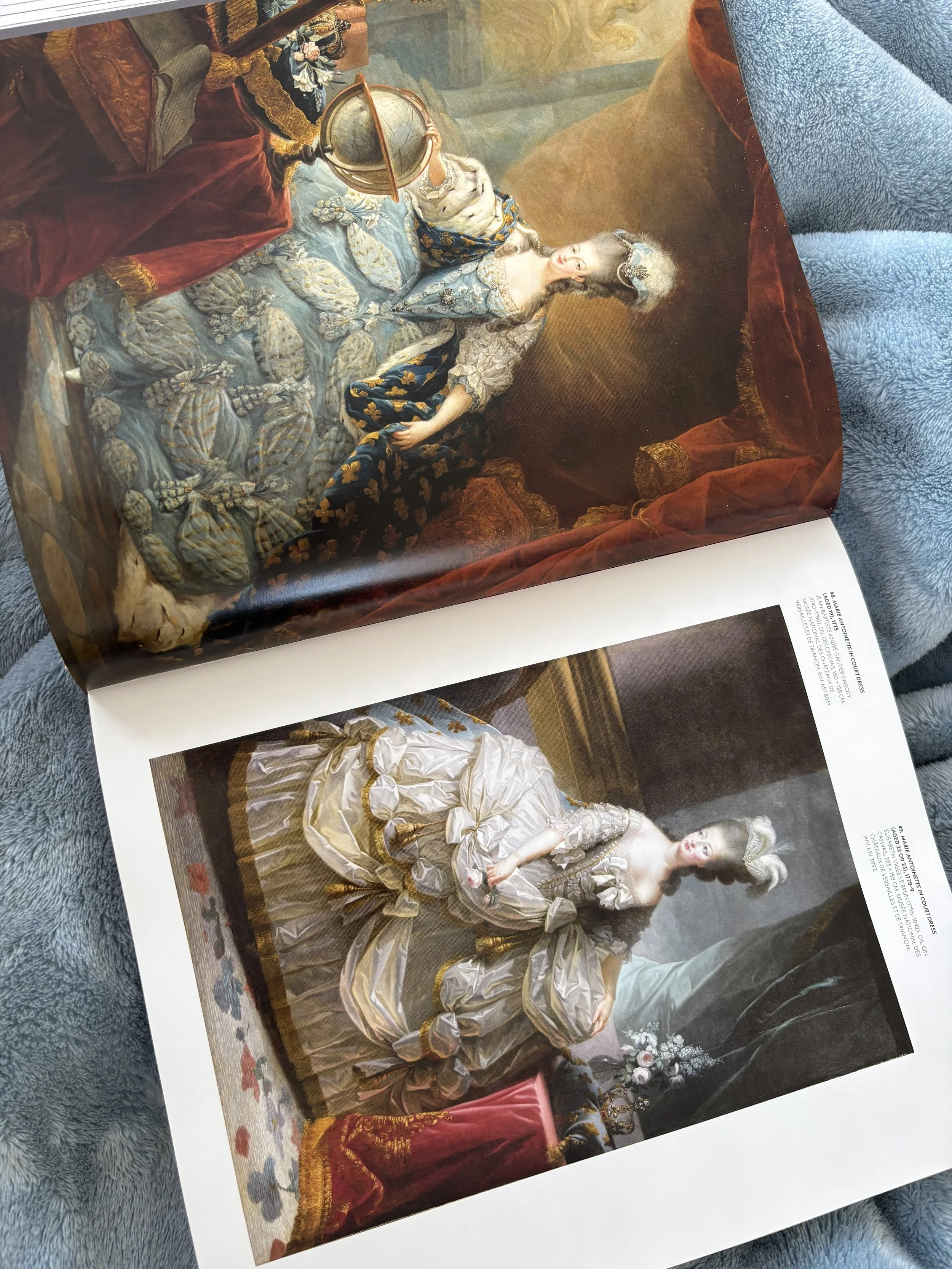
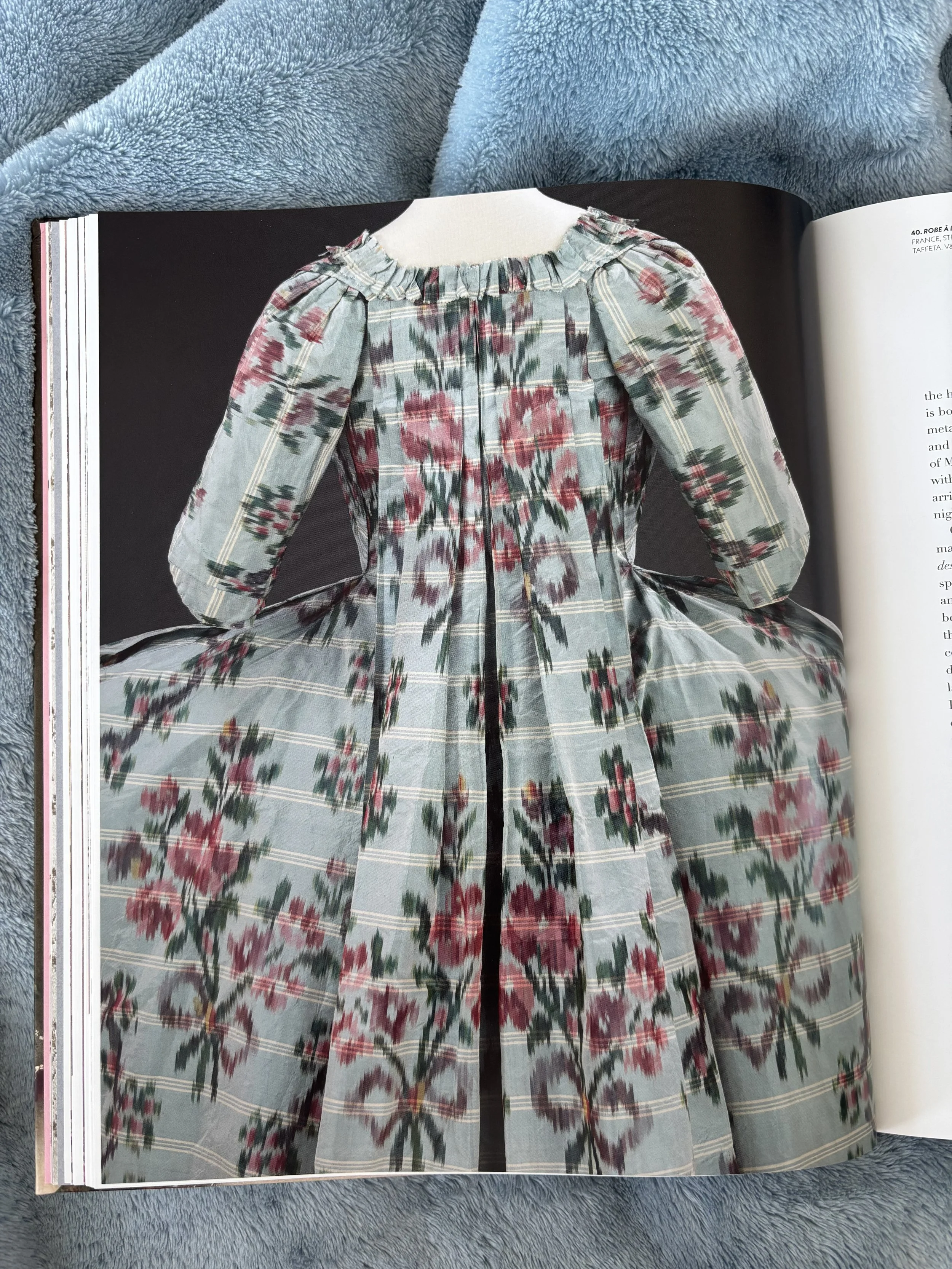
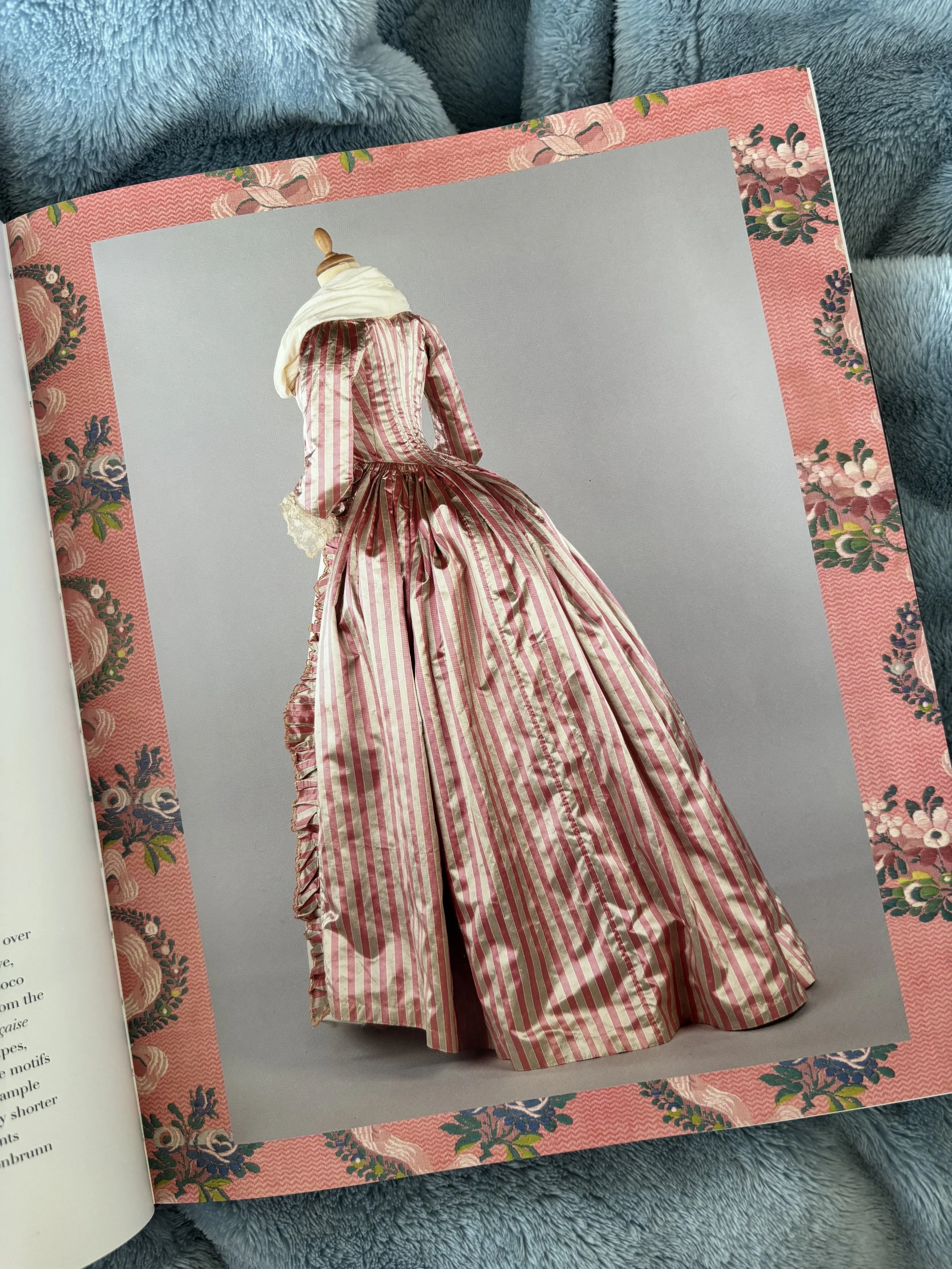
My copy of the exhibition catalog!
Written by Sarah Grant. The book is broken into two parts.
Marie Antoinette: The Origins of a Style Icon 1700 - 1800
Marie Antoinette: Memorialised & Restyled 1800 - Today
In this blog post I want to share my experience of visiting the Petit Trianon, Marie’s bedroom at Versailles, and the exhibition catalogue I bought from the V&A show (even though I couldn’t attend). I’ll include some photographs from our trip and some favourite pages from the catalogue. I’ll also talk about how Marie Antoinette and my day visit to Versailles have influenced my artwork and continue to inspire projects I have in the pipeline.
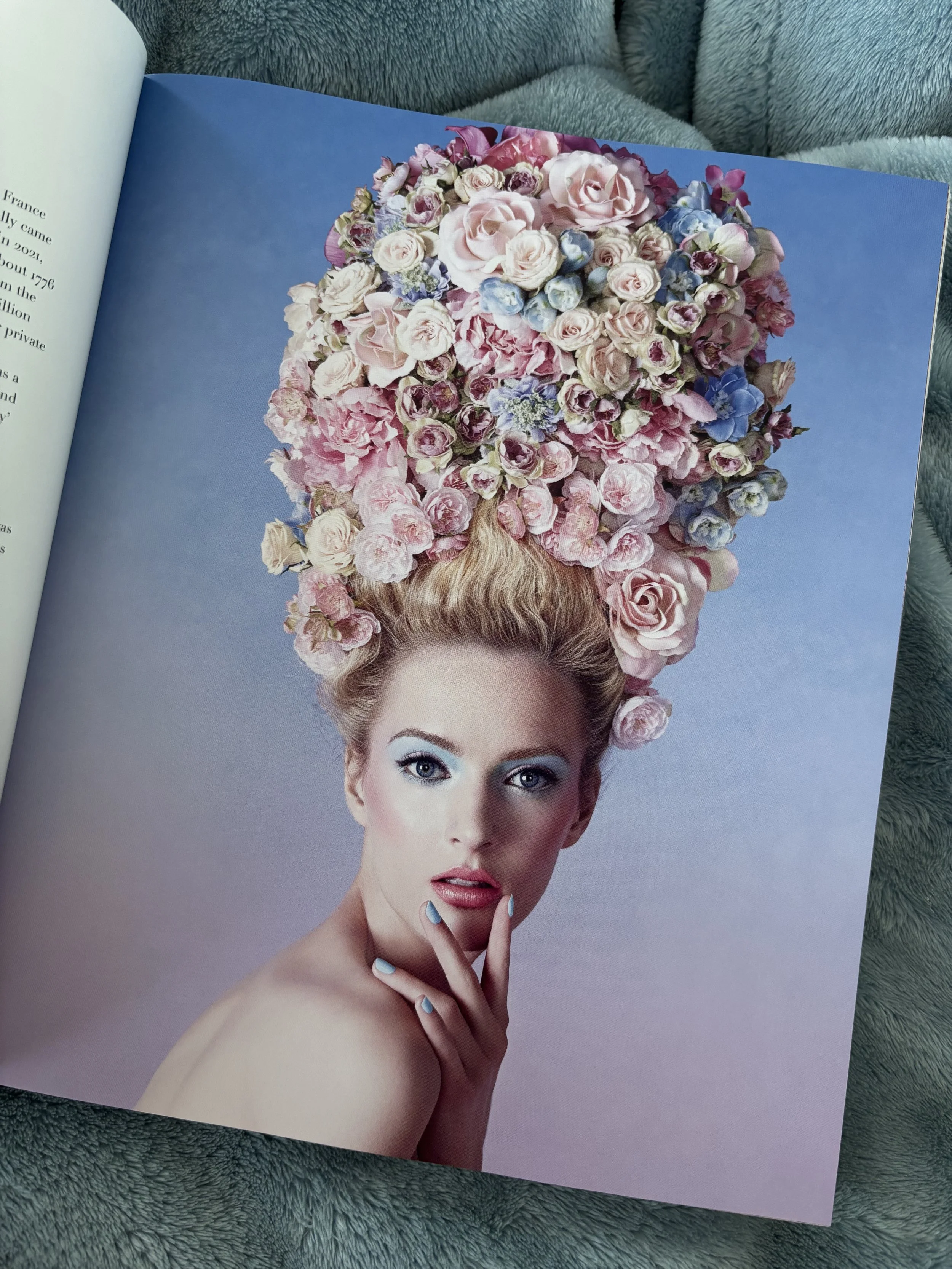
Expect plenty of images. Marie Antoinette’s style has shaped my taste in pattern, decoration and ornamentation.
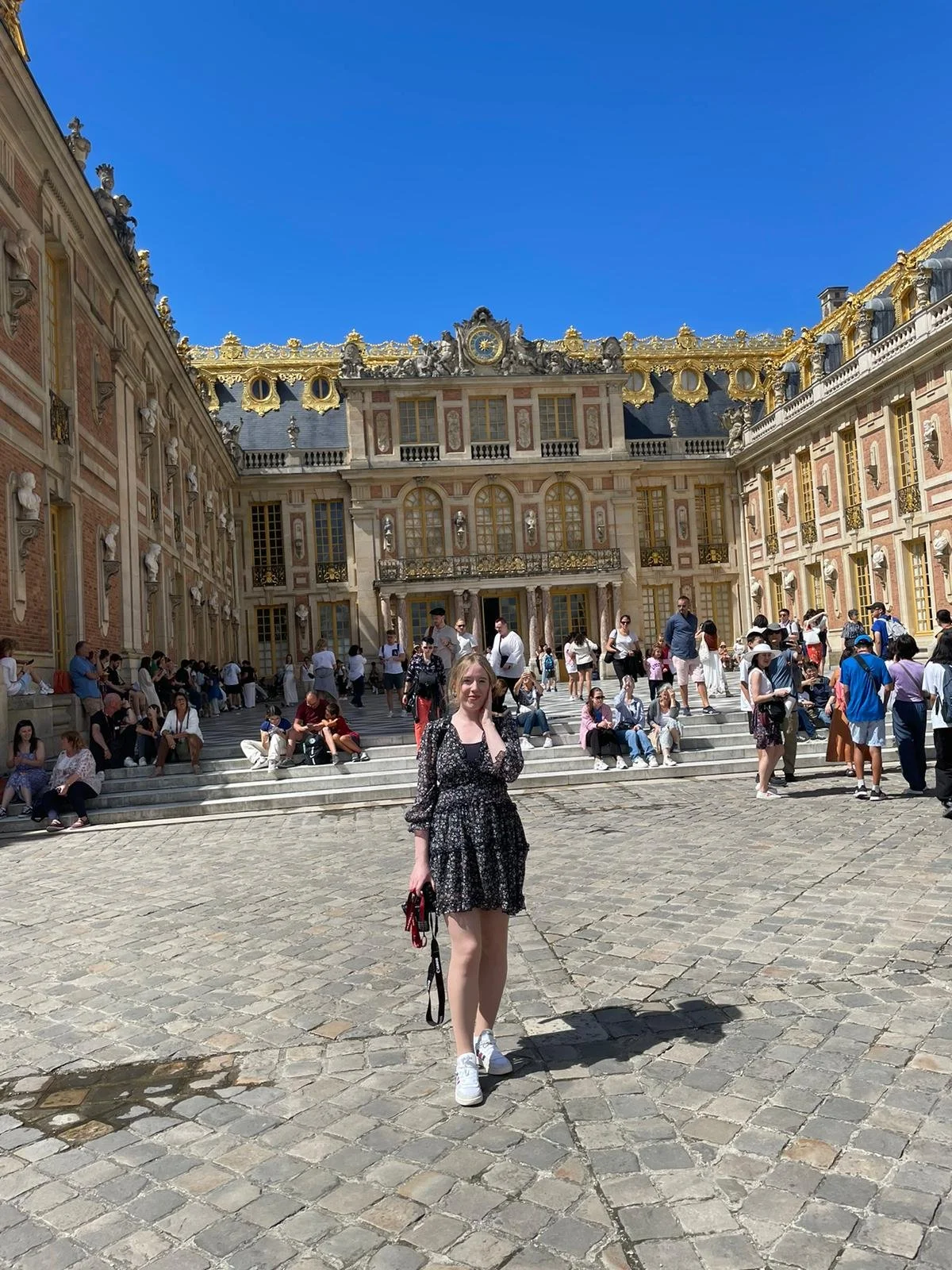
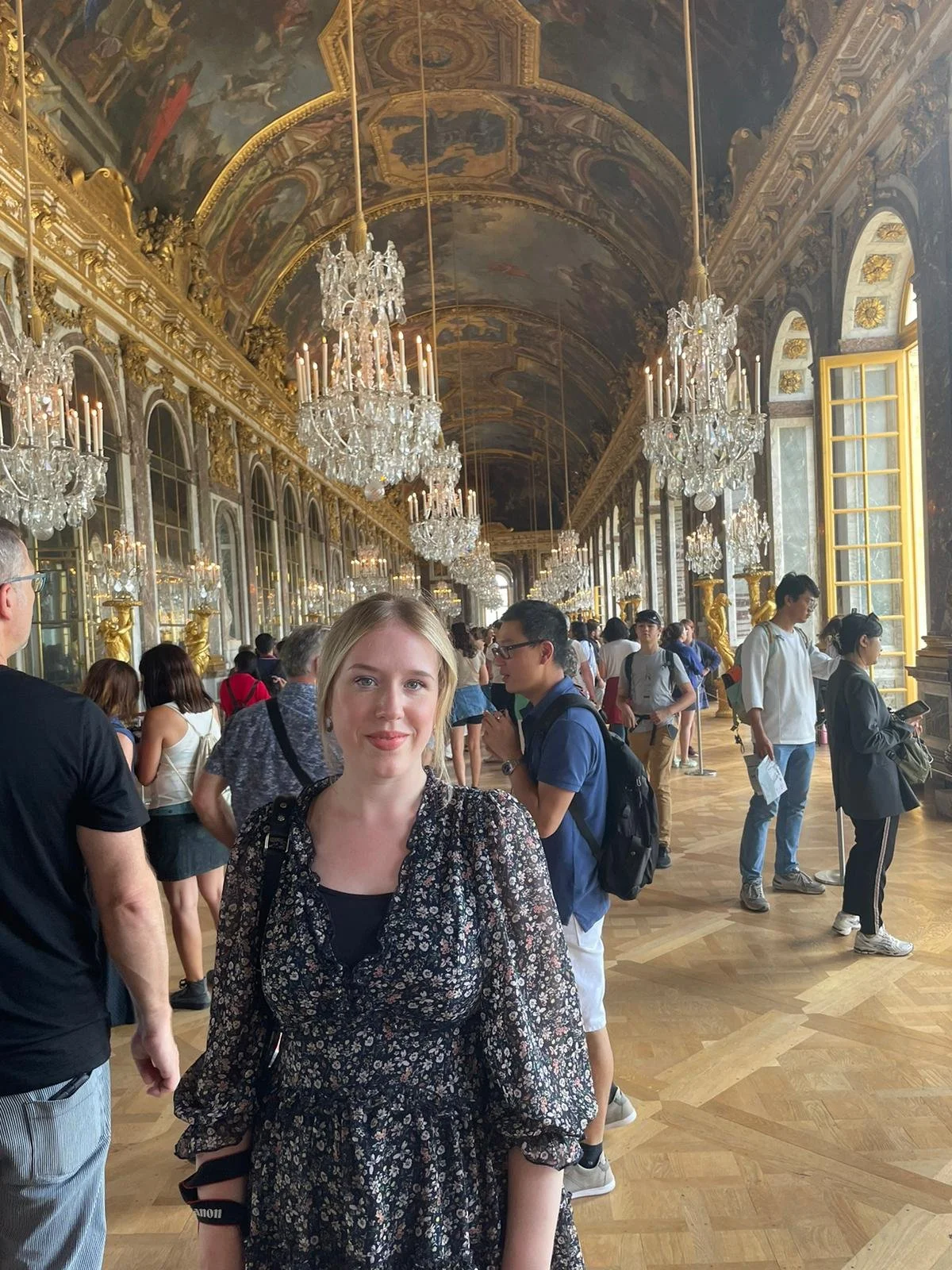
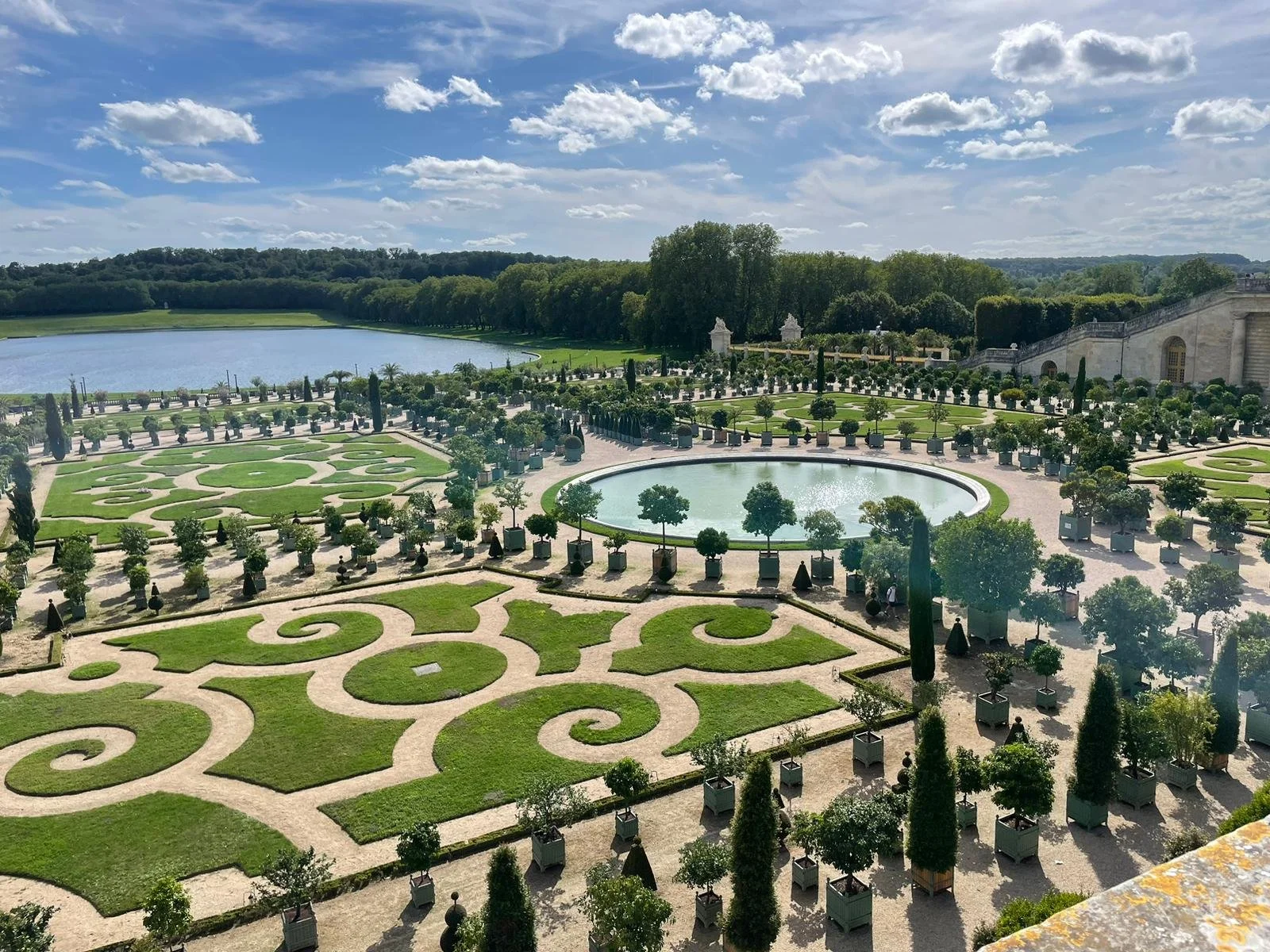
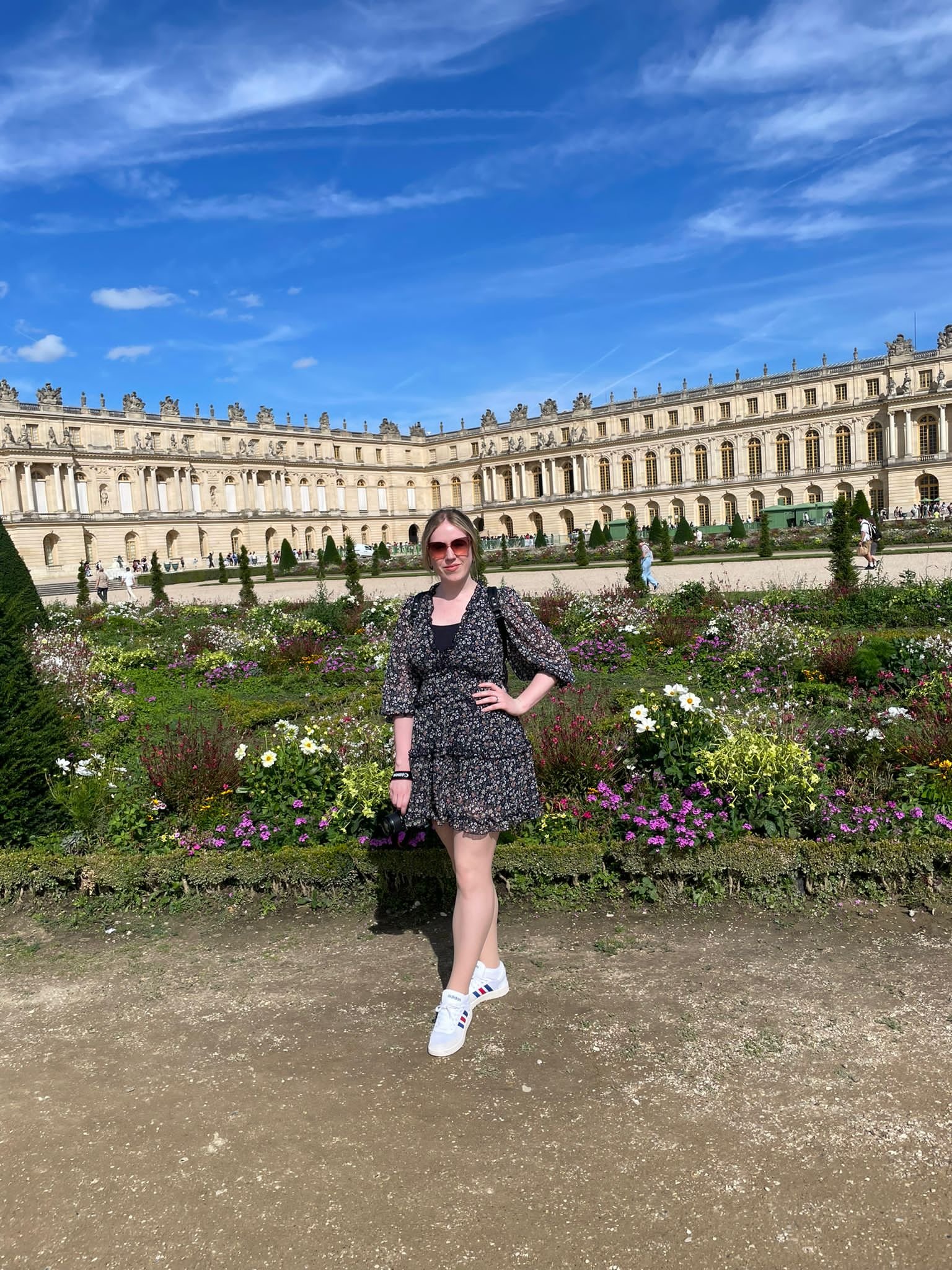
Marie’s Bedroom at Versailles
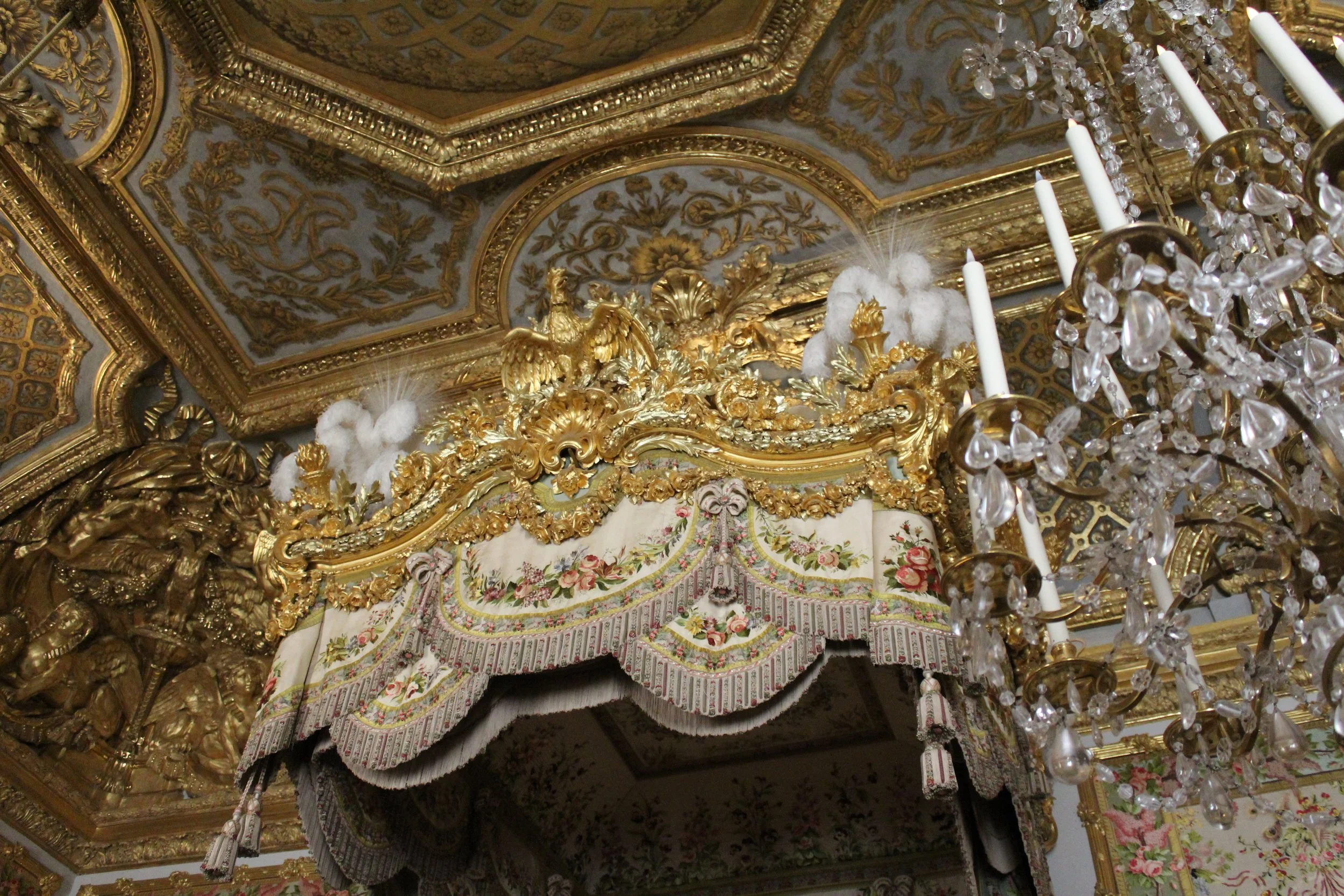
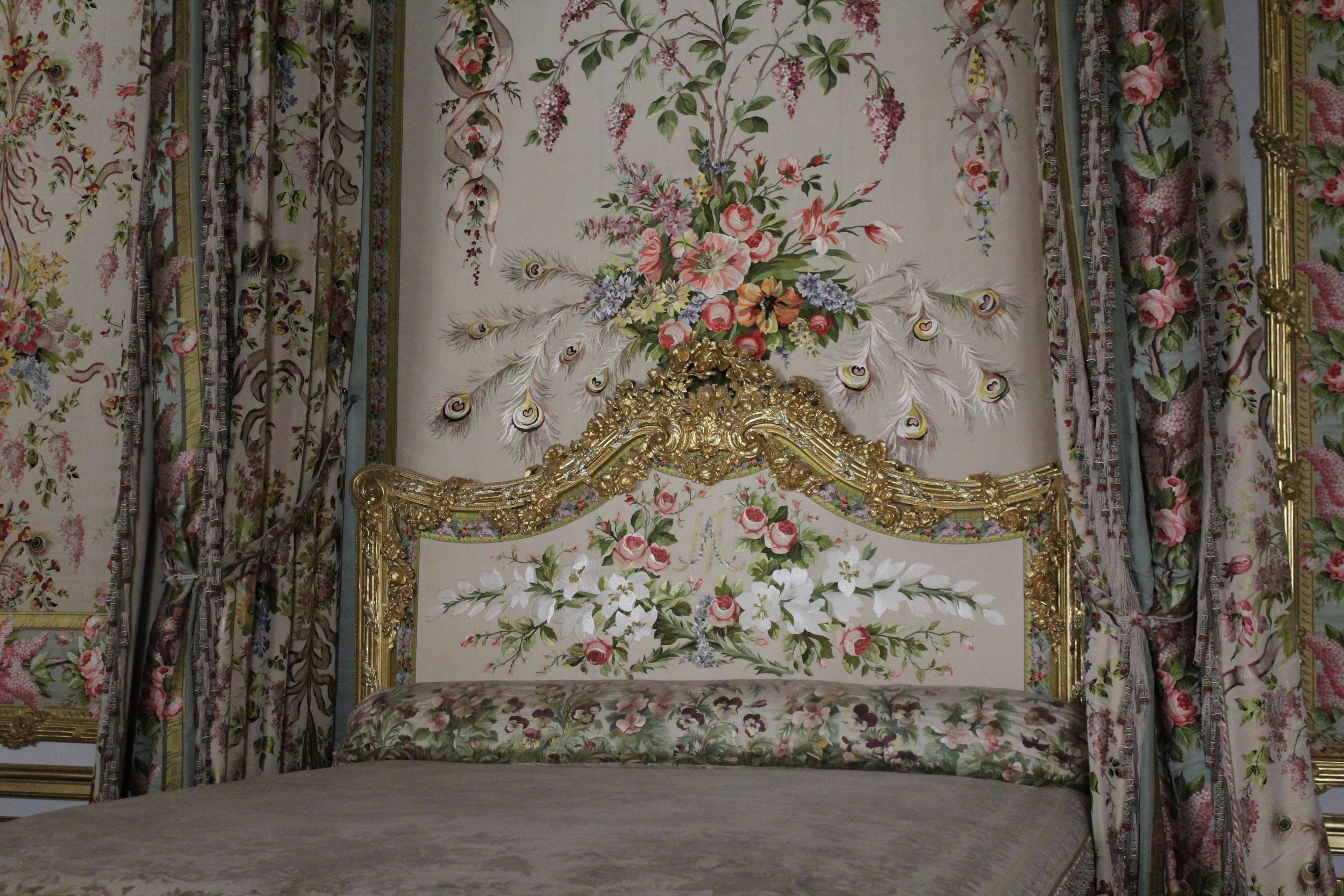
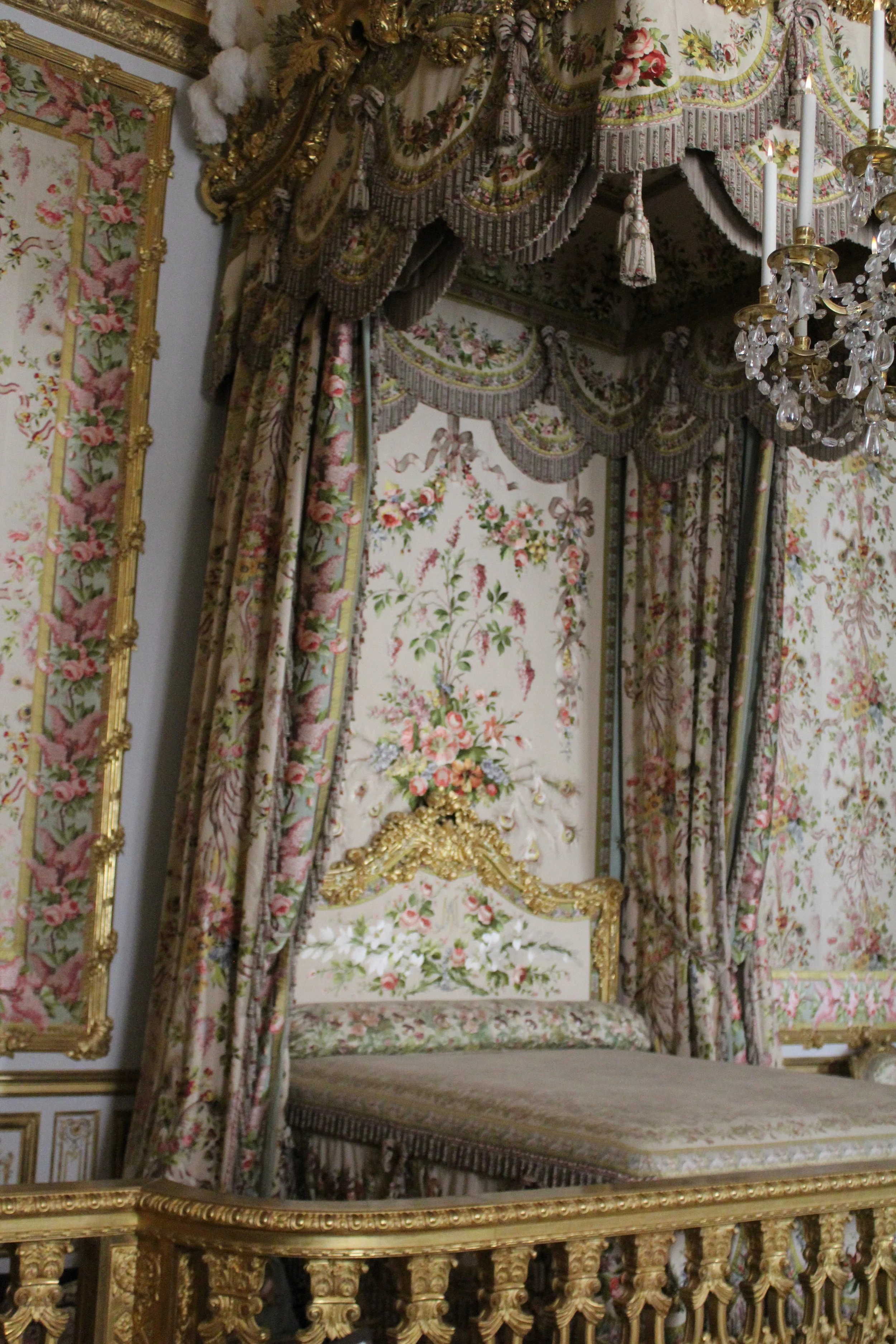
I remember Marie’s bedroom vividly. It was almost sickly with ornamentation. It had gold, embroidery, feathers, carvings, heavy textiles and elaborate mouldings. There is a gate in front of the bed, much like the King’s, designed to separate the royal occupants from the attendants and guards who slept in the same room.
The entire arrangement felt theatrical, almost like a stage set. It does make sense when you consider the daily dressing ceremony. Noblewomen would gather each morning to participate in the ritual of physically dressing the Queen. It was performance as much as protocol.
Much of what you see today inside Versailles has been recreated, as a significant amount was destroyed, stolen or sold as a result of the Revolution. I even noticed that some of the marble walls in the King’s rooms were in fact painted imitations. Unfortunately, we didn’t get to see Marie’s private rooms as they are only open seasonally. It was in those rooms that she and Louis hid with their children before being taken to Paris. It must have been terrifying, especially for the children.
I would describe the interiors of her rooms as engulfing. I felt swallowed by them. At times I needed to look out of the windows as a kind of visual palate cleanser. I did that frequently throughout the tour.
The Petit Trianon: Escapism Within Escapism
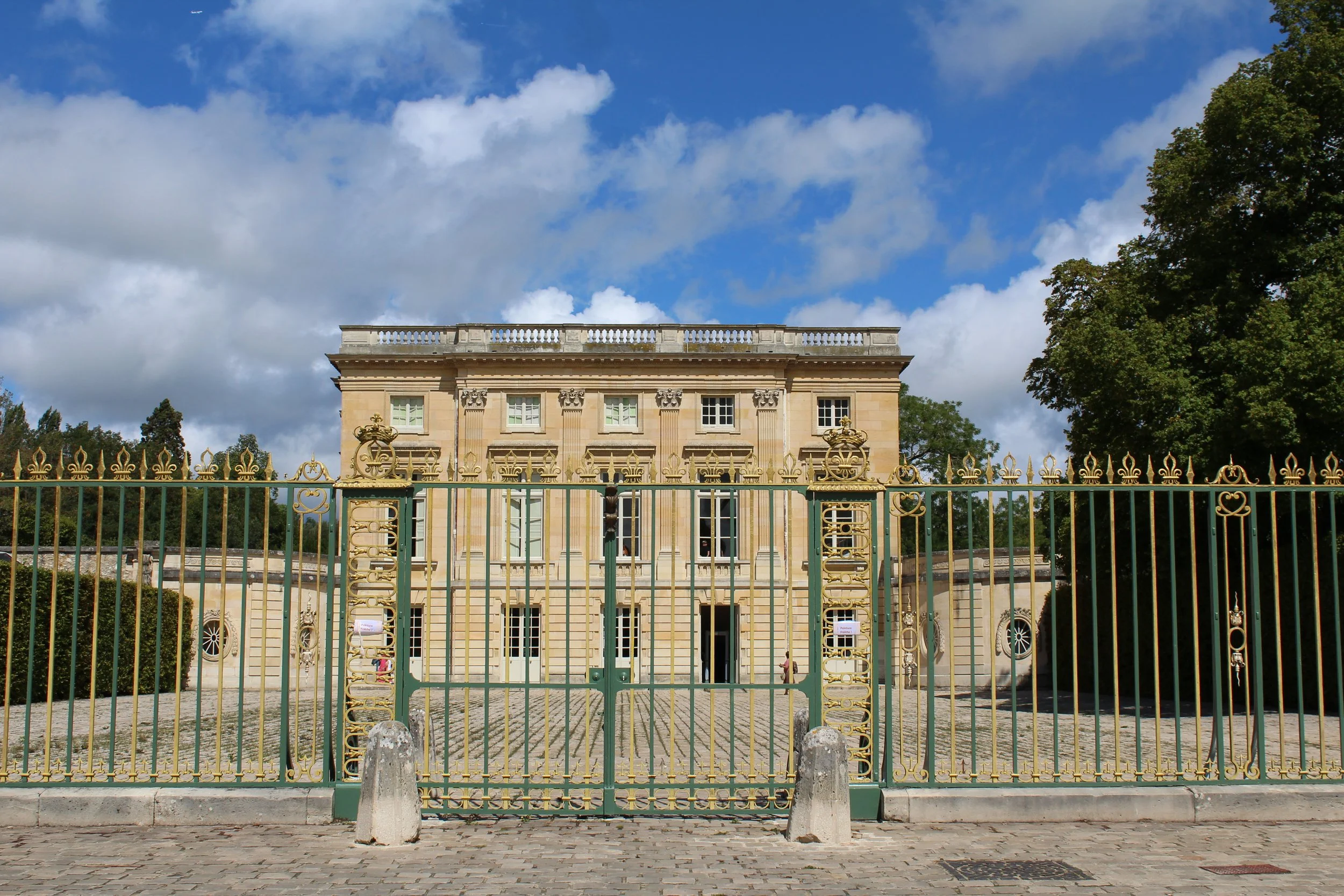
The Petit Trianon was an entirely different experience. Still grand by today’s standards, but nothing like the spectacle of the Palace.
What fascinates me, particularly in relation to escapism (a theme I explore in my own work) is that the Petit Trianon was Marie’s escape from Versailles. It’s interesting as Versailles itself was built as an otherworldly space for the French court to escape ordinary life and live separately from the people of France.
So in essence, by retreating to the Petit Trianon, Marie was escaping by returning to something more simplified and intimate.
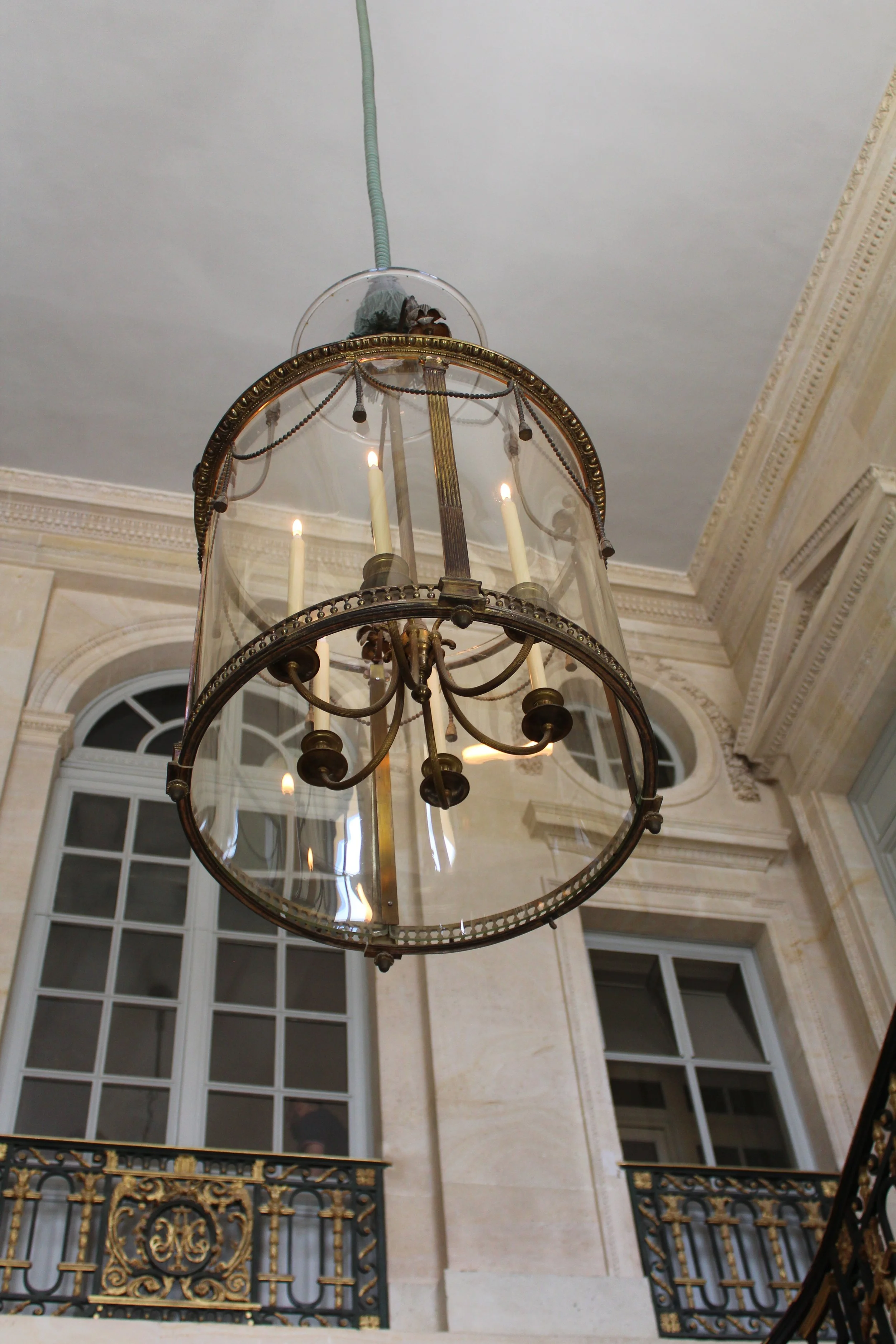
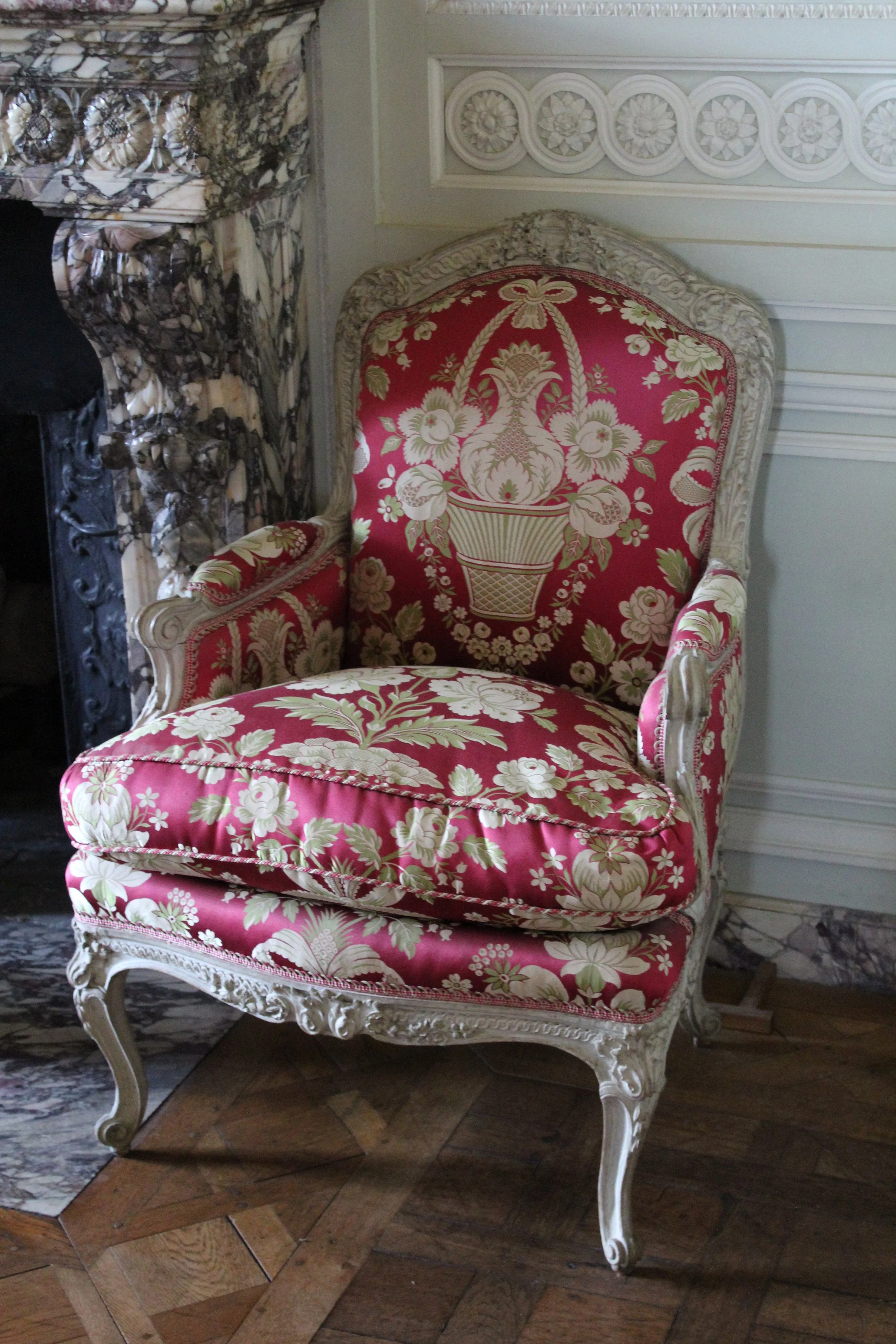
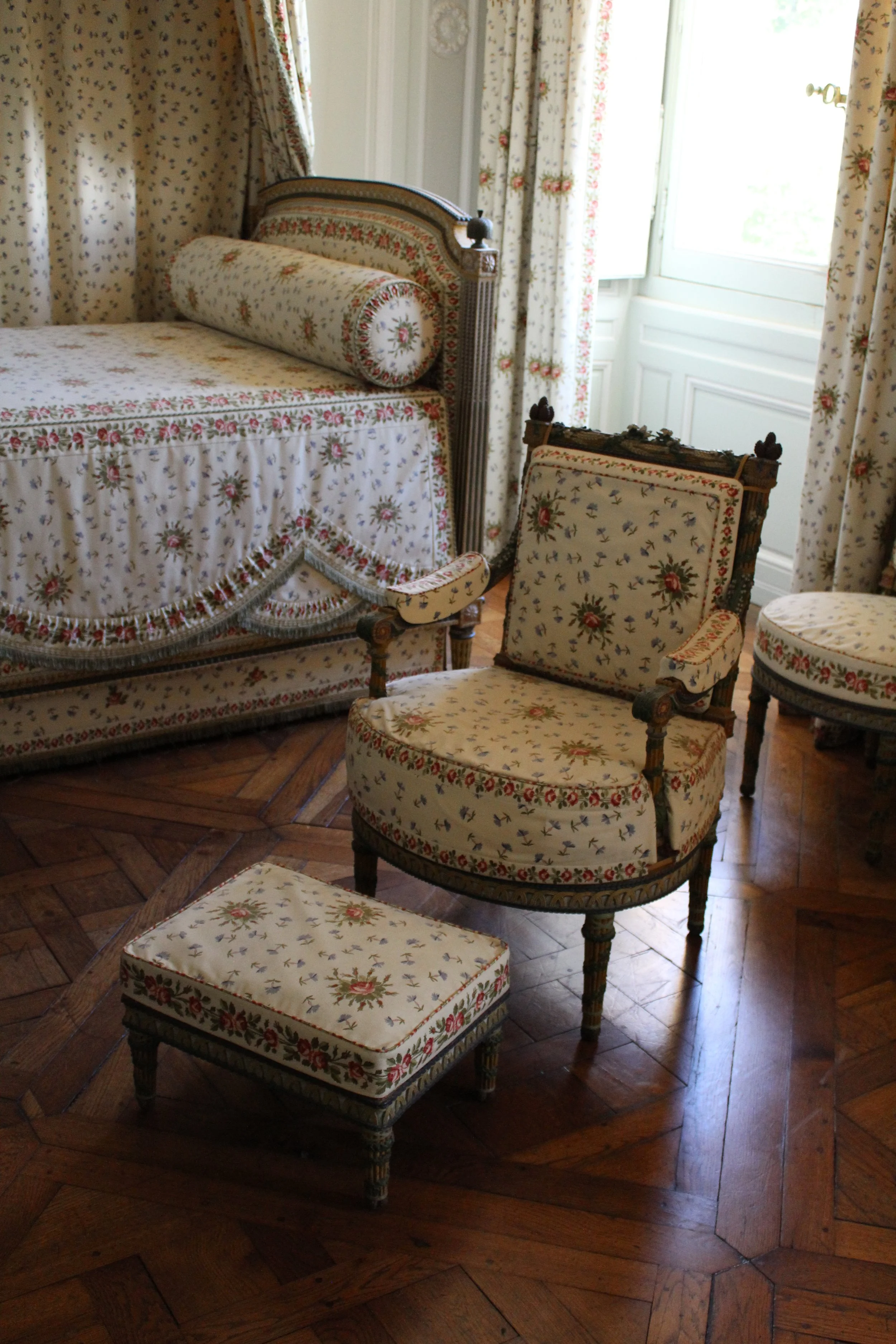
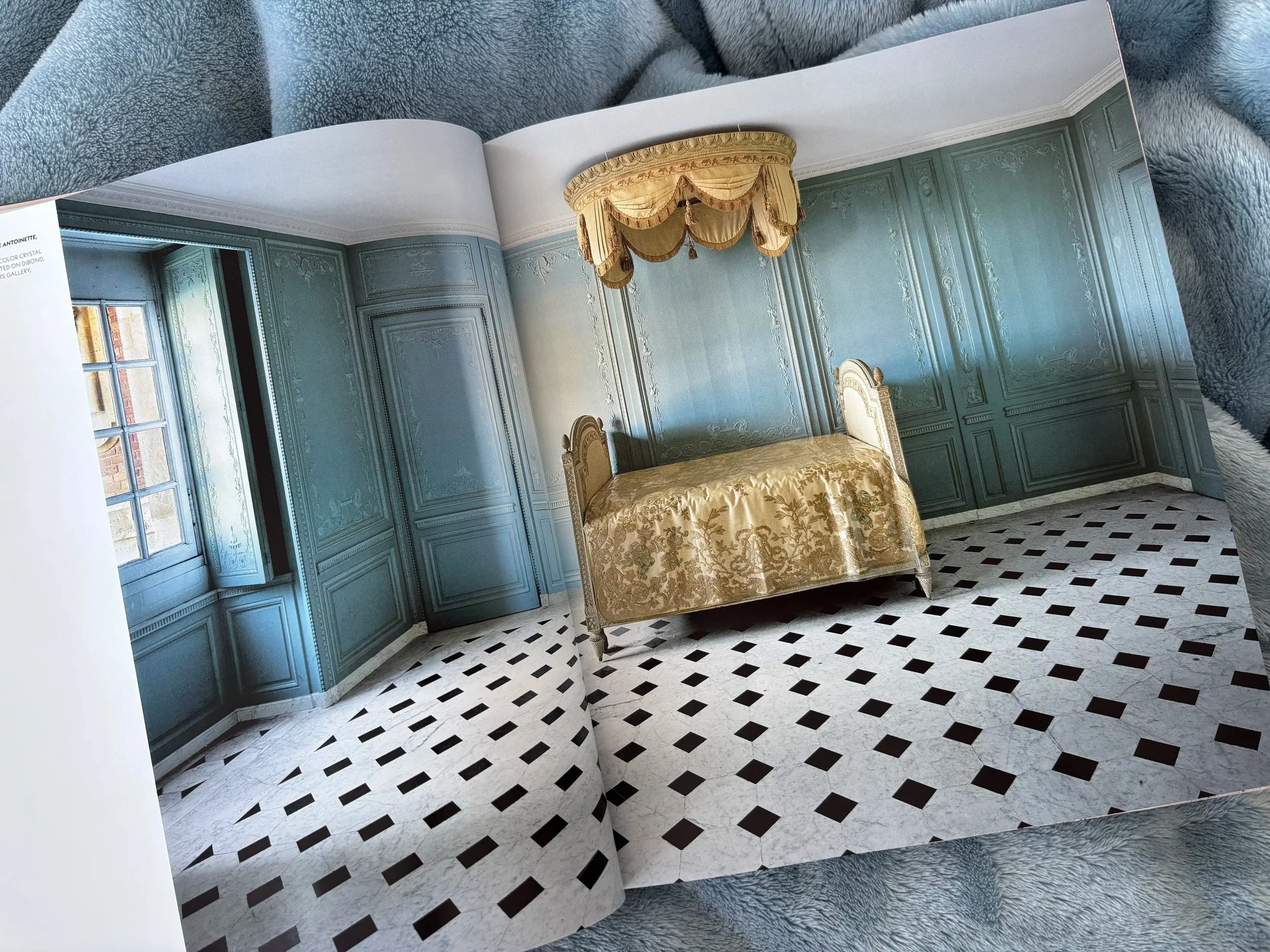
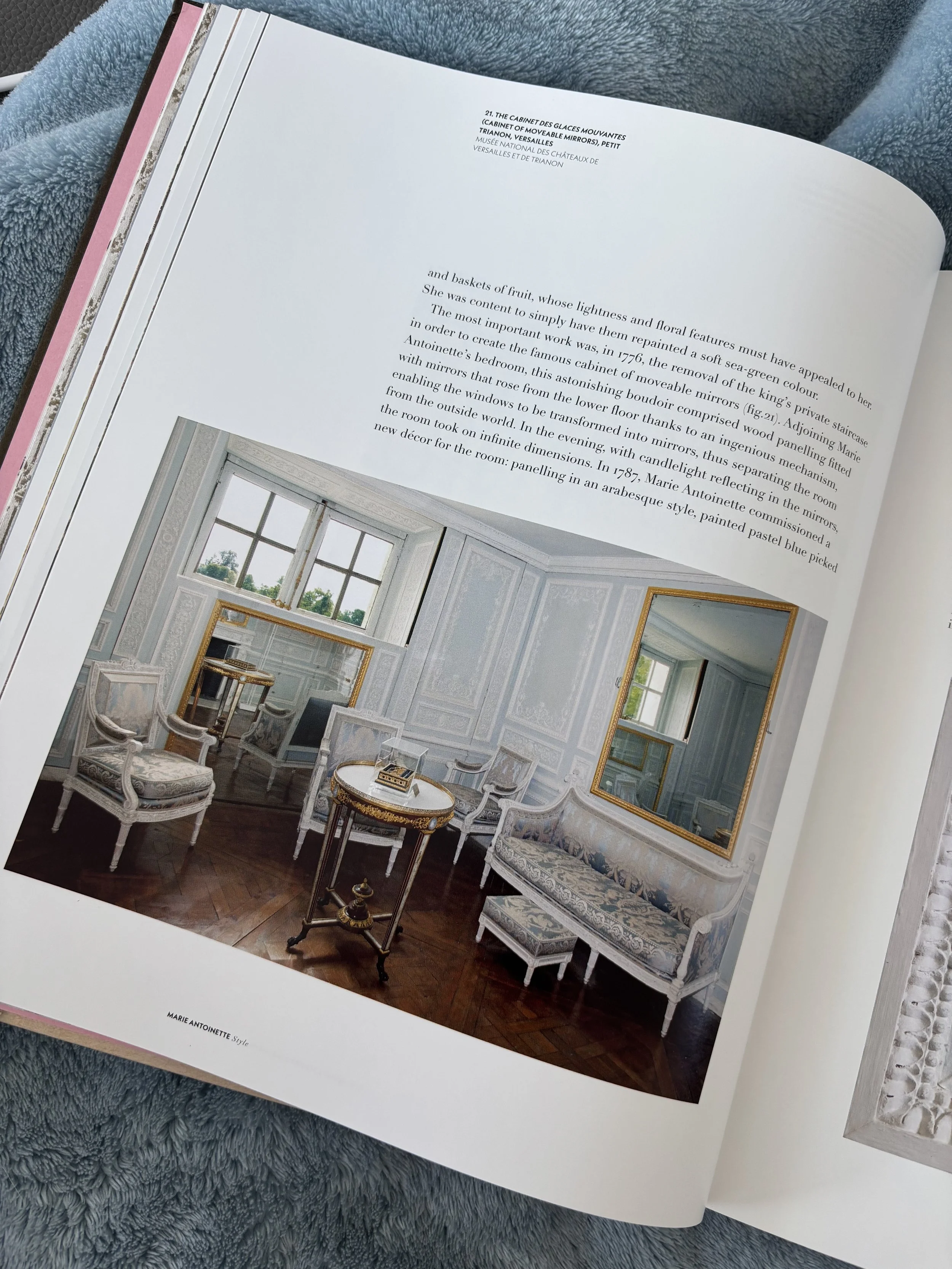
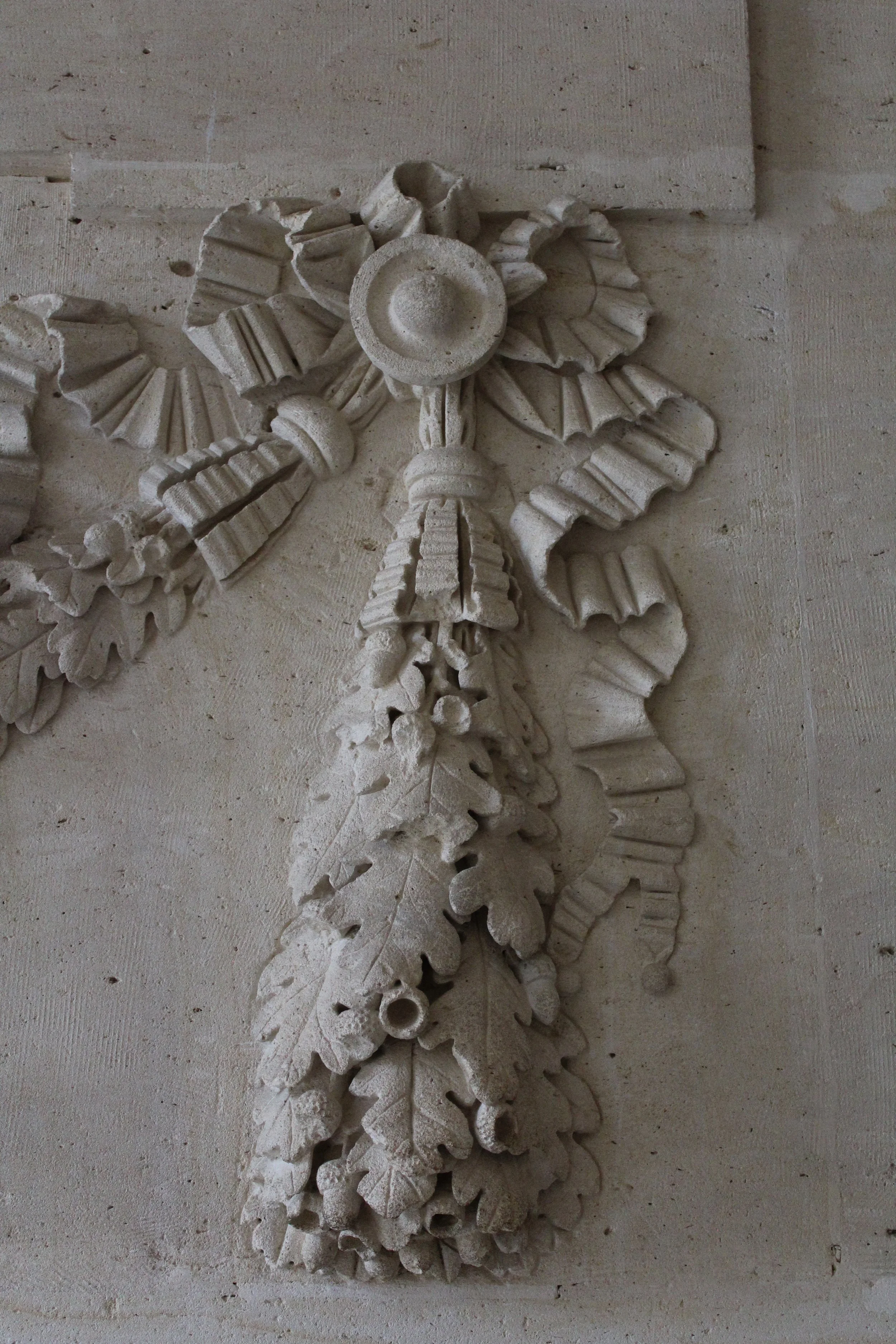
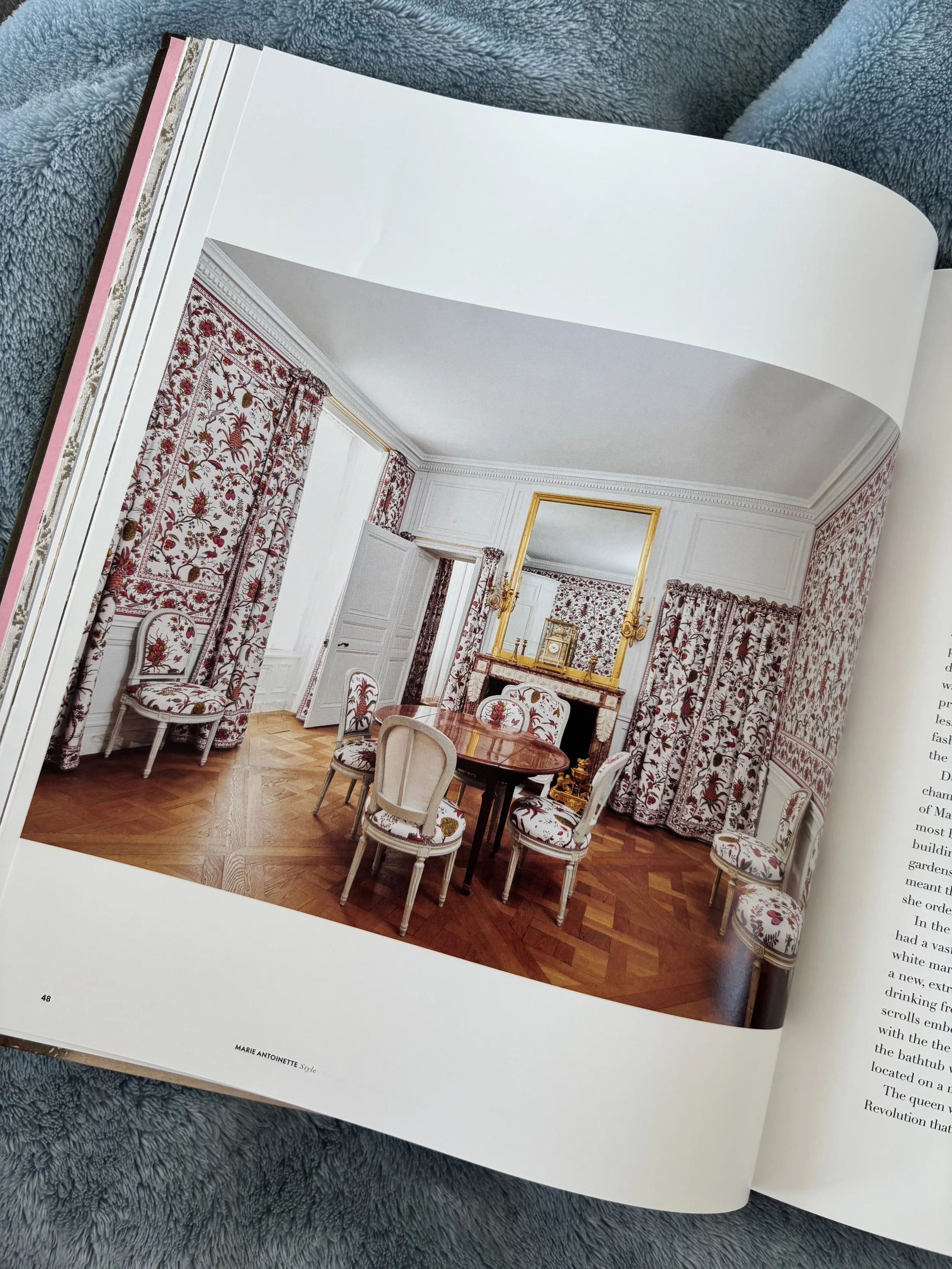
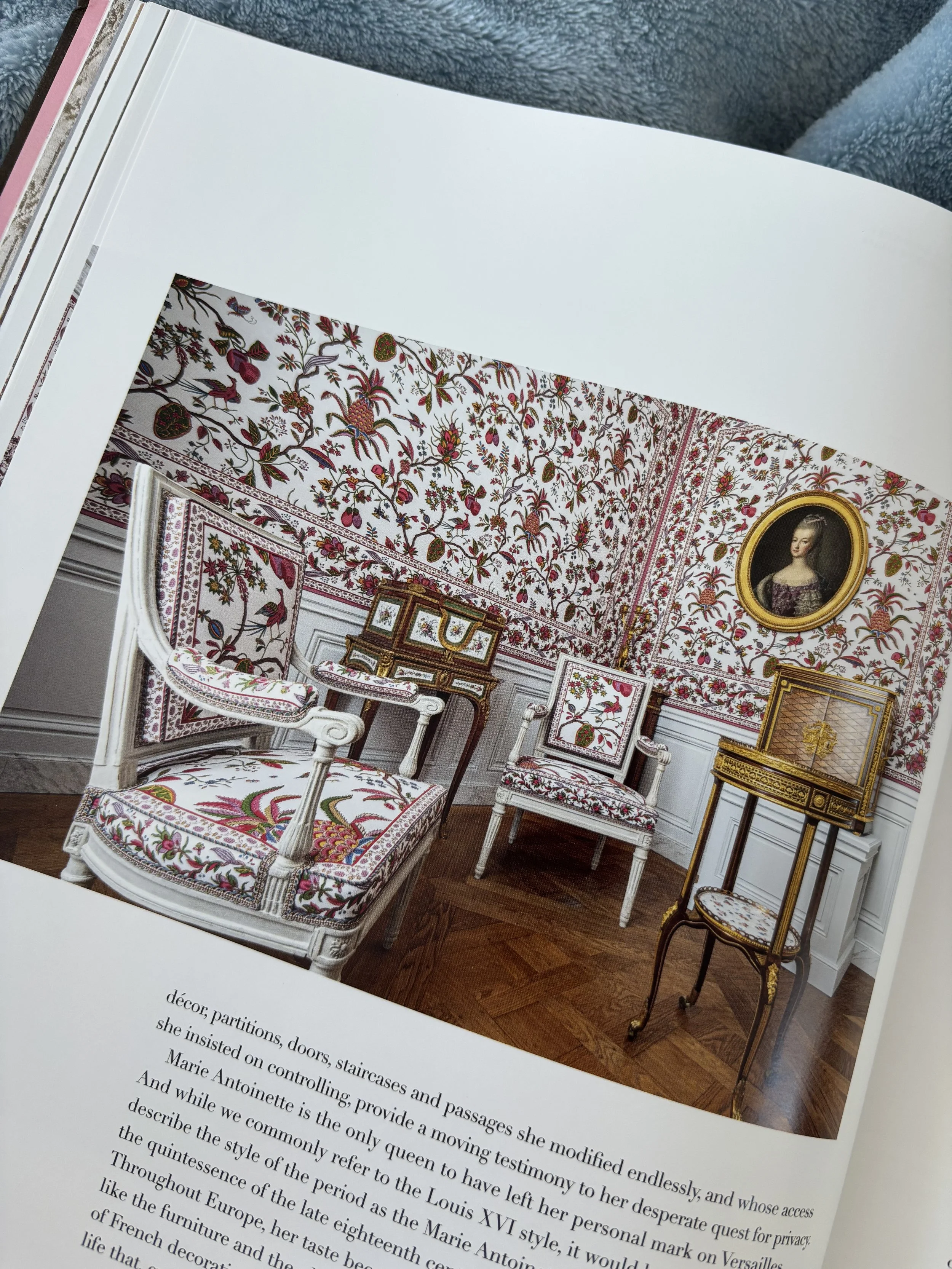
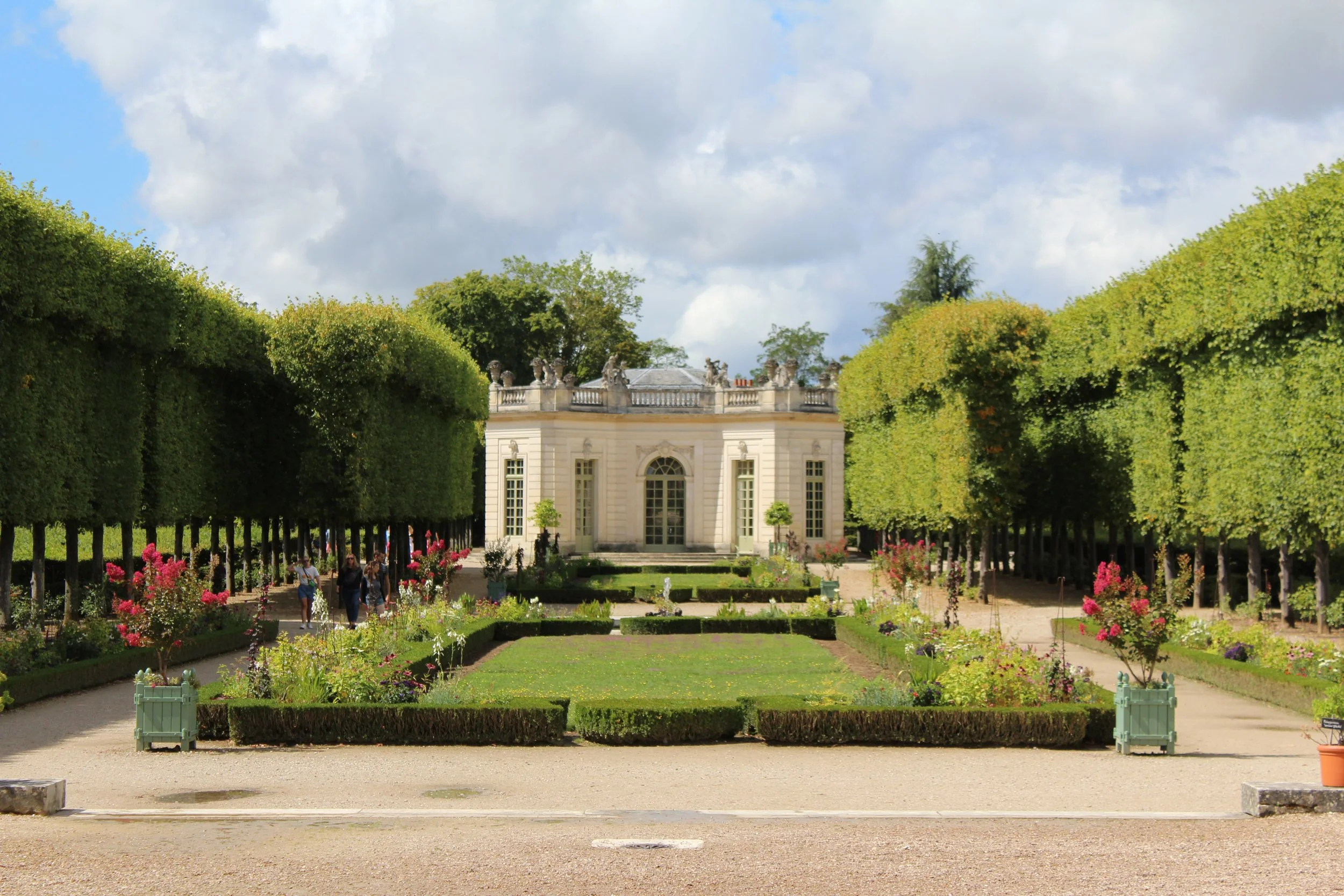
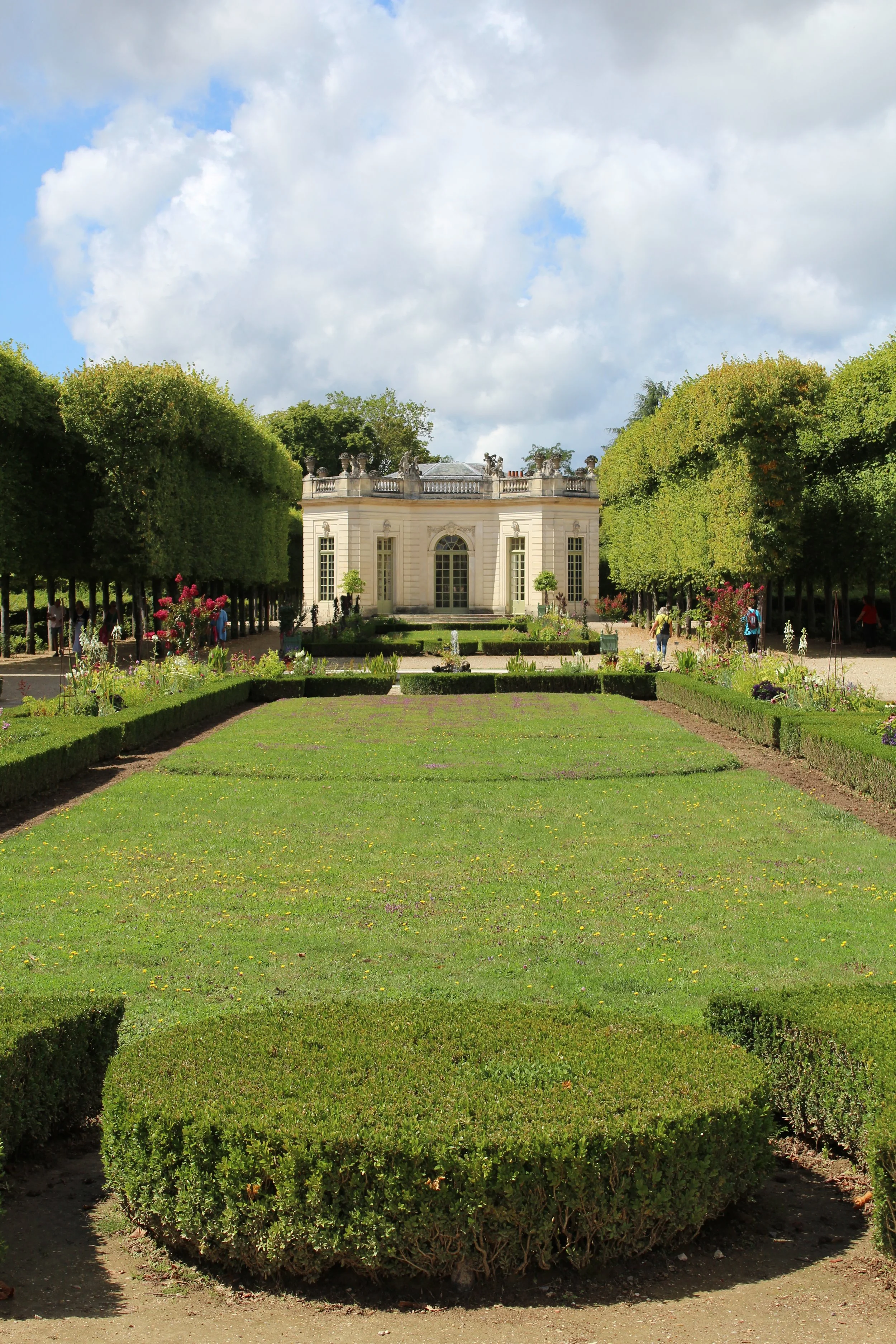
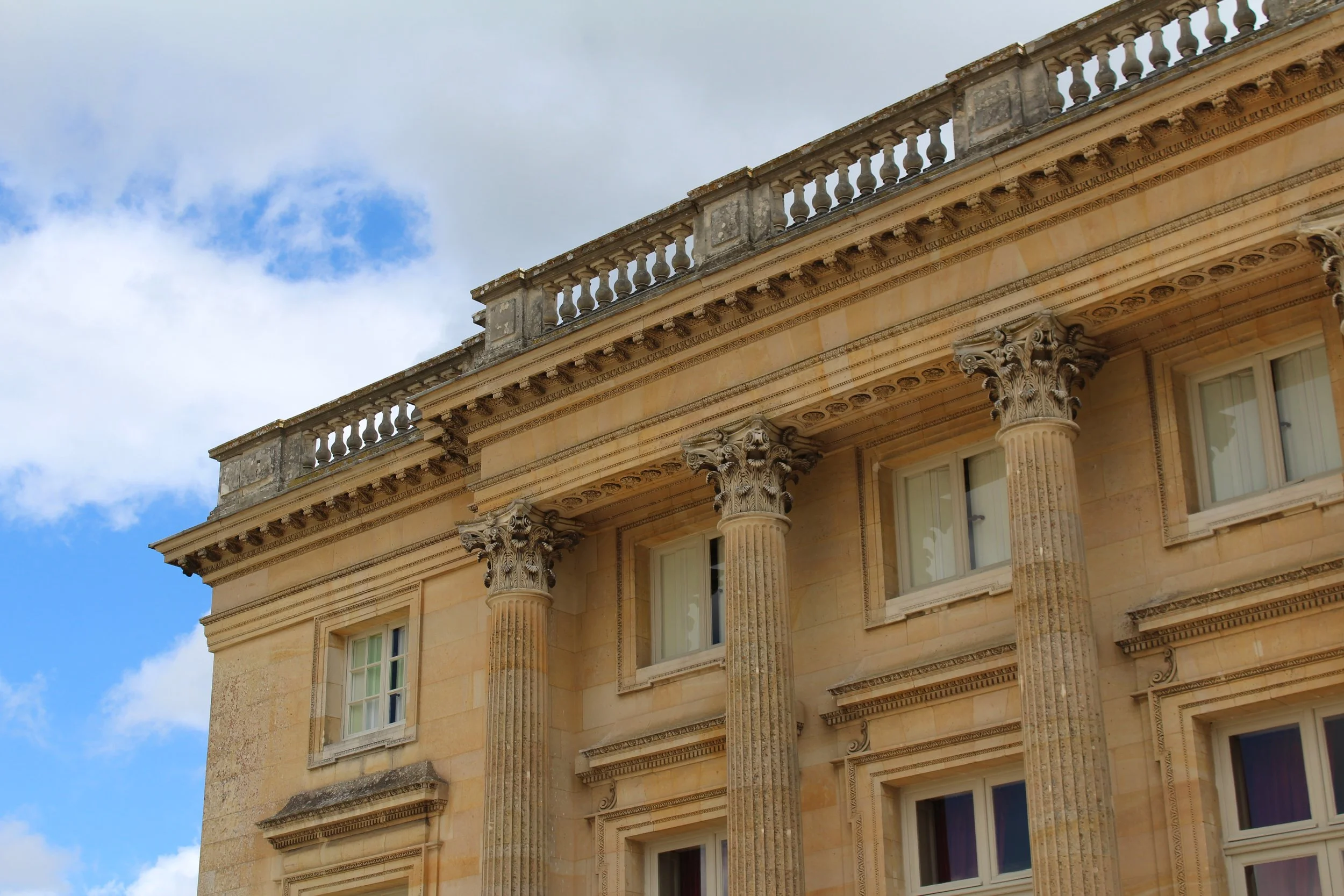
One of my favourite rooms there is the Cabinet of Moveable Mirrors. It reminds me so much of Jasperware by Wedgwood, of which I am a collector. The mouldings in this room complement the furniture carved by Georges Jacob. Although highly decorative, the restrained blue and white palette softens the busyness and lightens the overall effect.
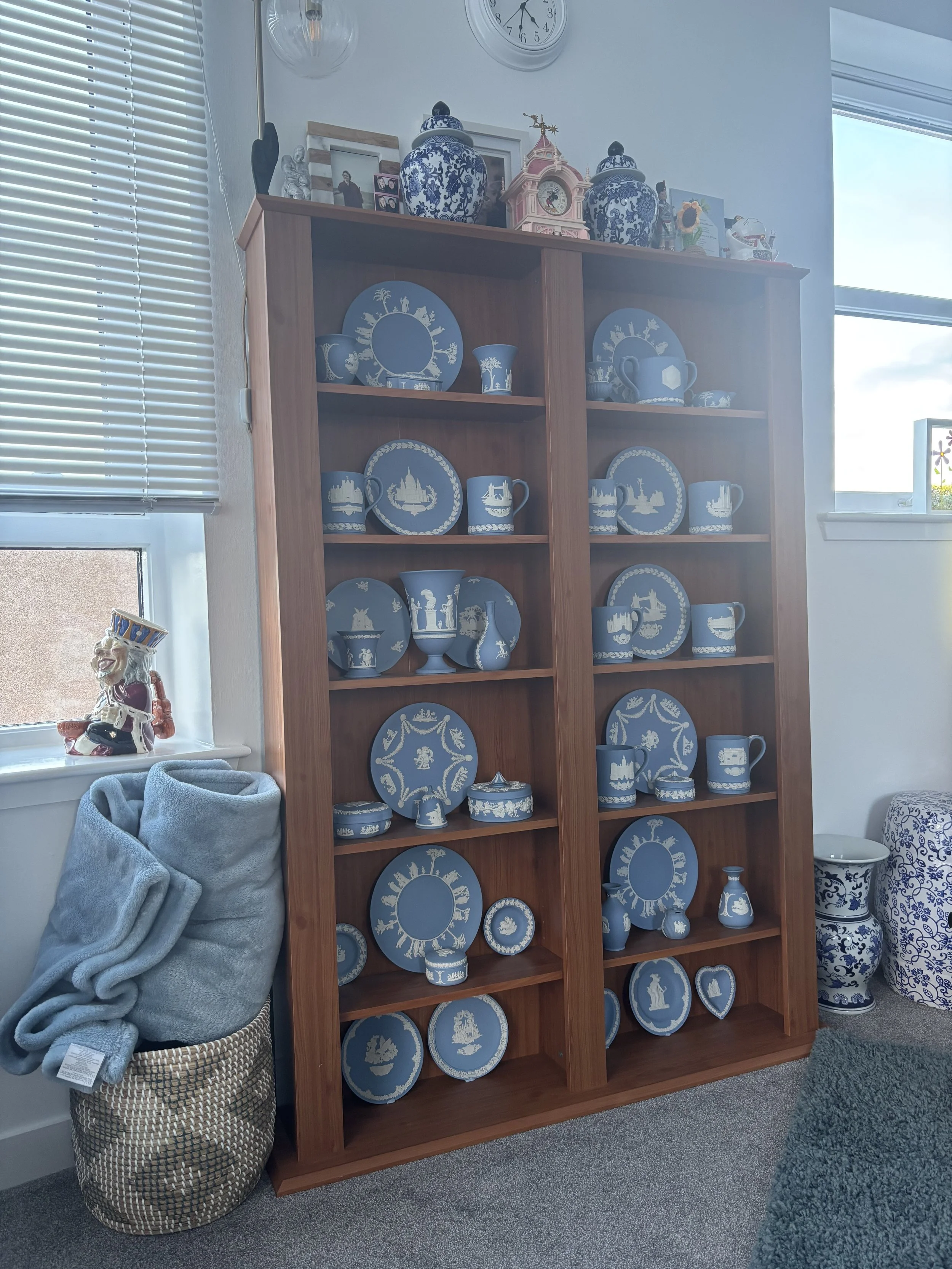
My Jasperware, Wedgwood Collection!
The colour is now famously known as “Wedgwood Blue”.
Toile de Jouy
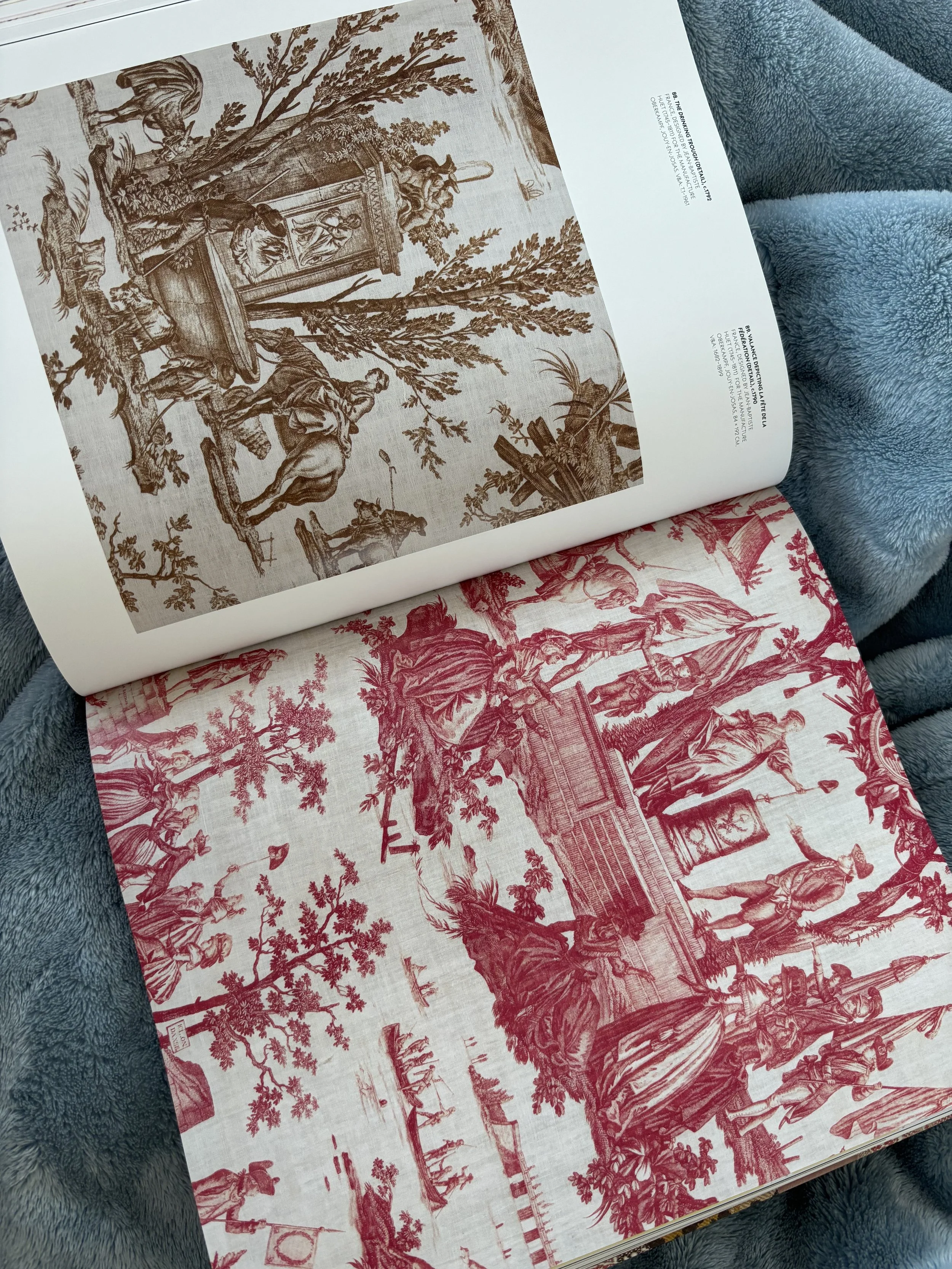
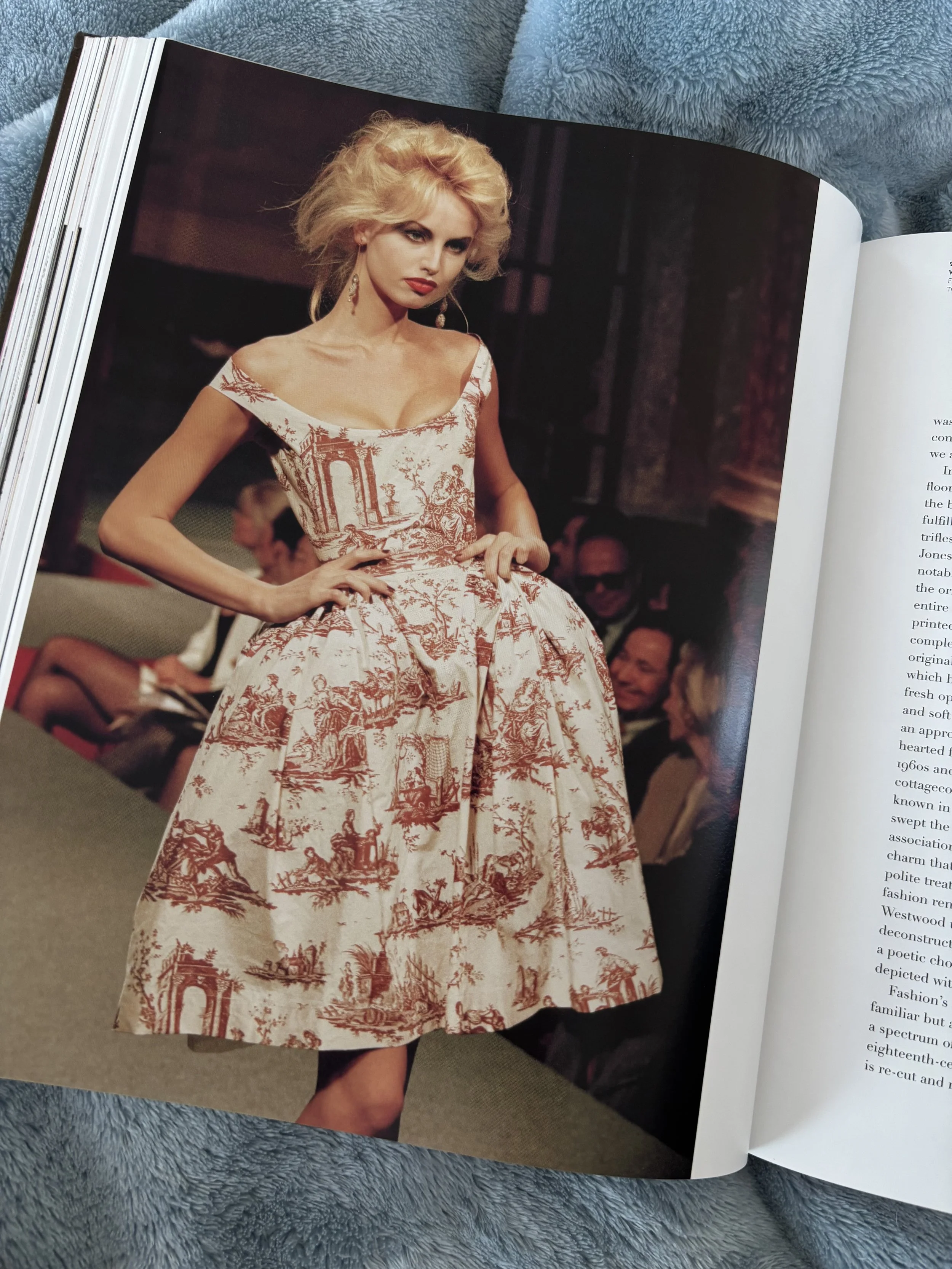
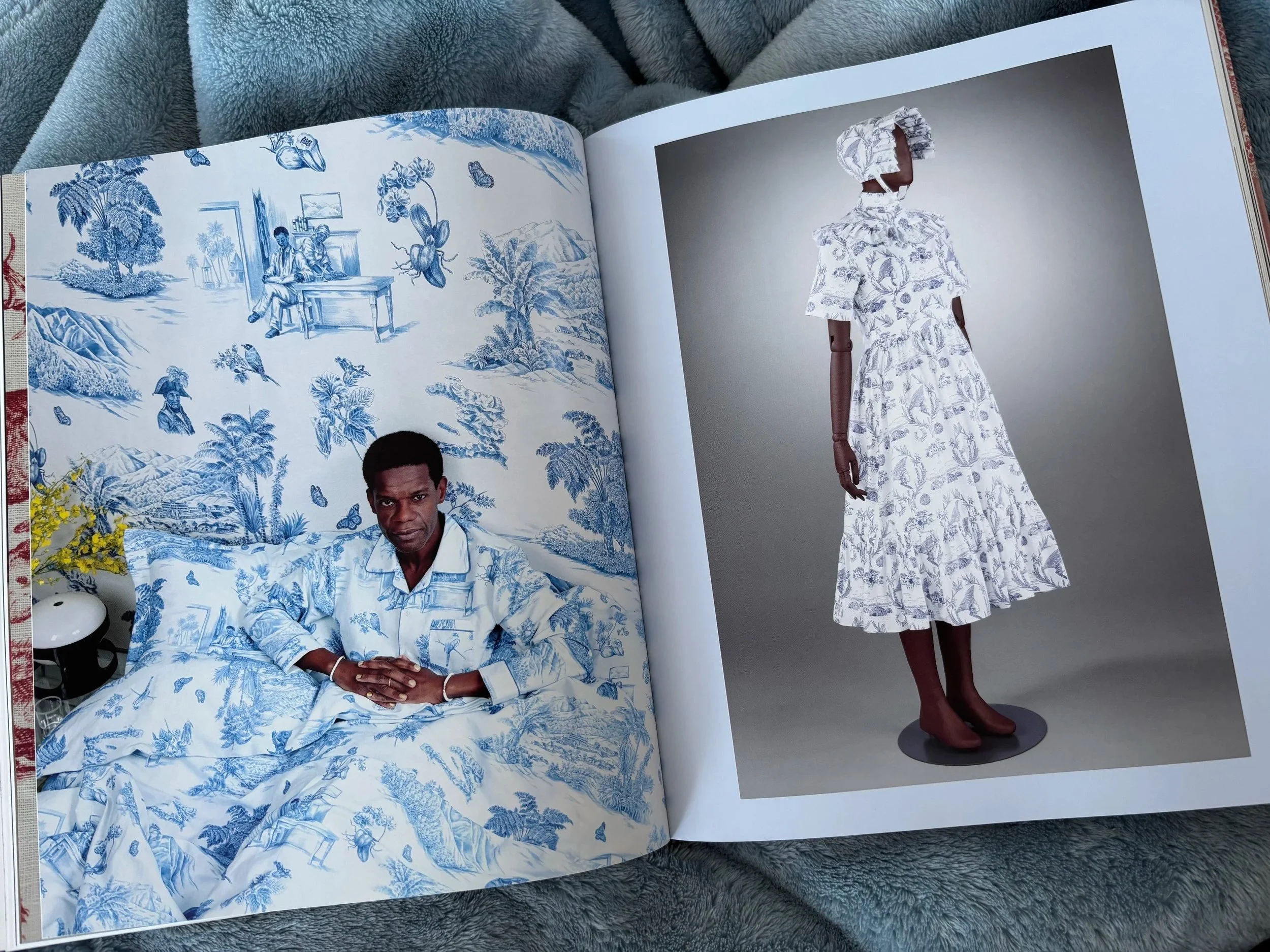
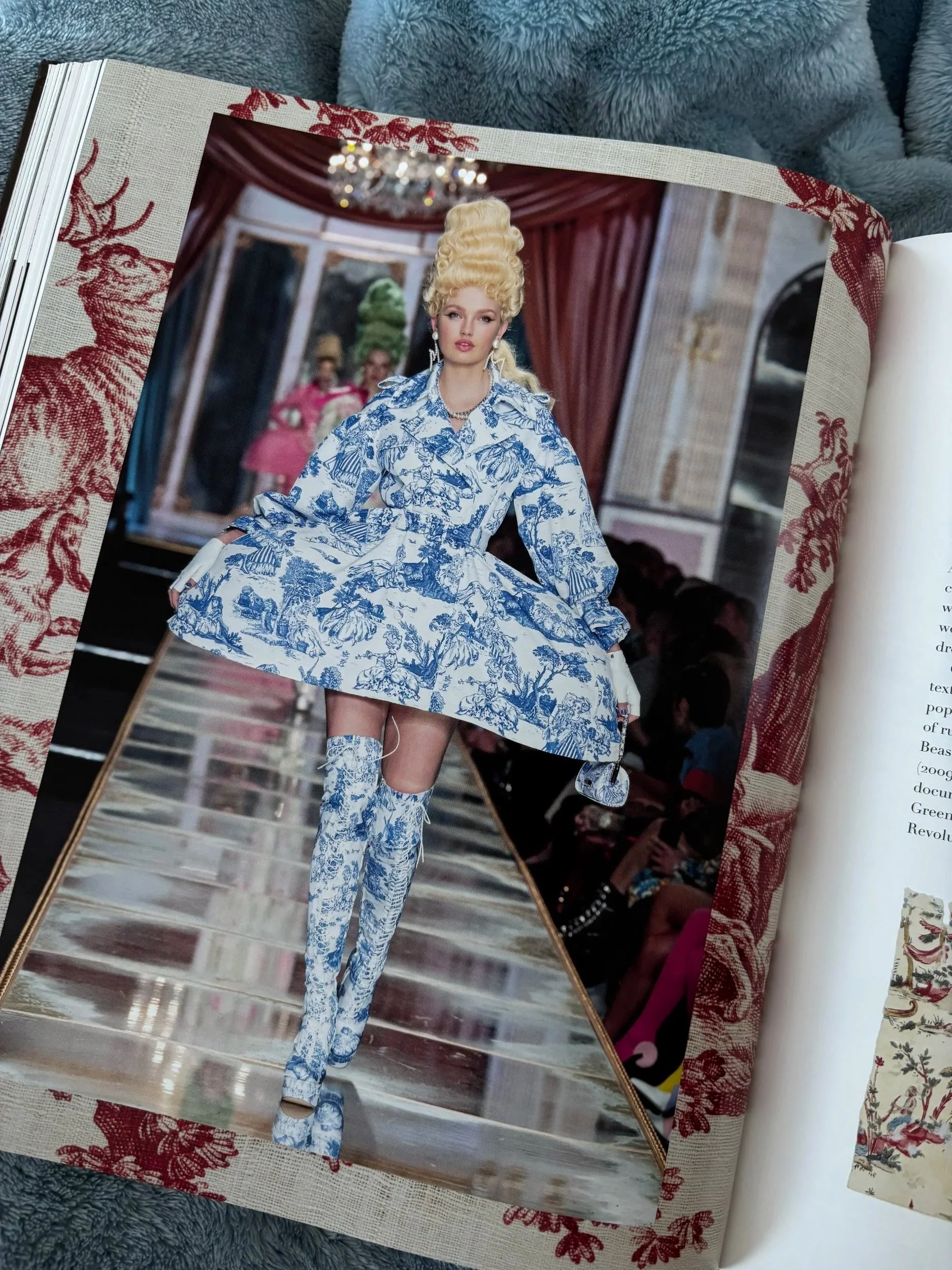
A key pattern I associate with Versailles and Marie is 18th-century Toile de Jouy, often simply called Toile. This classic French textile features monochrome pastoral or romantic vignettes of farmers, couples, animals or scenic narratives. It is printed on cream or white backgrounds. Traditionally used for upholstery, curtains and wallpaper, it now appears in fashion as well, reimagined by major houses such as Dior and Vivienne Westwood.
The pattern was developed and popularised by Christophe-Philippe Oberkampf (1738–1815), an innovative entrepreneur favoured by the French court. His manufactory, located between Versailles and Paris, printed fabrics using carved wooden blocks. Naturally, the more colours used, the more expensive the fabric.
Being a fan of his artistry, Marie visited his manufactory.
For some time I’ve hinted that I’d like to design my own version of Toile, perhaps using locations from Kirkcaldy. I’ve always stopped myself because I wasn’t sure what I would use the pattern for. I may incorporate it into a future Meditation Symphony, but I suspect it really belongs in one of the wall hangings I plan to make.
I’m signing up for sewing lessons after my birthday in April. Stay tuned.
I see Toile as a key pattern archetype, and I aim to explore each archetype in my own distinct style.
Fantasy, Camp and Decorative Illustration
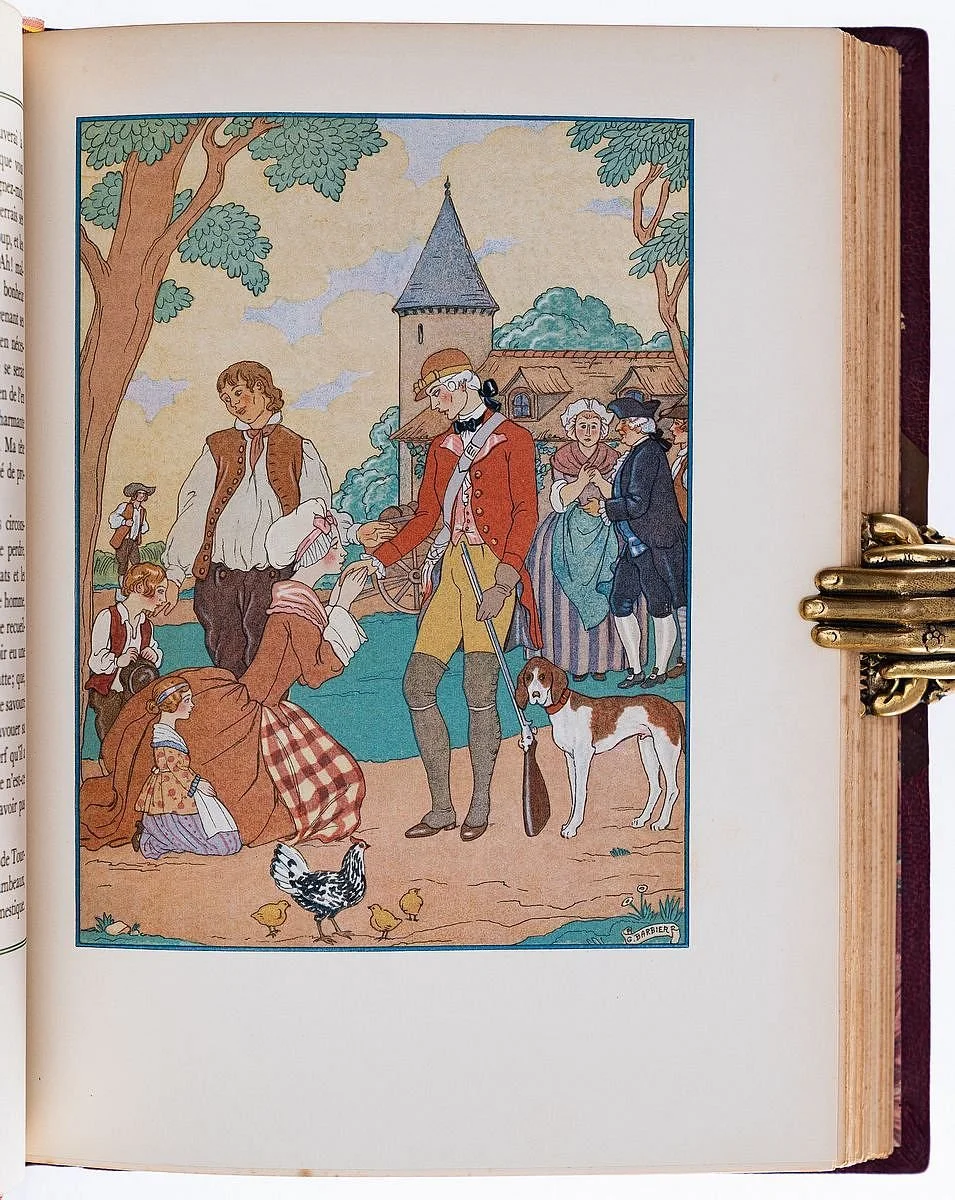
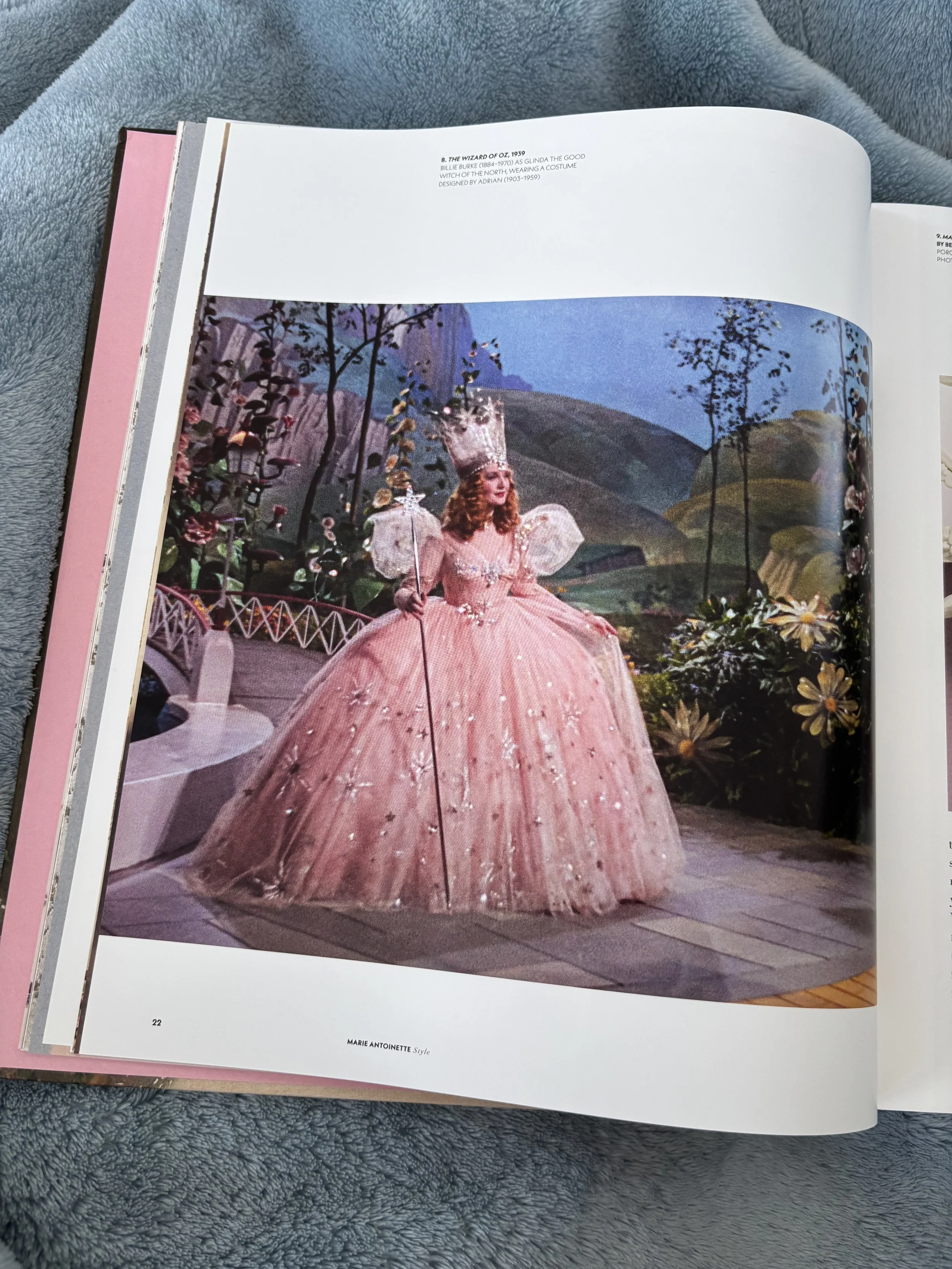
Another interpretation of Marie’s style that has influenced me emerged during the Art Deco revival, particularly in the graphic illustration work of George Barbier. This is where I think her image became deeply associated with fairytales, magic and fantasy.
When I think of Cinderella by Walt Disney Productions, I can clearly see the echoes of Marie’s aesthetic.
I also remember a children’s book my Granny Vera used to read to me. I would insist she pause so I could study the illustrations. I can’t remember the author or publisher now. It’s a shame and a little annoying, as I would love to track down a copy. I believe it was one of the earliest moments my imagination opened to fantasy and highly decorative illustration.
I was captivated by the exaggerated ball gowns. Their skirts like blooming flower petals, plumes, frills and bows everywhere.
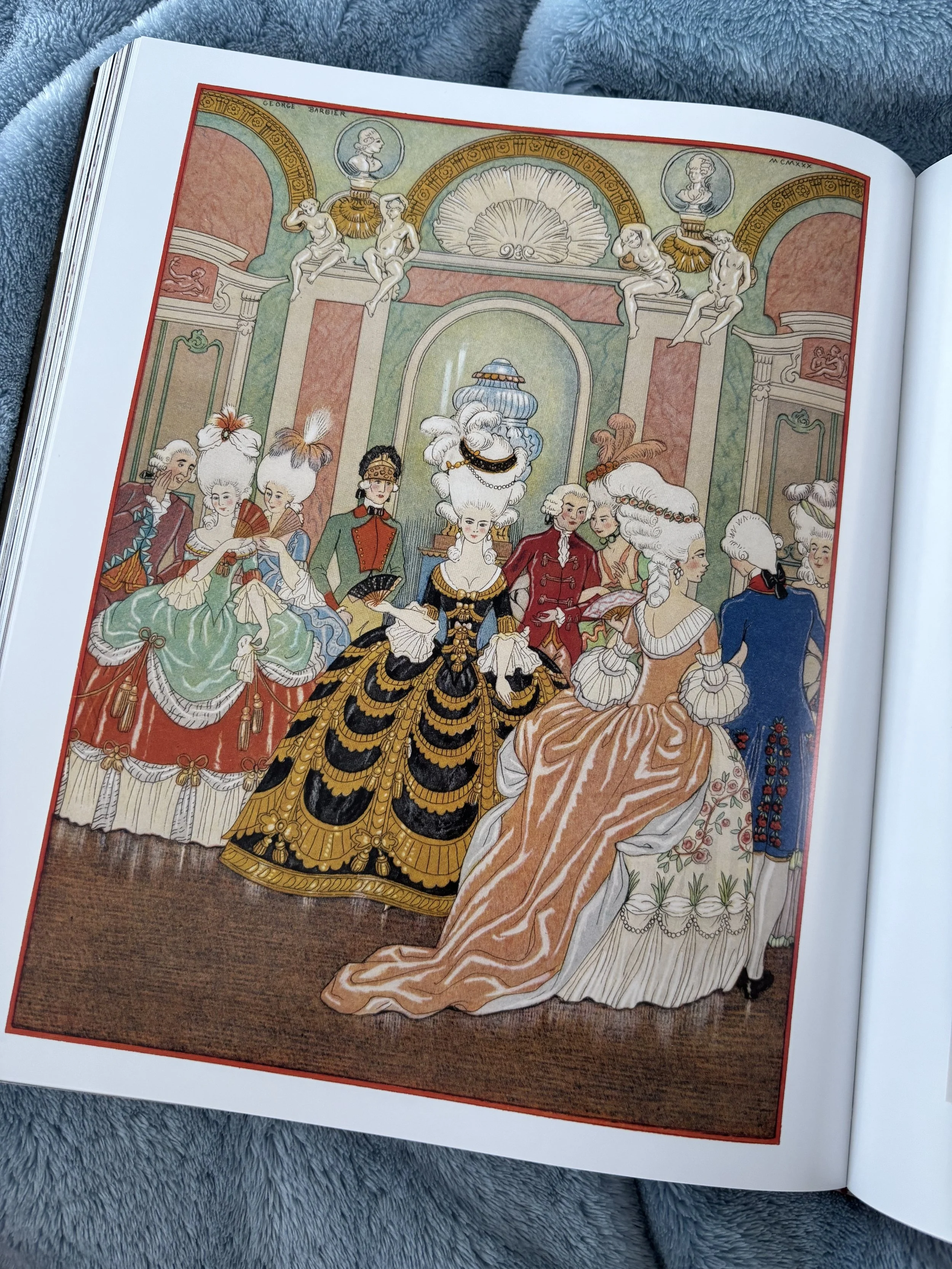
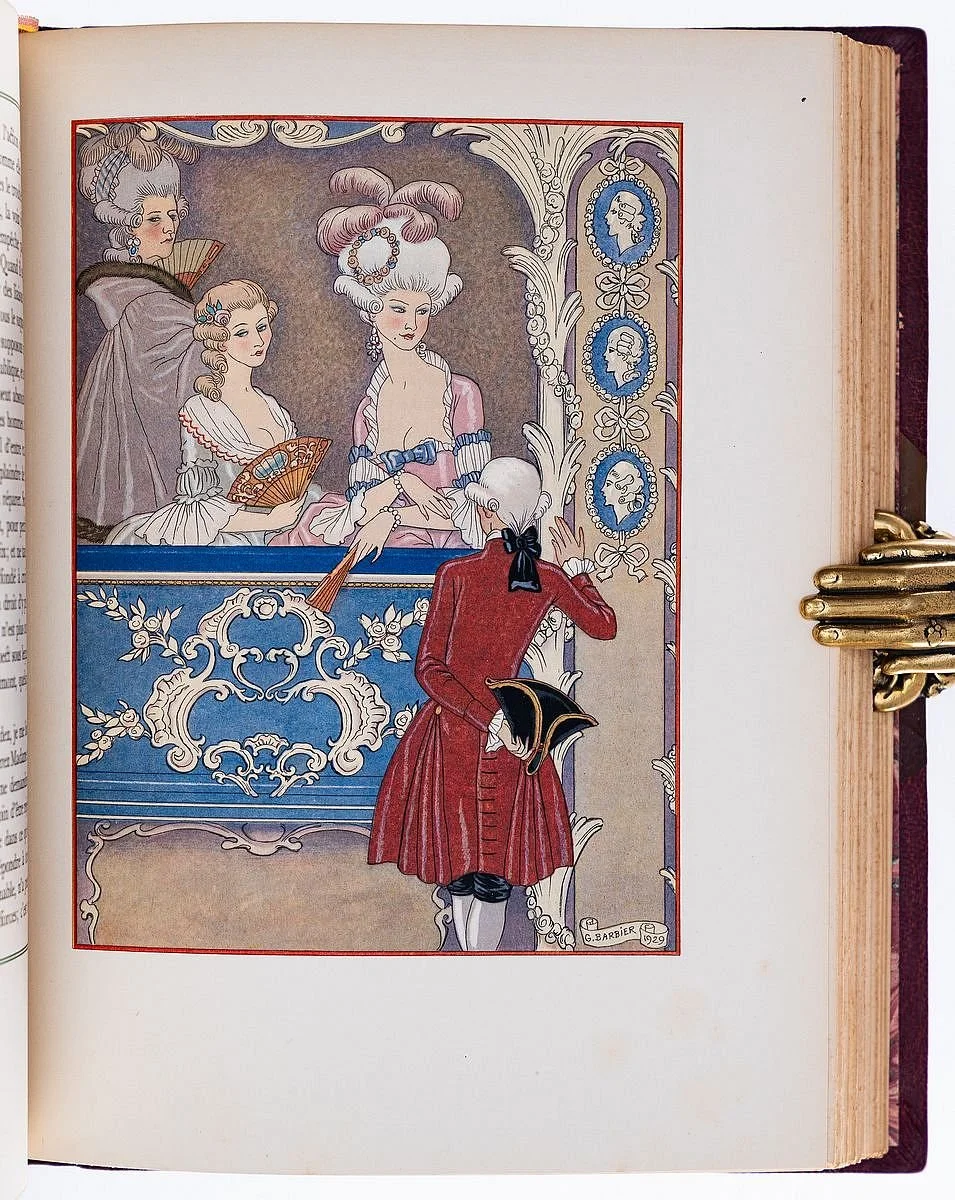
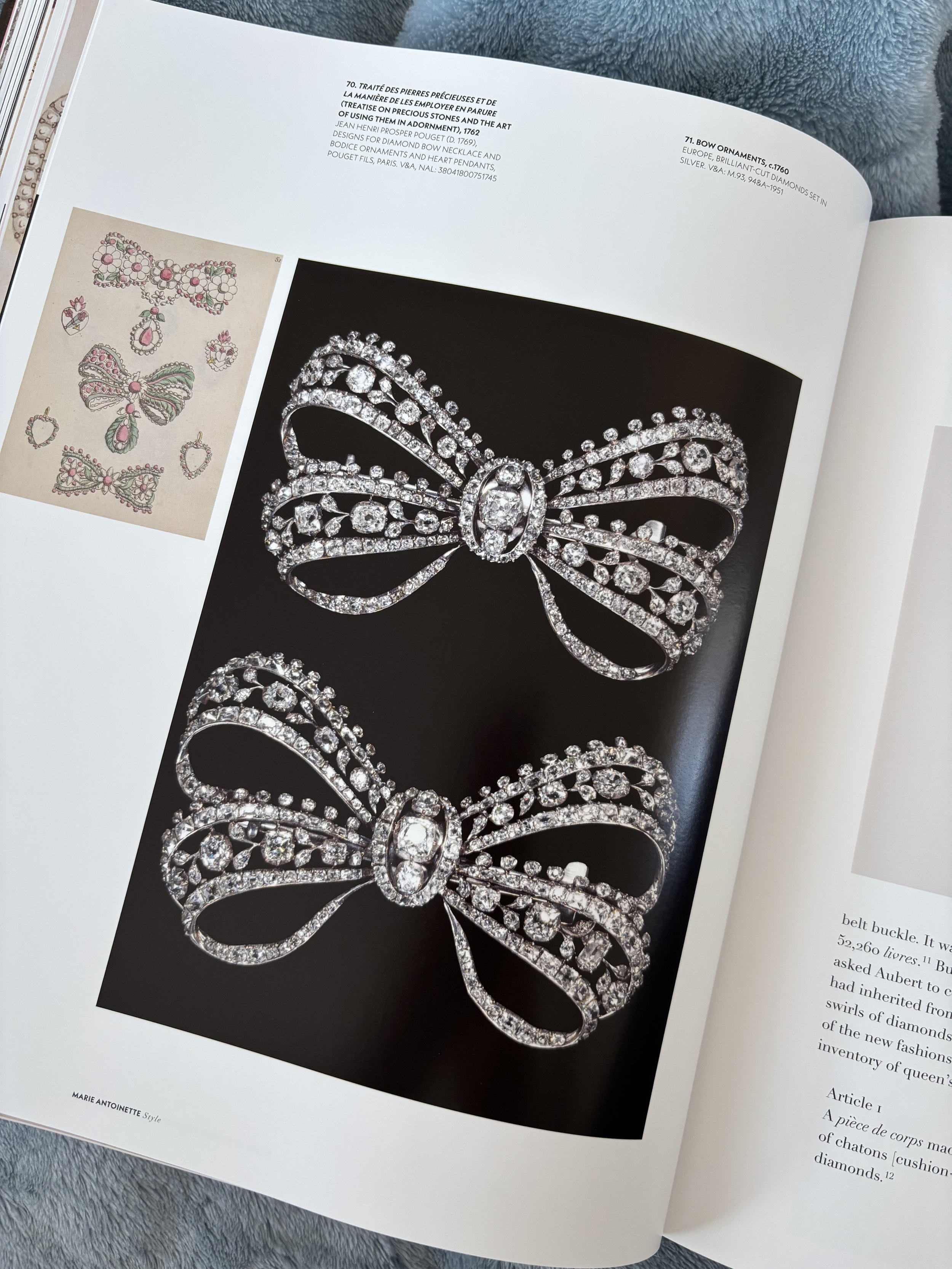
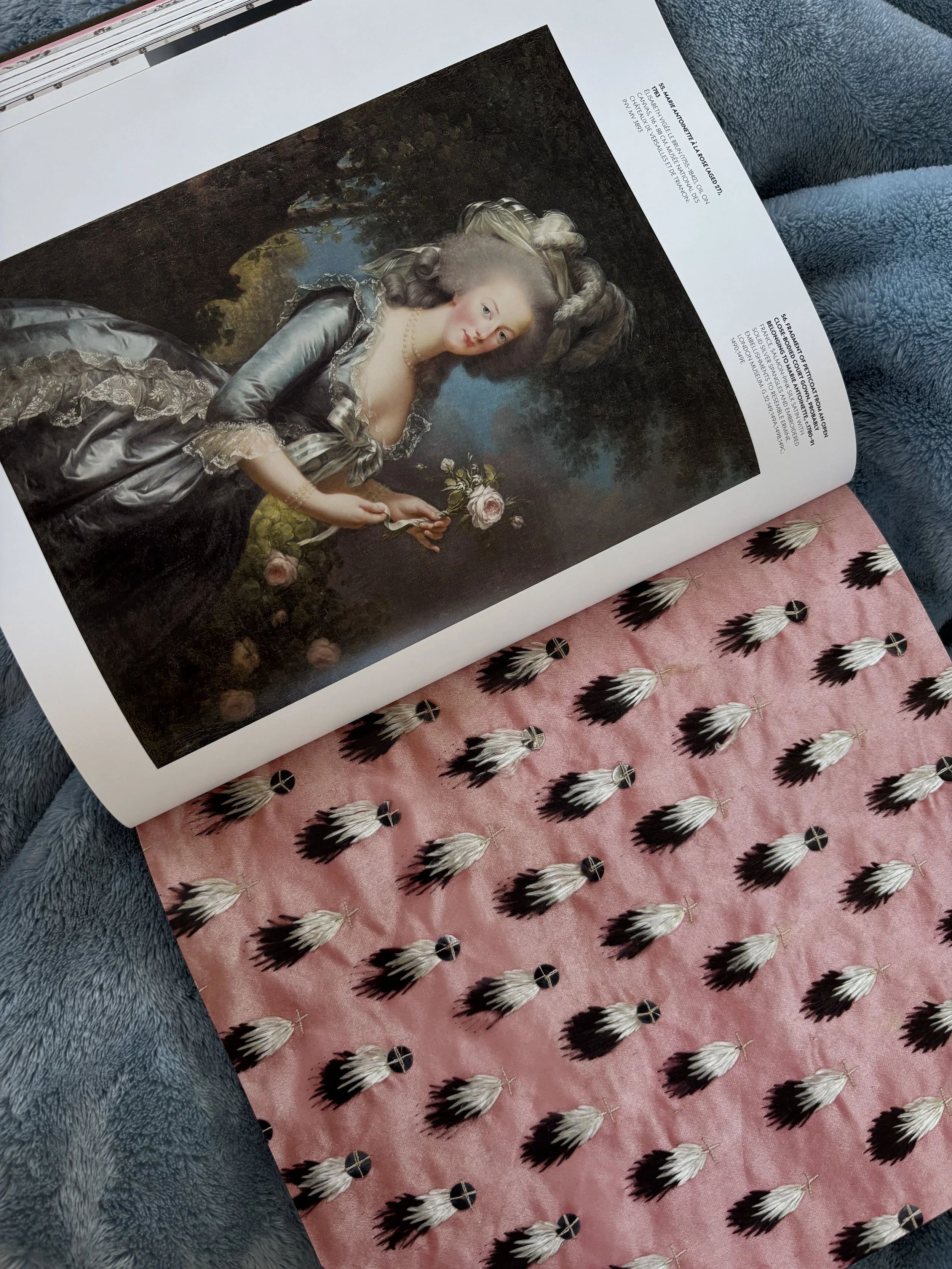
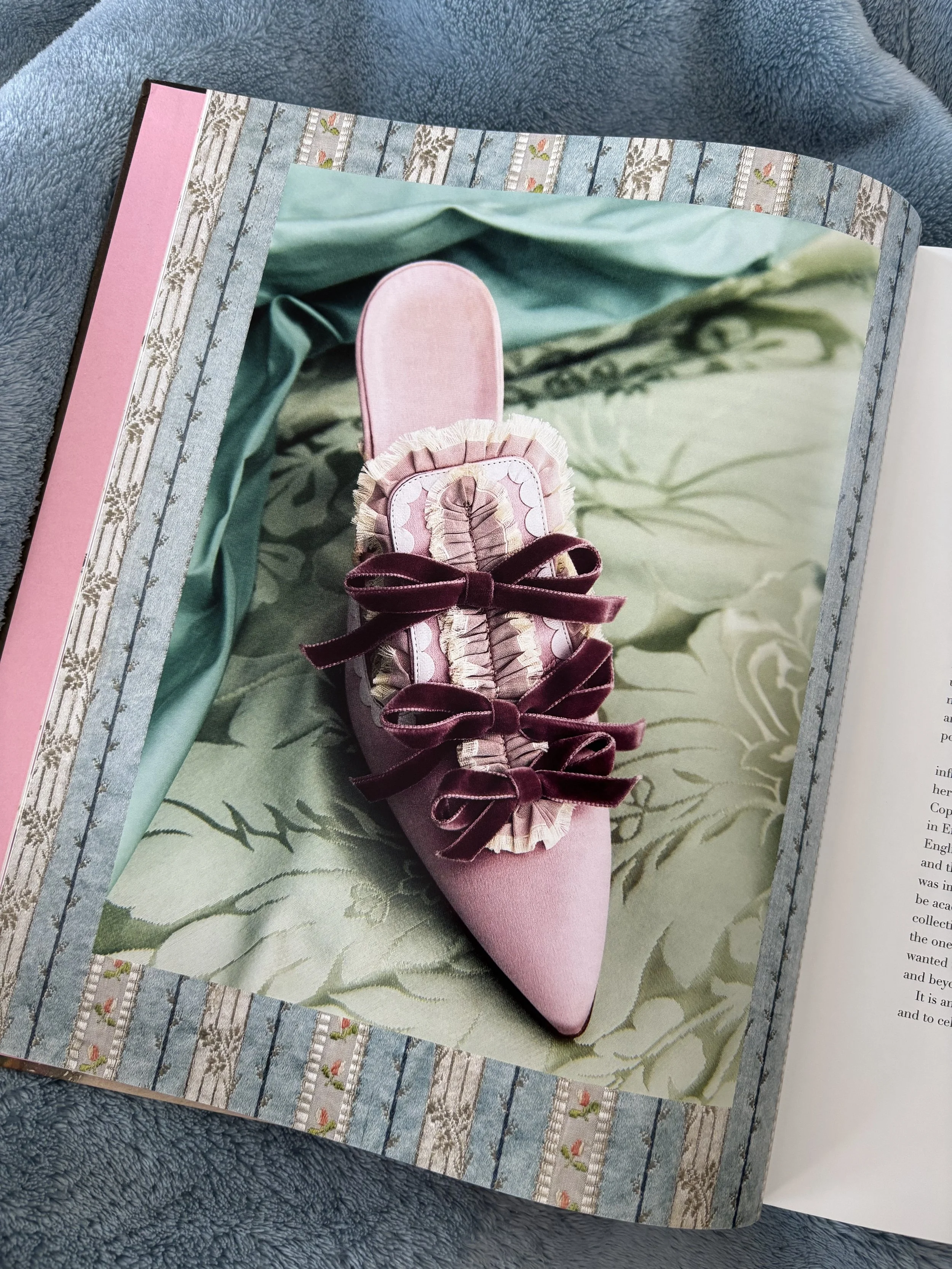
I think “camp” has its roots in Marie’s style. Her love of bows especially feels visually linked to what camp triggers in my mind today. She even owned diamond jewellery shaped like bows. I would love a broach like this and it doesn’t have to be real diamonds lol. Bows and ribbons are not only joyful to draw, they are unapologetically feminine. Especially in pink.
I frequently incorporate bows into my pattern designs and within my Meditation Symphonies. I intend to spend a week developing a dedicated pattern collection focused entirely on bows, ribbons, florals and stripes. It will be full of pinks, reds and blues that will all be inspired by Marie Antoinette. These will feature in future Meditation Symphonies and wall hangings. I love building a library of patterns to dip into when creating new decorative works.

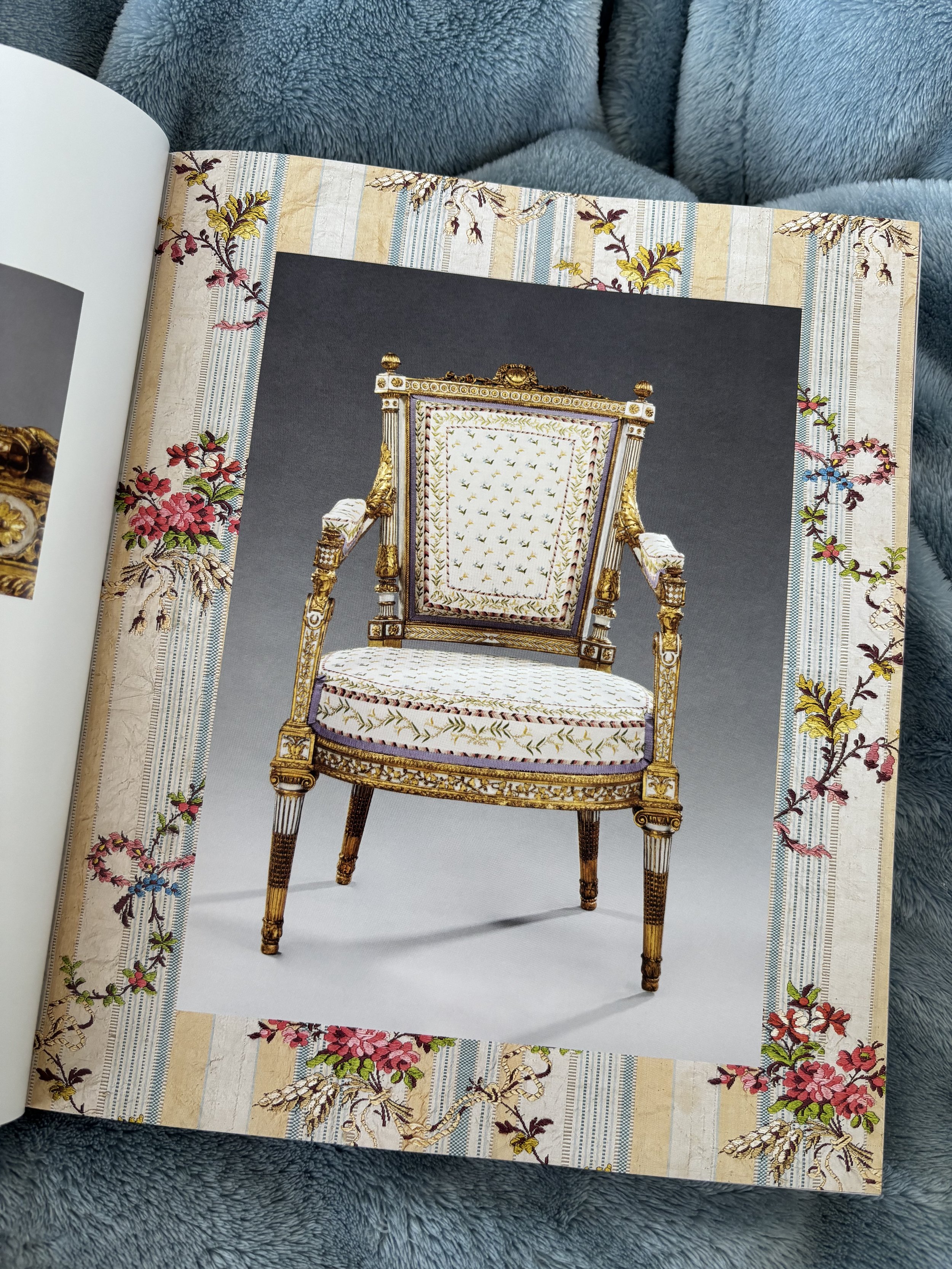
A Controversial Legacy
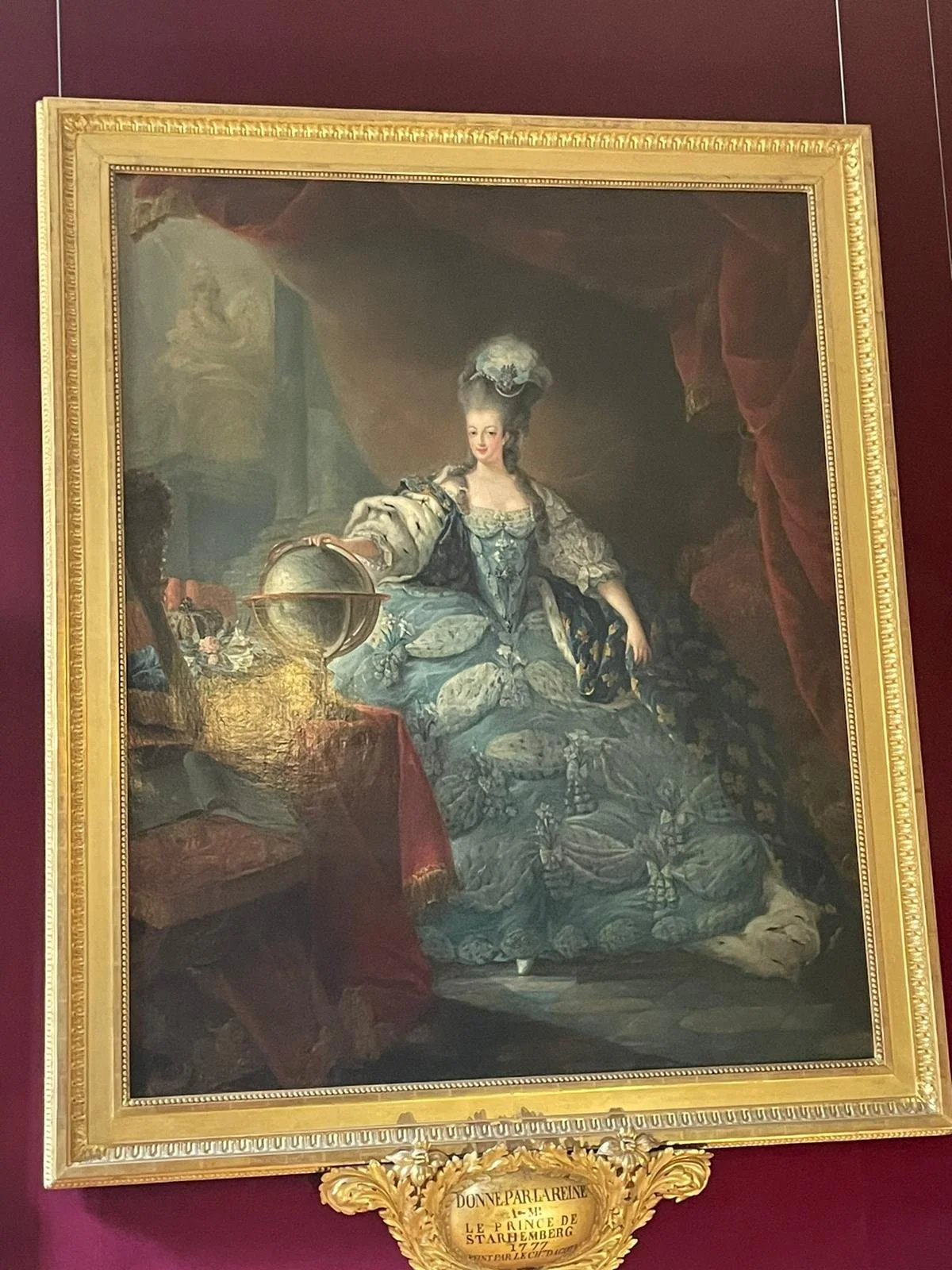
Marie Antoinette remained a controversial and often embarrassing figure in French history for many years following her execution. I’m glad that historical reappraisal, along with artists and designers reclaiming her image, has helped reposition her as a more nuanced and culturally significant figure.
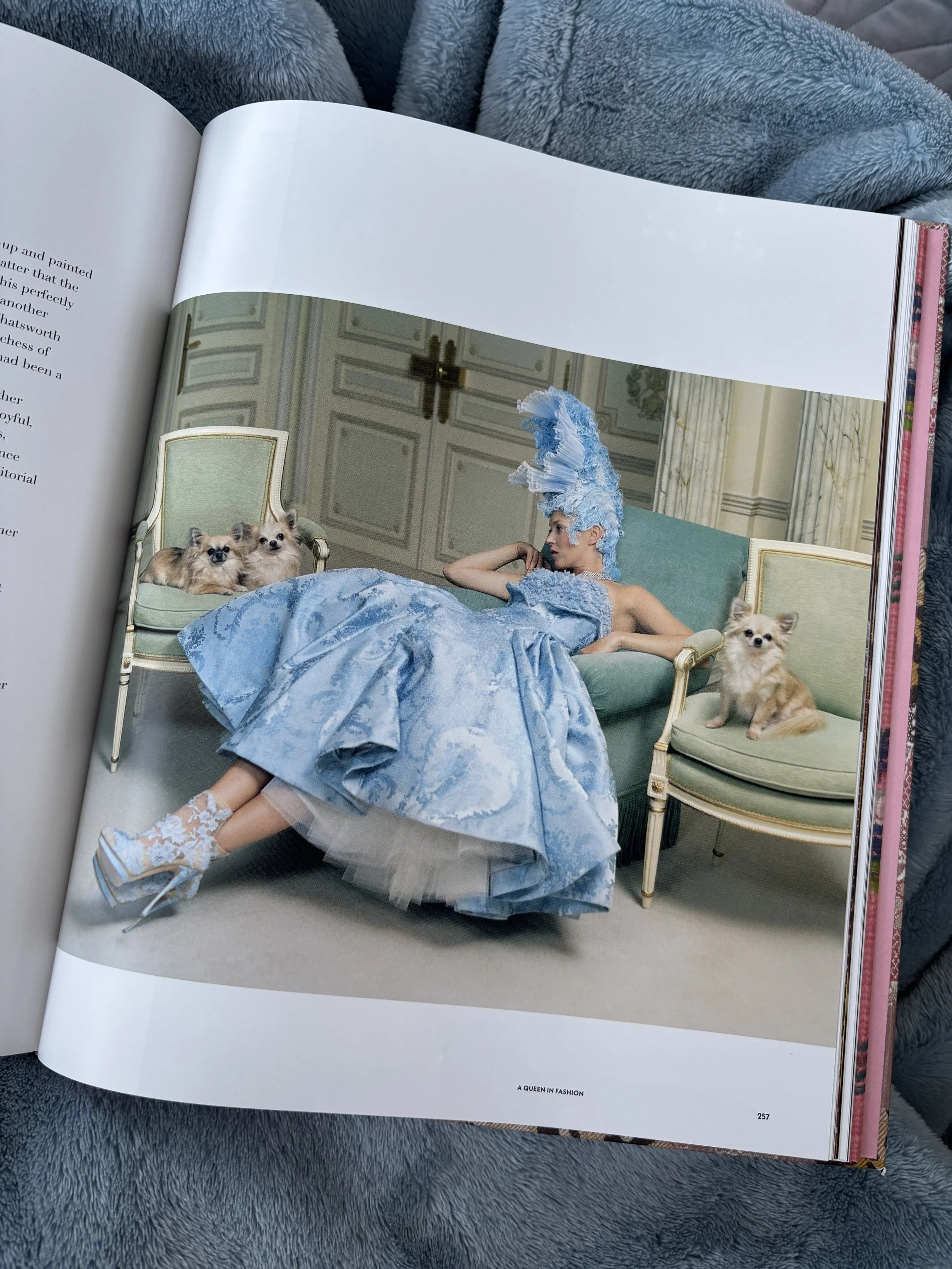
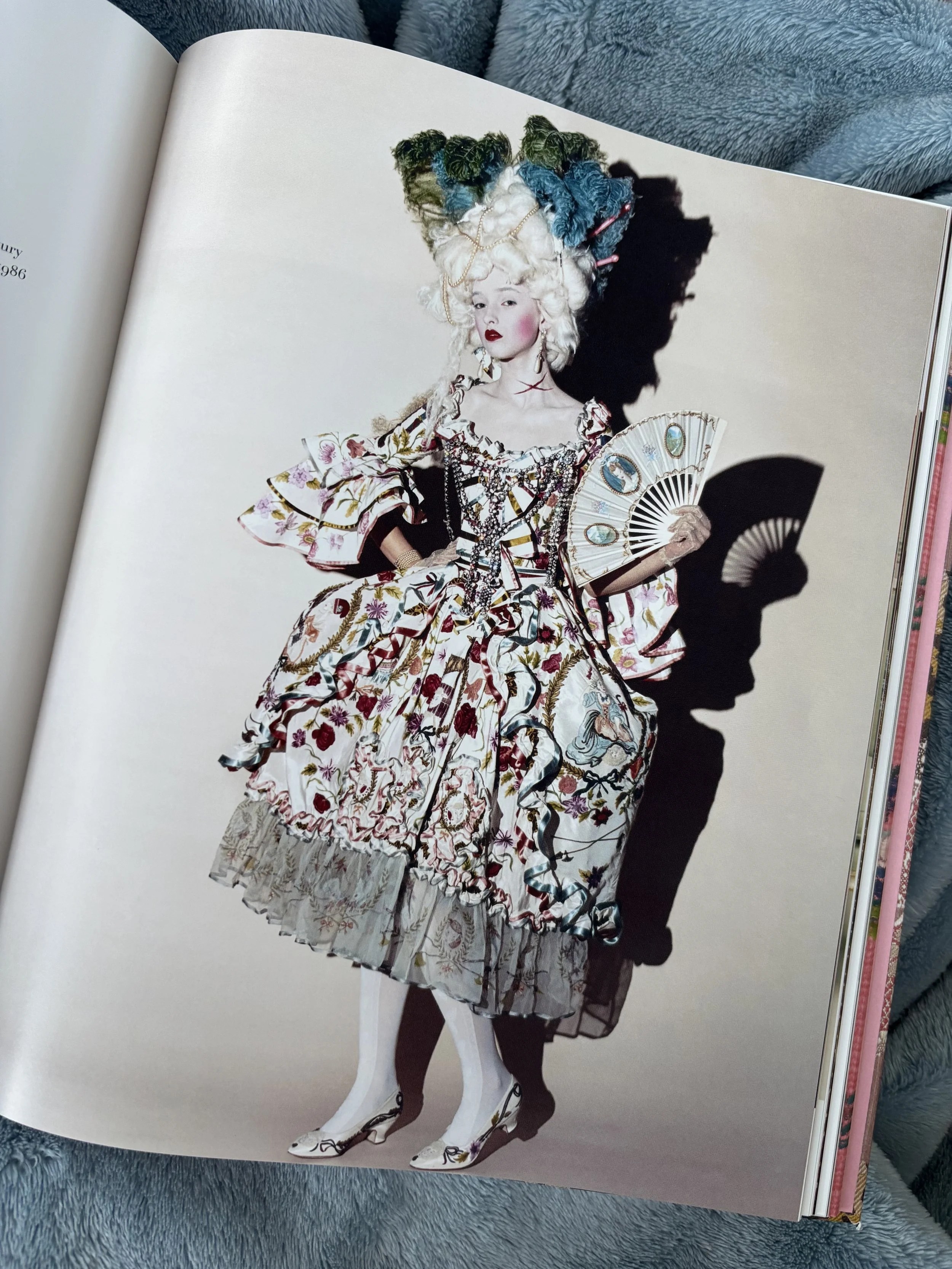
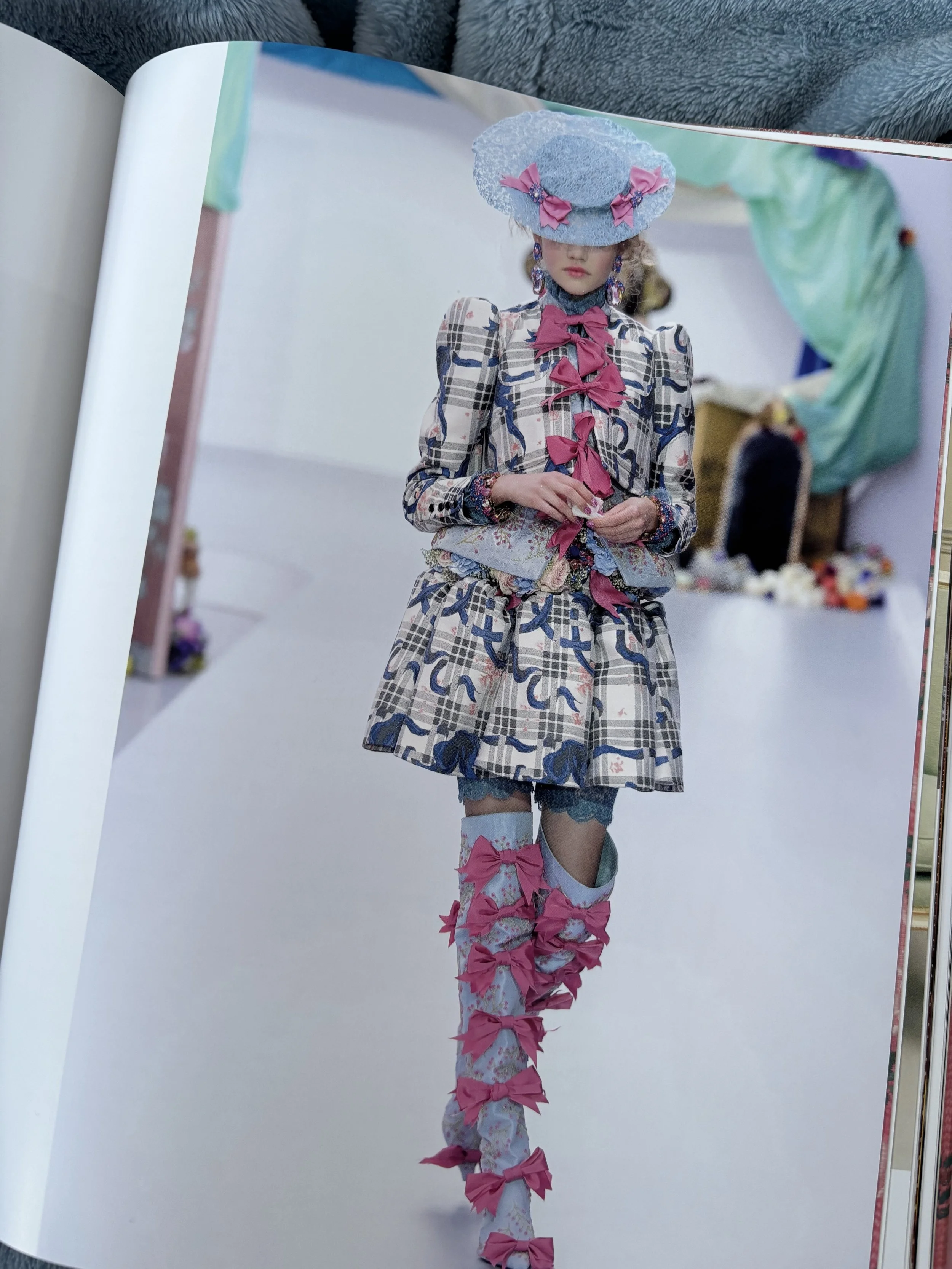

If you’re interested in her story, I recommend the French Revolution series by The Rest Is History. It’s an epic 20-part deep dive. I also recommend Marie Antoinette directed by Sofia Coppola. It received mixed reviews upon release and isn’t historically precise, but watch it for the fashion and the emotional atmosphere of what her life may have felt like.
There is also the recent BBC television series Marie Antoinette, which I thoroughly enjoyed. Interestingly, the actor who plays Louis (Louis Cunningham) is a real-life descendant of French royalty. Of course, if you ever get the chance, visit Versailles. I haven’t experienced anything like it before or since.
Links to The Rest is History Podcast & Trailers:
T.R.I.H Podcast: https://www.youtube.com/watch?v=sm5yrVIGJfg&list=PLEbAHi3fZpuHM2K49x2je9j0Pg1qhq5ni&index=4
Sofia Coppola’s Marie Antoinette Trailer: https://www.youtube.com/watch?v=yBWyKRoh98U
BBC’s Marie Antoinette Series Trailer: https://www.youtube.com/watch?v=bK4D5qC_EW8
Thank you for reading to the end. I love sharing the things that excite and inspire me. I am endlessly curious, always looking for new inspiration. I write blogs like this to bring you along with me.