
Inner Worlds, Outer Influences
I’ve just finished my latest artwork, The Beholden Tree, and uploaded it to my cloud alongside the rest of my work for safe keeping (yes, I back everything up).
While I was doing that, I was struck by how different this piece feels compared to the artworks from my Inner Worlds collection. It genuinely took me by surprise. I suddenly became very aware of how much my work has evolved and, by extension, how much I have too. It felt like looking at an old photograph of yourself: it’s clearly still you, but so much has changed.
I’ve added a short progress clip of The Beholden Tree to my homepage, showing parts of it being created in my Photoshop workspace. I’ll make a more in-depth video later, talking about the inspiration behind it and some of the smaller details – basically what’s going on inside the artwork.
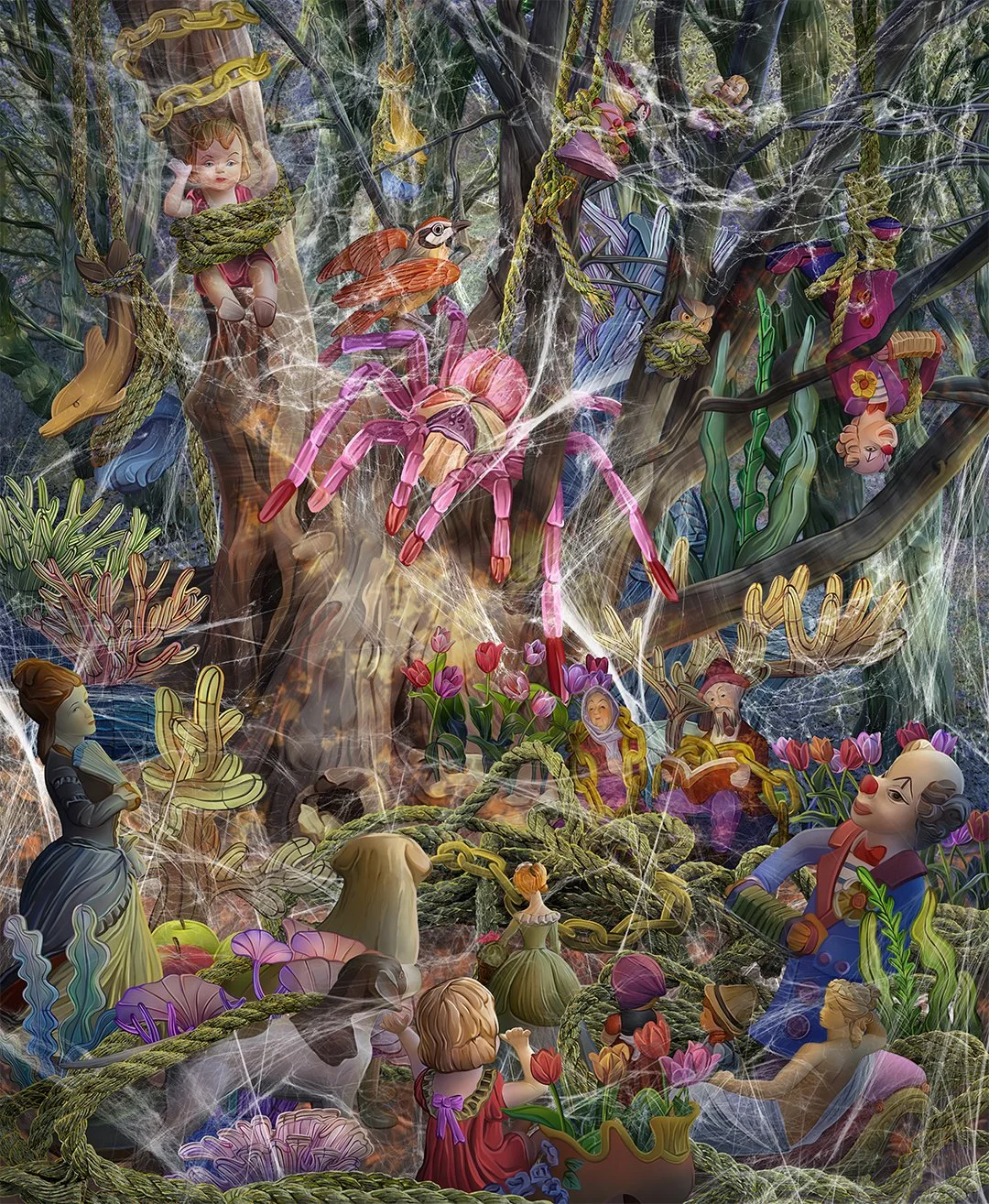
The Beholden Tree
Emma Collins, 2026
Right now, I’m in two minds about what to do next. I still have another scene painting, Quiet Tragedy, to finish… but I also have a strong craving to start a new Meditation Symphony.
Art that stayed with me
I also wanted to use this blog to talk about the “art” I’ve encountered in my life that has truly moved me, stayed with me, and shaped how I work.
I’m keeping this list to three experiences. There are many more I could mention (and yes, Grayson Perry’s Smash Hits is one of them, even though I’ve left it out here), but three feels like enough without turning this into a novel.
I’ve listed them in the order I experienced them.
1. Monet and Van Gogh – National Gallery, London
The first “art” experience that really stayed with me happened at the National Gallery in London, in the Impressionist galleries, where I saw paintings by Claude Monet and Vincent van Gogh.
They were actually my first introduction to art back in primary school. I remember painting my own version of Monet’s lily pond bridge and doing a drawing in four different colourways inspired by Van Gogh’s bedroom. My mum laminated them and stuck them on the fridge.
In 2013, I travelled to London and saw their work in person for the first time. Until then, I’d only ever known them through prints or images online. Standing in front of Monet’s bridge and Van Gogh’s sunflowers felt strangely like meeting them face to face. I’d studied their paintings so many times and suddenly they were there, physically in front of me.
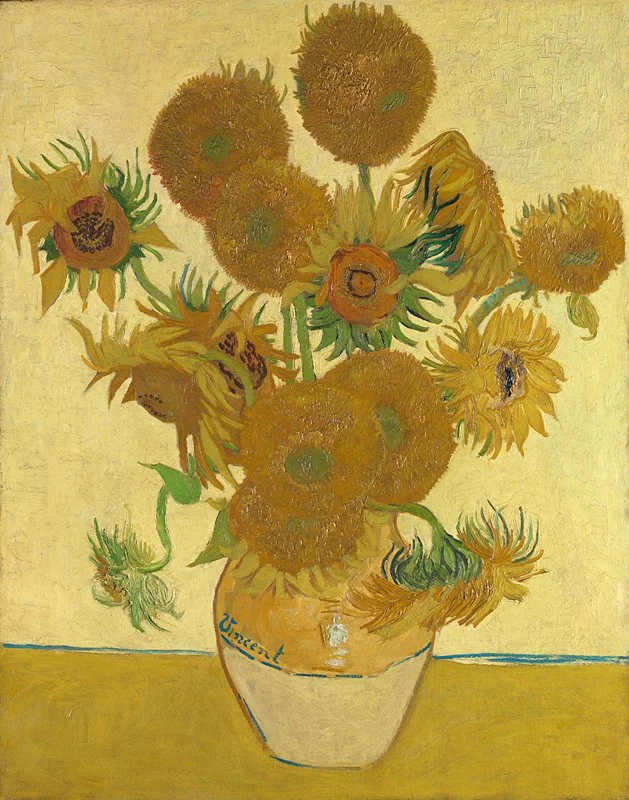
Sunflowers, Vincent Van Gogh, The National Gallery
Even now, the linear quality of my digital drawing often reminds me of Van Gogh. I think of him whenever I’m building up lines in an artwork. And whenever I’m considering light and colour, Monet is always in the back of my mind.
Looking at Monet’s work over the years has deeply shaped my sense of colour, especially how I connect colour to the seasons. The Impressionists are really the foundation of how I understand making art: composition, layering colour, adapting, and knowing when something feels complete.
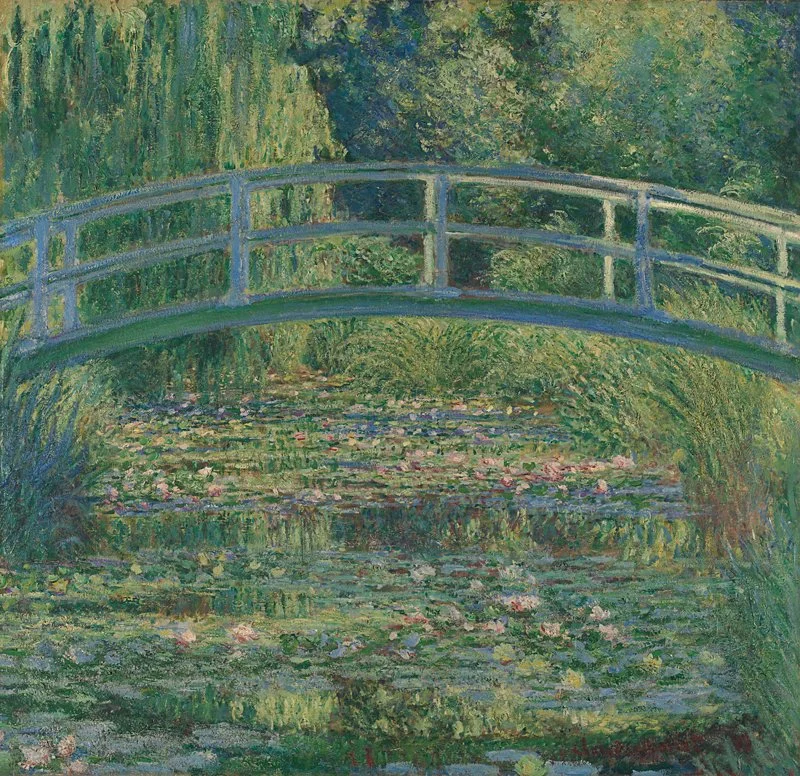
The Water-Lily Pond, Claude Monet, The National Gallery
Sometimes, when I’m choosing the mood for a new scene painting, I’ll pull out my Monet book, find a particular atmosphere in one of his paintings, and begin from there.
2. Bird in Hand (2006) – Ellen Gallagher, Tate Liverpool
The second experience was seeing Bird in Hand by Ellen Gallagher at the Tate in Liverpool in the summer of 2022. It was my first time in Liverpool, and my first time visiting that gallery.
The artwork itself is a large collage made from stacked, inked and stained pages – sometimes twenty sheets deep – cut through to reveal layers of colour beneath the surface. The scene forms an undersea landscape, connected to Gallagher’s exploration of the Middle Passage, the most dangerous part of the slave trade route between Africa and North America.
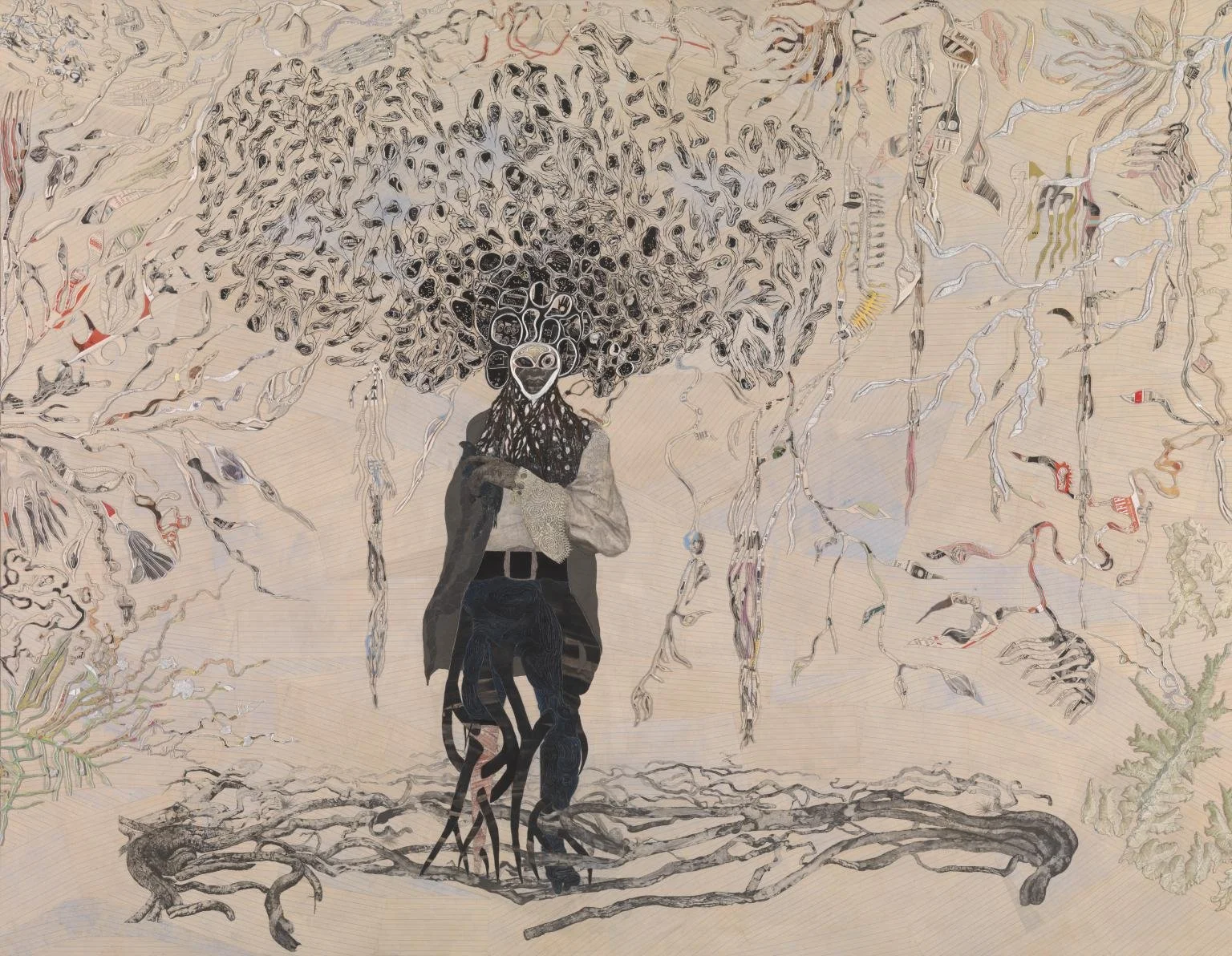
Bird in Hand, Ellen Gallagher, 2006, Tate Liverpool
I was initially drawn to it simply because I love collage as a medium. But while I was there, a member of staff began giving a free talk about some of the works in the gallery, including this one.
He spoke about Drexciya which is an imagined underwater place created through stories told by enslaved people. The idea was that if you were thrown overboard, you wouldn’t die, but would be taken there instead. Pregnant women, he said, were believed to give birth to children with magical powers. He compared it to Wakanda from Black Panther.
Suddenly the piece became deeply human to me. These were people who had been taken from their homes, telling each other stories so they might feel less afraid of dying.
No matter your background or culture, I think hope – and hopelessness – is something everyone understands.
What I love about this artwork is that it works on two levels: it’s visually powerful at first glance, but it also holds layers of meaning and storytelling (and quite literally, layers of paper). At the time, I remember thinking that this was the kind of balance I wanted to aim for in my own work.
3. It’s a Small World
My final “art” experience is It’s a Small World which I experienced for the first time in 2023.
Some of you will disagree with me calling this art. I actually started writing out a defence of why I think it is, then realised I don’t need one. This is my blog, and I can decide what counts as art.
It’s art you can step inside, and I truly believe you come out changed. I know I did.
The art direction by Mary Blair and Rolly Crump is timeless and beautiful. Through this attraction (and her other work for Disney), Mary Blair introduced modernist-inspired design into storytelling and theme parks.
The song written for the attraction by the Sherman Brothers is arguably one of the most unforgettable ever written. The immersion is overwhelming in the best way. And the central message – celebrating our similarities over our differences – will never go out of date.
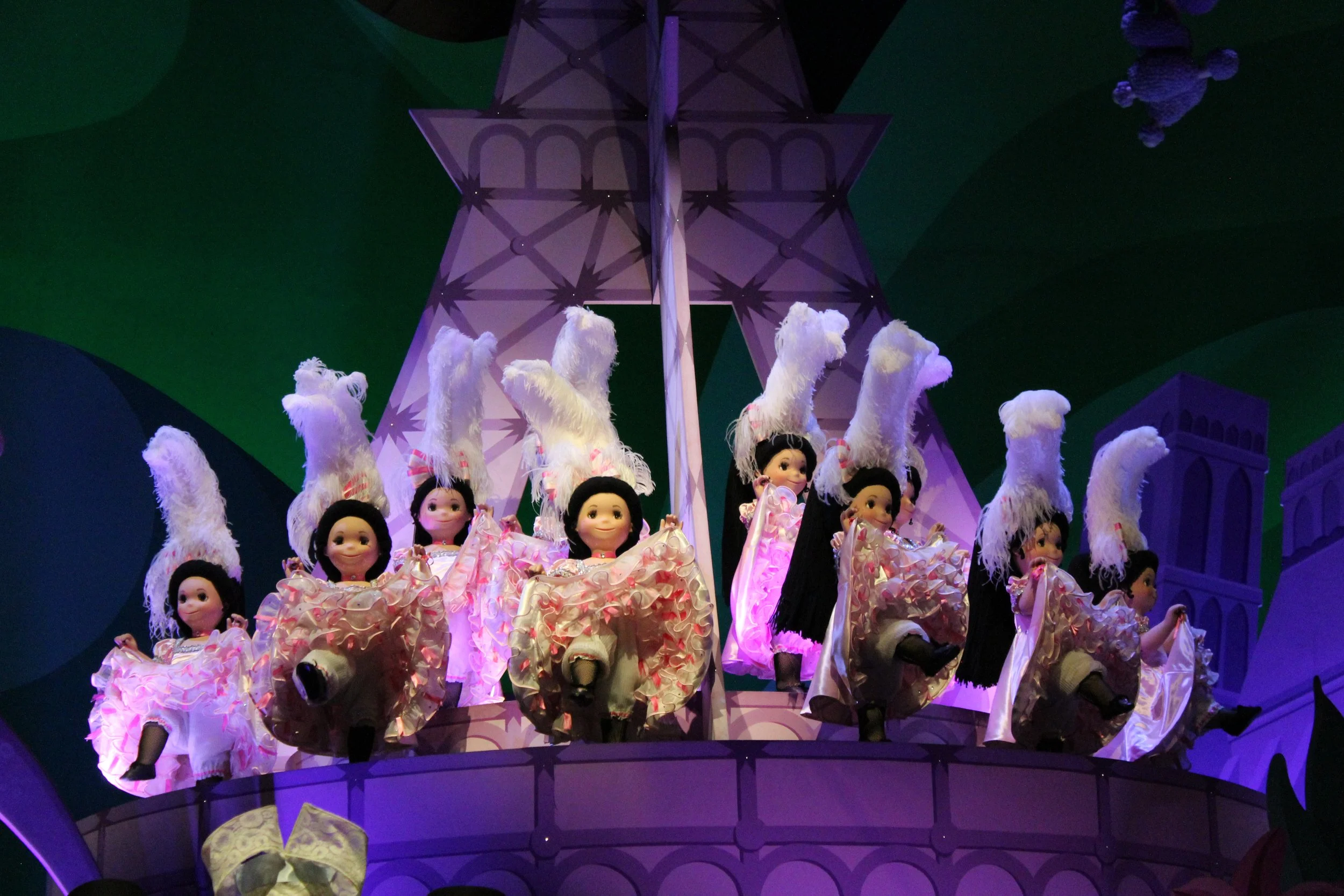
It’s A Small World, Disneyland Paris
This piece of art has heart. That’s the main thing I admire, and the main thing I aspire to in my own practice.
The first time I experienced It’s a Small World was at Disneyland Paris. By my third ride, I remember thinking that I wanted my own collection to feel like this: immersive, layered, full of detail and storytelling.
I went home and finished Inner Worlds a year later. I never stopped thinking about how that attraction made me feel.
For me, it ticks every box: visually unified, deeply immersive, and built around a message that transcends time.
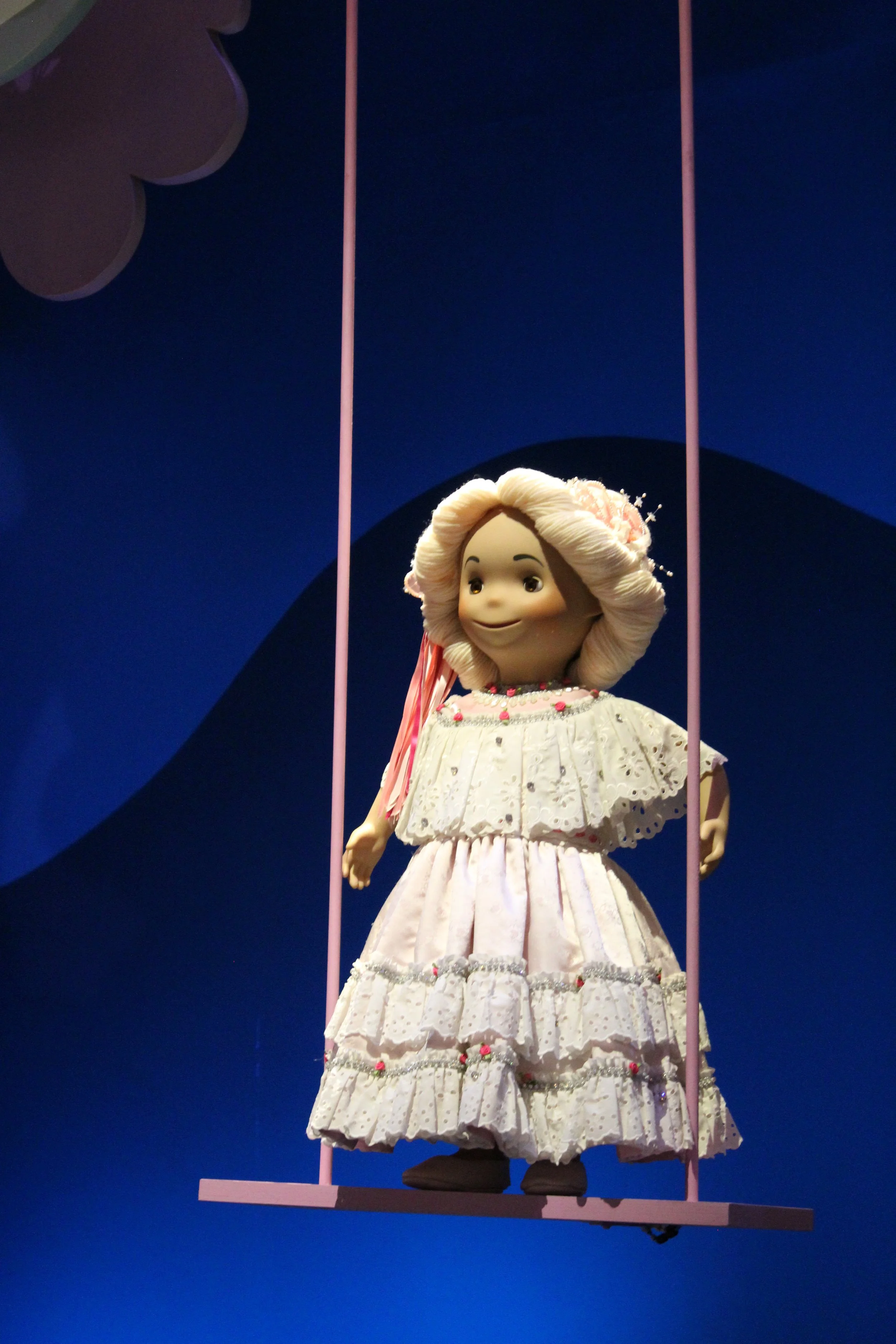
It’s A Small World, Disneyland Paris
Final thoughts
I think these experiences reveal something important about how I approach making art.
For me, art is emotional first.
I can have all the tools, tricks and techniques in the world, but if the emotional charge isn’t there, then there’s no story. Without a story, there’s no concept. Without that, there are no visual triggers like colour or composition.
And without those, there is no art.